
Professional Tree Removal Services in Springdale, SC
Call us
(803) 866-3855
Hours
Scheduled visits
Booked ahead, not promised at short notice

What the trees in Springdale are doing
Tree Service in Springdale, SC
Springdale is a census-designated place of 2,422 people, and its 1,121 housing units sit inside 4.22 square miles. The median house dates to 1972, and that date is most of the story of the trees here. A house finished in 1972 very often came with a sapling planted in the same season, and a shade tree planted that year is now fifty-four years old, standing perhaps eight feet from a wall that has not moved. A tree that grew up beside a house grew into the space it was given and then carried on growing. The work in this neighbourhood is mostly about the second half of that arrangement.
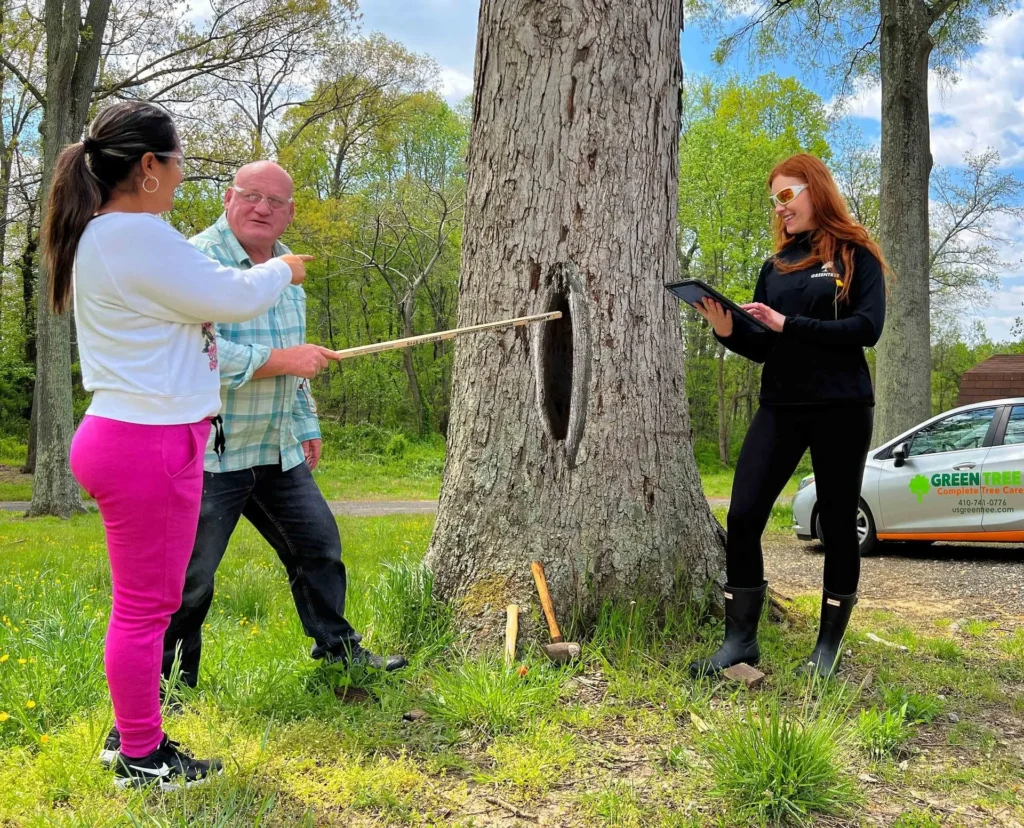
Homes in Springdale and the trees around them
1,121 homes across 4.22 square miles
Spread over that much ground, the housing here averages roughly 266 units per square mile, and the effect on tree work is about elbow room. Lots are wide enough that a trunk at the back corner is genuinely at the back corner, often past a detached garage, a shed and a garden, with the property line running through a stand of volunteers nobody planted. Getting a machine to that corner without crossing a flower bed or a septic drain field is the first problem of the day, and it is settled on foot before anything is started. Wide lots also mean a tree can be dropped in a direction that has nothing to do with the street, which is the one advantage space buys, and it is worth using properly rather than falling everything toward the same open patch.
The 63.2% of houses standing before 1980
Nearly two in three homes here were built before 1980, so the canopy around them has been growing since the Carter years or earlier. Trees of that age carry history in their wood. A limb removed badly in the 1980s leaves a wound the trunk never closed over, and a stub cut flush to the parent branch becomes a pocket of decay that runs down into the union. You can read some of that from the ground: a hollow at an old cut, a seam of included bark where two stems meet, a bulge that suggests the tree grew around a fence wire. None of it means the tree has to go. It does mean the climbing plan and the anchoring points need choosing with more care than a young tree would ask for.
A 1972 median build year, with an eight-year margin
The margin on that median is eight years, which is a polite way of saying Springdale was not built in one push. Houses from the mid-1960s and houses from the end of the 1970s stand on the same streets, and the trees that came with them are not the same age either. That matters because trees planted as a group fail as a group. A developer who set the same species along four blocks in one season produced a row that reaches its difficult decades together, so a run of removals in a short stretch of years is normal here rather than a sign of bad luck. Knowing the era of the house gives a fair guess at the era of the tree, and a fair guess at what the trunk has already survived.
506.2 ft and the shelter that disappears
At 506.2 ft, this is high ground for the Midlands, and height changes what a tree has had to withstand. A trunk that grew on an exposed edge has spent decades loading and unloading in wind, and its wood is shaped by that: shorter, denser, with a taper that resists bending. A tree that grew up sheltered behind a neighbour’s stand has done none of that work. Take the shelter away, through a removal or a new build, and the sheltered tree is suddenly the exposed one, carrying a load it was never shaped for. That is one of the quiet consequences of clearing a lot, and it is the reason a row of trees is worth reading as a group rather than one trunk at a time.
Talk to us about a tree in Springdale
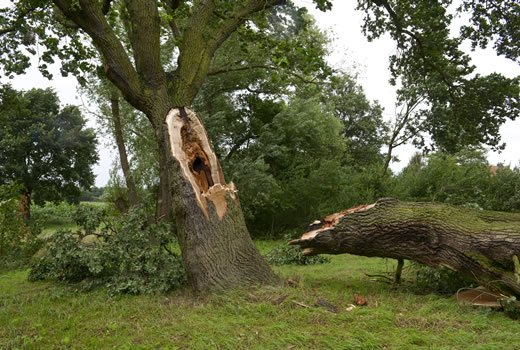
Tell us the address, what the tree is doing and what has to stay open while the work happens. We will set a time to walk the property and put the scope in writing before anything is scheduled.
Tree work in Springdale
Tree services in Springdale
The mature canopy here means pruning is often the first job rather than the last. Tree pruning removes deadwood, shortens a limb that has grown too far over a drive, and takes weight off the side a tree leans toward, which is work done to keep a tree rather than replace it. Tree removal comes in when the trunk is hollow at the base, the unions have split, or the lean has passed the point where a reduction helps. Either way the assessment comes first, and the difference is explained before the saw is started.
Stump grinding clears what is left after a removal so the ground can be used again. The stump is taken down below the surface, the chips go with the crew unless you want them for a bed, and the hole is left ready for soil and seed.
Debris removal handles the other half of the job: the trunk sections, the brush, the rakings, and the pile a previous storm left behind a shed. The load goes out in the same visit the wood comes down, so nothing sits at the edge of a lawn through a wet week. Land clearing covers a lot being opened up, where the decision is which stems are worth keeping as a screen and which are volunteers crowding a fence. Emergency tree service is for a tree already down or hanging, and the first thing there is distance, not a saw. Commercial tree services covers the rentals, the small offices and the property manager holding several addresses along the same road.
Springdale sits between West Columbia and Cayce, with Columbia a short run past the river, and all three are on the same working week.
How a visit runs
- Walk the property and note what is at risk
- Check the base, the crown and the access
- Confirm what the city or county requires
- Put the scope in writing before the work
- Clear the debris and rake at the end
What we will not do
- We will not promise a response time we cannot keep
- We will not claim a credential we cannot show
- We will not give a figure for a tree nobody has seen
- We will not stack debris at the curb and call it cleared
- We will not cut a tree that can be pruned and kept

Why property owners in Springdale work with us
A place of 2,422 people does not have a tree office to ring, so the answers tend to come from whoever has actually stood under the tree. That is the service here: someone walks the lot, reads the base and the unions, and says plainly which trunks are a job for this year and which can wait. We work daily, and the talk is about the tree in front of us rather than a list of options. We put the scope in writing before the work starts so the boundary of the job is clear to everyone watching from the kitchen window. What we will not do is dress up a guess as a finding, or promise an outcome that depends on wood we cannot see until it is open. On a lot this wide, that walk covers the back corner as well as the front, because the tree most likely to matter is rarely the one by the road.
Fallen Tree Removal Columbia works from Mason Road in Columbia and covers Springdale on the same schedule, so the walk, the scope and the crew come from the same place.
Why it matters now in Springdale
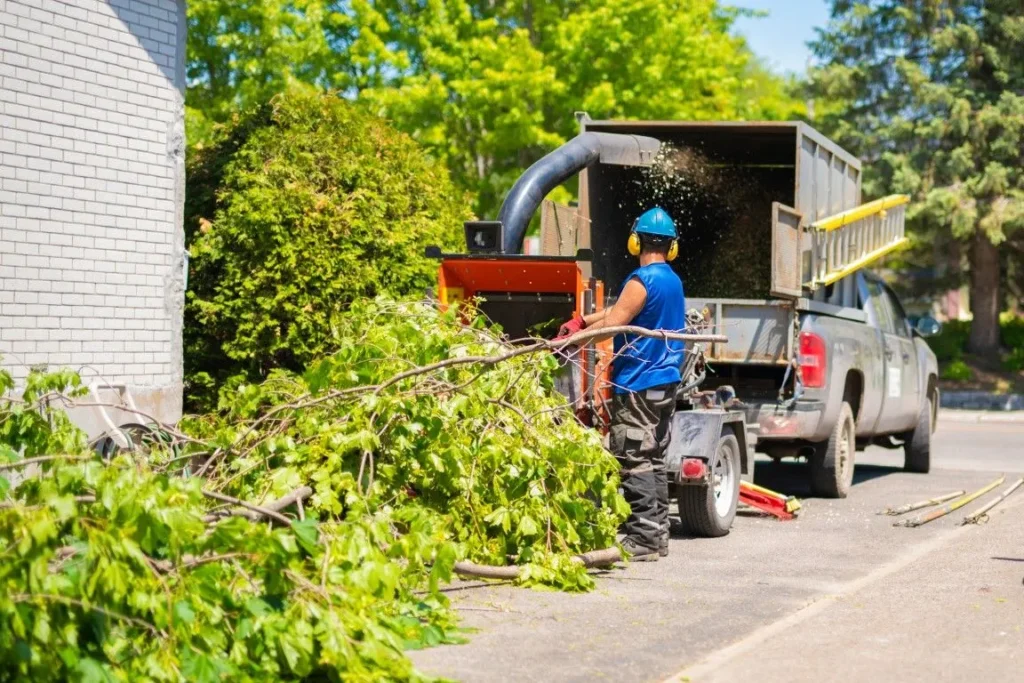
Two things are happening at once on these streets. The 63.2% of homes built before 1980 are now shaded by trees of the same vintage, and a tree that has stood for fifty years has had fifty years of chances to develop the defect that matters. At the same time, the weather that tests those defects has not eased. Helene reached the county in September 2024, and the National Weather Service log for Lexington County records 70 to 80 mph at the peak, with trees and power lines down, roads closed, parts of the county dark, 3 homes destroyed, 41 others damaged, a few structures hit by falling trees, and flooding in the low spots. A gust of that strength finds the tree with the hollow base rather than the healthy one beside it. That is why a look at the root flare in spring is worth more than a crew in the road in October. The defect is there in calm weather; the wind only reveals it. A tree of fifty-four is also at the age where a limb that has been shedding weight for a decade can separate on a still afternoon, with no storm in the forecast at all. That is not a reason to take every old tree out. It is a reason to look closely at the ones leaning over something that would be difficult to replace.
Tree work around Springdale
Frequently
Asked
Questions
Why does a house from 1972 tend to come with a difficult tree?
Because the tree is the same age as the house. Fifty-four years is long enough for a shade tree to reach its full spread, to have had limbs cut badly in earlier decades, and to start hollowing at an old wound. The house has been maintained; the tree usually has not. That gap is what shows up as a heavy limb over a driveway and a base that no longer looks solid. Both ends are worth checking, since the top says what the tree is doing and the bottom says what it can still hold.
Springdale is a census-designated place. Does that change anything for tree work?
It changes where questions go rather than how a tree is handled. There is no town tree office to call, so the practical assessment is the one made on the ground. It also means the housing is spread across 4.22 square miles of mixed lots, so access and the space around a trunk vary from street to street and get checked before a date is set.
How much of the neighbourhood went up before 1980, and why does it matter?
The figure is 63.2%, close to two homes in three. It matters because trees planted when those houses were new are now in the age band where old pruning wounds, included bark and hollow centres begin to matter. A street of same-era houses usually has same-era trees, so the problems arrive in clusters rather than one at a time. A cluster like that is a scheduling question rather than a surprise.
What did the September 2024 wind do in Lexington County?
The county entry reads: peak gusts of 70 to 80 mph, trunks and lines down across roads that had to be shut, power lost in sections, three homes destroyed, 41 more damaged, and flooding. Helene did that in a single pass through Lexington County in September 2024.
Can a leaning tree here be saved?
Sometimes, and the test is at the base. A lean that has been there for years, with a sound flare and no soil heaving, is usually a tree that grew that way and can be reduced instead of removed. A lean that appeared this season, with a mound of soil on one side or a crack at the ground line, is a root plate that has moved. The second kind is not saved by pruning. The ground around the base is where the answer lives, and it is read standing still rather than by pushing on the trunk.
What happens to the wood and the stump once the tree is down?
The trunk and brush leave with the crew unless you ask for the wood to be left in lengths for burning. The stump is ground below the surface, the grindings are raked or taken away, and the hole is filled so the spot can be mown or planted. Nothing is left stacked at the curb for a pickup that may not come. If a planting is planned for the same spot, say so at the start, because the depth the stump is ground to depends on what goes in next.
Because the tree is the same age as the house. Fifty-four years is long enough for a shade tree to reach its full spread, to have had limbs cut badly in earlier decades, and to start hollowing at an old wound. The house has been maintained; the tree usually has not. That gap is what shows up as a heavy limb over a driveway and a base that no longer looks solid. Both ends are worth checking, since the top says what the tree is doing and the bottom says what it can still hold.
It changes where questions go rather than how a tree is handled. There is no town tree office to call, so the practical assessment is the one made on the ground. It also means the housing is spread across 4.22 square miles of mixed lots, so access and the space around a trunk vary from street to street and get checked before a date is set.
The figure is 63.2%, close to two homes in three. It matters because trees planted when those houses were new are now in the age band where old pruning wounds, included bark and hollow centres begin to matter. A street of same-era houses usually has same-era trees, so the problems arrive in clusters rather than one at a time. A cluster like that is a scheduling question rather than a surprise.
The county entry reads: peak gusts of 70 to 80 mph, trunks and lines down across roads that had to be shut, power lost in sections, three homes destroyed, 41 more damaged, and flooding. Helene did that in a single pass through Lexington County in September 2024.
Sometimes, and the test is at the base. A lean that has been there for years, with a sound flare and no soil heaving, is usually a tree that grew that way and can be reduced instead of removed. A lean that appeared this season, with a mound of soil on one side or a crack at the ground line, is a root plate that has moved. The second kind is not saved by pruning. The ground around the base is where the answer lives, and it is read standing still rather than by pushing on the trunk.
The trunk and brush leave with the crew unless you ask for the wood to be left in lengths for burning. The stump is ground below the surface, the grindings are raked or taken away, and the hole is filled so the spot can be mown or planted. Nothing is left stacked at the curb for a pickup that may not come. If a planting is planned for the same spot, say so at the start, because the depth the stump is ground to depends on what goes in next.