Professional Tree Removal Services in Elgin, SC
Call us
(803) 866-3855
Hours
Scheduled visits
Booked ahead, not promised at short notice

What the trees in Elgin are doing
Tree Service in Elgin, SC
Elgin covers 1.08 square miles and holds 758 housing units, so almost nothing in this town is far from anything else. A tree on a back boundary can overhang three gardens at once, and the canopy that shades a street also leans over the service drop, the fence line and the shed at the end of it. That compression is what makes the work here different: it is rarely one tree on one empty lot. Tree service Elgin households ring about is usually a tree that has quietly become a shared problem.
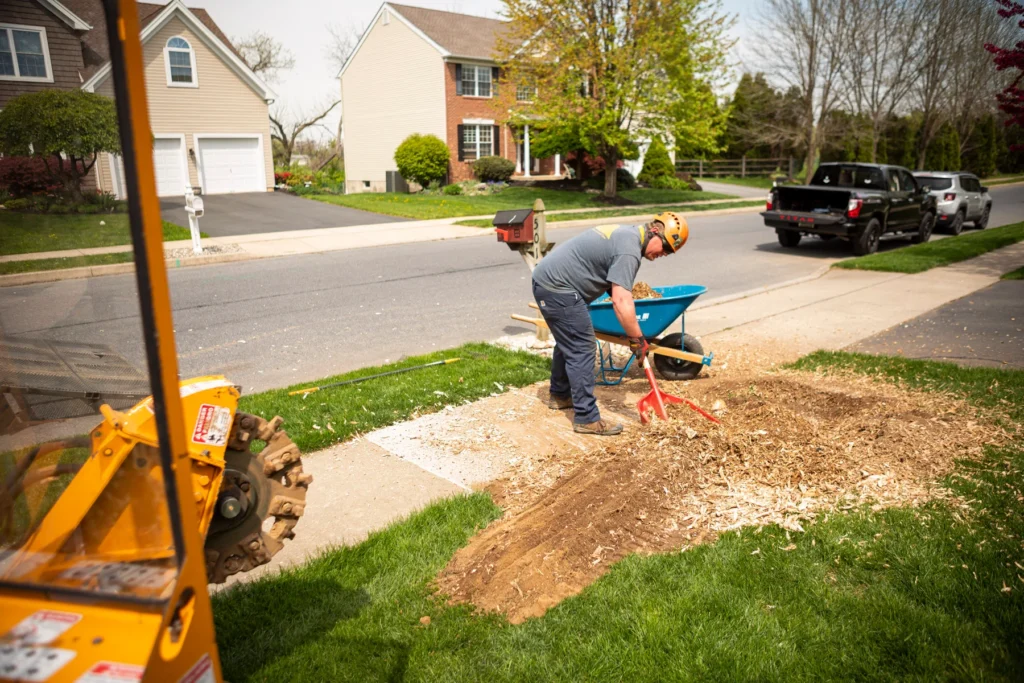
The homes in Elgin and the trees around them
The 1.08 square miles that hold the whole town
At just over a square mile, the town has no wooded hinterland of its own to absorb a failure. The timber sits outside the boundary and starts again as soon as the last garden ends, so the trees that matter are the ones inside: packed between houses, leaning over the two or three roads that carry traffic through, and crossing fences that divide lots only a few dozen feet wide. That has two consequences. A take-down has to be planned around a neighbour’s wall, a parked car and a road that cannot close for a day, which means short sections lowered on a line rather than one clean drop. And a stem that falls blocks a route out rather than a corner of a garden, because there is no second way round. That is worth knowing before a truck and chipper arrive looking for somewhere to stand.
Houses from the mid-nineties, and trees a little older
The median house here dates to 1995, so the town’s growth is recent without being new: three decades old. Trees that were standing when those houses went in are now at the size where the first real defects appear — a fork with bark trapped in the crotch, a limb that has grown across a boundary, a pine whose lower branches were cut badly when the drive went in. On the parcels that predate 1980, which make up 16.9% of the stock, the story runs the other way: hardwoods that were established before the lots were divided around them and are now standing inside gardens that were never sized for a mature crown, with the trunk close enough to the wall that any movement is worth knowing about. Those crowns also sit lower than on newer lots, a fair marker of how long they have been left alone.
Kershaw County’s record, written without numbers
The county entry for Hurricane Helene carries no gust figure and no damage tally. It records trees and power lines down across Kershaw County, some roads closed, sections of the county without power, a few structures damaged by falling trees, and areas of flooding. Read quickly it looks like the quieter version of a storm, and it is easy to treat it as a lesser event. It is simply a record of consequences rather than speeds. For a household in Elgin the useful phrase is the one about structures damaged by falling trees, because it names the failure mode: individual stems coming down onto buildings, not stands going over in one piece. A reader hunting for a figure will not find one here, so the useful habit is to look at the trees rather than argue with the record.
414.7 feet, with woodland just past the line
Elgin sits at 414.7 feet, and the woods pick up again the moment the town limits do. That arrangement decides which trees are worth watching. The stems inside the town are sheltered by houses and by each other, so they put on height quickly and keep a narrow crown. The ones on the woodland edge beyond the line grew in the open, with wind on them from every side, and they are heavier and wider for it. When a wind takes the slim stems inside the boundary they fall across gardens and drives; when it takes the heavy ones outside, they land among their own kind. The trees that need a look here are the tall ones on the sheltered side, which usually means the back garden rather than the front, since the front has the street and open air over it.
Talk to us about a tree in Elgin
Tell us the address, what the tree is doing and what has to stay open while the work happens. We will set a time to walk the property and put the scope in writing before anything is scheduled.
Tree work in Elgin
Tree services in Elgin
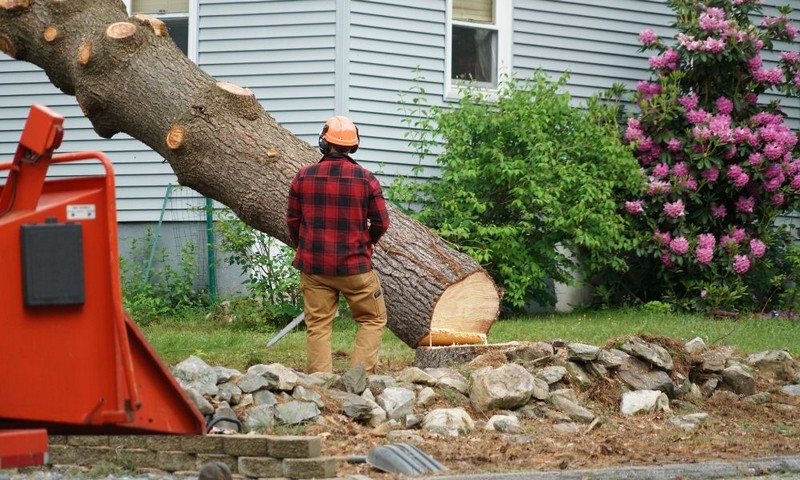
The tight footprint sets the order of work. Tree removal in a town this compressed usually means a climb rather than a fell: the stem is worked down from the top in short lengths, each one tied and lowered clear of a wall, a fence or a car, and the butt is taken last. It takes longer than dropping a tree in a field, and it is the only way to do it when the drop zone is a driveway three paces wide. The chipper usually stays on the road, so the route in is walked before anything is carried out, and the neighbour’s gate is treated as a boundary worth asking about.
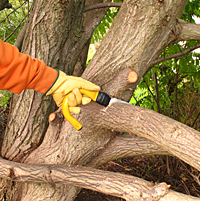
Grinding follows on the same visit wherever the machine can get in, since a stump beside a boundary is a trip hazard for two households rather than one, and a stool left in a narrow garden takes up ground that nobody can spare. Tree pruning carries most of the routine work here: clearance restored over a path, deadwood out of a crown that hangs across a fence, weight taken off the side a tree leans toward so the lean stops growing.
Land clearing is for the occasional lot being reopened between two built ones, where the cleared edge has to be decided before anything is cut, since the line that looks obvious from the street rarely is once the undergrowth is gone. Debris removal clears the sections, the rakings and the piles that have sat behind a shed since the last wind. Emergency tree service handles a stem that has already come down over a drive or a line; the shops and offices on the main road fall under commercial tree services, where the entrance has to stay open while the work goes on.
We cover Elgin and the places round it on regular runs: Blythewood and Columbia to the west, Hopkins down in Richland County, and the county roads between. Where two gardens share one crown, it helps to say so when you call, because both sides can be looked at in a single visit rather than two. The drive out is short enough that a second address on the same street can usually be added to the same morning.
How a visit runs
- Walk the property and note what is at risk
- Check the base, the crown and the access
- Confirm what the city or county requires
- Put the scope in writing before the work
- Clear the debris and rake at the end
What we will not do
- We will not promise a response time we cannot keep
- We will not claim a credential we cannot show
- We will not give a figure for a tree nobody has seen
- We will not stack debris at the curb and call it cleared
- We will not cut a tree that can be pruned and kept
Why property owners in Elgin work with us
In a town this small, a tree is rarely one household’s business. It shades a shared fence, drops leaves into a neighbour’s roof edge and leans across a boundary that was drawn long after it rooted. Fallen Tree Removal Columbia works on the understanding that the neighbour will be watching, which changes how a job is set up: the drop side is agreed with both sides of the fence, the pieces are lowered rather than thrown, and the ground is left so that nobody has to explain it afterwards. That is a small thing on a large property and the whole job on a lot this size, where the gap between two houses is often the only working space there is. It also means the plan is explained before the saw starts, so nobody is surprised by which way a limb is going.

Why it matters now in Elgin
The trees in this town are at an awkward age, and the county’s storm record says what happens when awkward meets wind.
Three decades is when a pine or a water oak that grew up beside a house starts to show the consequences of that arrangement. The crown has closed over the roof edge, the roots have run under the drive, and the first limb to go takes a line or a fence with it. Add the parcels that predate 1980 and the mix gets harder: a mature hardwood inside a small garden has nowhere to shed a limb except onto something built. Kershaw County’s account of Helene lists trees and lines down, roads shut, sections without power, a few structures damaged by falling trees and areas of flooding — no gust figure, no tally, just the consequences. For a household inside a square mile, the consequences are the point. There is no room here for a tree to fail into empty ground; every stem in town is within falling distance of a wall, a car, a fence, or the road out. That is why the walk-around matters more than the cutting: it is the only chance to spot the fork, the crack or the hanger while there is still a choice about which way it goes.
Tree work around Elgin
Frequently
Asked
Questions
How much of Elgin’s housing predates 1980?
16.9%, and only 5.5% predates 1960. So roughly one house in six has a garden old enough to hold trees that were mature before the subdivision around it was laid out. Those are the parcels where a hardwood is likely to be standing inside a small garden, and where the first question is usually clearance rather than removal. Two of them on the same block is a scheduling question rather than a surprise.
Why does the county’s storm entry have no wind figure?
The Kershaw County entry for Helene records what happened rather than how hard it blew: trees and lines down, some roads closed, sections without power, a few structures damaged by falling trees, areas of flooding. There is no maximum gust and no count of homes. That is not a sign of a mild event, just a differently written record, and it is still worth reading for the line about structures. Nothing in it is specific to Elgin, so read the trees rather than the tally.
Does a lot this small make a removal harder?
Yes, in the sense that there is less room for the tree to go. On a lot a few dozen feet wide the stem cannot be felled, so it is climbed and taken down in short pieces, each tied off and lowered. That is slower than a straight drop, and it is the reason a job in town takes a morning where the same tree in open ground would take an hour.
What does the 414.7 foot elevation tell you about the trees?
Height by itself is not the risk; exposure is. At 414.7 feet the town has no wooded belt of its own between the houses, so a stem takes its shelter from the buildings and the trees next to it, and a tree raised in that shelter grows tall and slim. Those are the ones that come apart when a gap opens between two houses.
Are the pines here the same age as the houses?
Often close. With a median build year of 1995, a pine left at the back of a lot when it was built has had about thirty years to put on height, which is long enough to reach the eaves and long enough for the lower limbs to have been cut badly at some point. Age alone does not condemn a tree, but a thirty-year pine beside a wall is worth reading for lean and fork.
Do the oaks here suffer from disease?
Hypoxylon canker is a fungal disease that follows weakness rather than causing it. Clemson’s note on oak trouble puts drought stress first among the reasons a tree becomes vulnerable, and names water oak and southern red oak among the species affected. In a town this small, the oaks that matter are the few in the older gardens, so the thing to watch after a dry summer is a crown thinning from the top while the rest of the tree still looks green.
16.9%, and only 5.5% predates 1960. So roughly one house in six has a garden old enough to hold trees that were mature before the subdivision around it was laid out. Those are the parcels where a hardwood is likely to be standing inside a small garden, and where the first question is usually clearance rather than removal. Two of them on the same block is a scheduling question rather than a surprise.
The Kershaw County entry for Helene records what happened rather than how hard it blew: trees and lines down, some roads closed, sections without power, a few structures damaged by falling trees, areas of flooding. There is no maximum gust and no count of homes. That is not a sign of a mild event, just a differently written record, and it is still worth reading for the line about structures. Nothing in it is specific to Elgin, so read the trees rather than the tally.
Yes, in the sense that there is less room for the tree to go. On a lot a few dozen feet wide the stem cannot be felled, so it is climbed and taken down in short pieces, each tied off and lowered. That is slower than a straight drop, and it is the reason a job in town takes a morning where the same tree in open ground would take an hour.
Height by itself is not the risk; exposure is. At 414.7 feet the town has no wooded belt of its own between the houses, so a stem takes its shelter from the buildings and the trees next to it, and a tree raised in that shelter grows tall and slim. Those are the ones that come apart when a gap opens between two houses.
Often close. With a median build year of 1995, a pine left at the back of a lot when it was built has had about thirty years to put on height, which is long enough to reach the eaves and long enough for the lower limbs to have been cut badly at some point. Age alone does not condemn a tree, but a thirty-year pine beside a wall is worth reading for lean and fork.
Hypoxylon canker is a fungal disease that follows weakness rather than causing it. Clemson’s note on oak trouble puts drought stress first among the reasons a tree becomes vulnerable, and names water oak and southern red oak among the species affected. In a town this small, the oaks that matter are the few in the older gardens, so the thing to watch after a dry summer is a crown thinning from the top while the rest of the tree still looks green.