
Debris Removal in Columbia, SC
A pile of limbs at the curb is not a small problem. It is where termites start, where the mower stops, where the storm water pools, and, in Columbia, where a homeowner discovers that the county’s weekly yard-waste limit is measured in bags rather than in truckloads. Debris removal is the part of tree work nobody plans for and everybody needs after the first big limb comes down.
Why property owners in Columbia end up living with the pile
Removing a tree takes a day. Removing what the tree left behind takes a plan: what gets chipped, what gets hauled, what can stay on site, and which loads go where. Most properties in the Midlands end up with three kinds of material that cannot go in the same place.
The first is green brush and limbs, which a chipper handles. The second is trunk wood, which is heavy, awkward and useless as mulch without being split and seasoned. The third is the material that was already there before the storm: old fencing, a rotted deck board, bags of leaves, the pile behind the shed that has been growing since the last hurricane season.
Trying to move all three in one pass is how a cleanup turns into three weekends. Separating them is what makes the job finite, and it is the difference between a property that is clear at the end of the day and one that has a tidier pile in a different corner. A homeowner with a truck and three Saturdays can do it. A homeowner with a sedan and a green cart cannot, and that is most of the calls we get.
Richland County
1205 Mason Rd, Columbia SC
WHAT A CLEANUP INVOLVES
Separated first, loaded once
A pile is made of several materials that go to different places. Separating them before the truck arrives is what turns a two-weekend job into one pass.
Brush
Limbs and tops that can be chipped on site where the access allows it.
Trunk wood
Heavy sections that need a different truck and a different destination.
Everything else
Fencing, treated lumber and demolition material leave separately, because they are not green waste.
Local crew
Working from Mason Road in the north of Columbia
HOW A CLEANUP RUNS
why the pile is sorted before the truck arrives
Brush, trunk wood and non-green material go to three different places, so sorting on site is the whole job.
Access checked
Whether a chipper reaches the pile or the material is carried out.
Volume measured
How many loads the pile is, before a truck is booked.
Drainage protected
Limbs cleared from swales and gutters so the next rain runs where it should.
Surface left clear
The area is raked and walkable at the end, not tidier in a different corner.
DEBRIS WORK IN THE MIDLANDS
What the cleanup covers, and what it does not
Routine yard debris, storm wood, brush and trunk sections are the normal job. Soil, rock, tyres, paint and demolition material are not green waste and are handled separately.
Brush and limbs
- Limbs and tops
- Hedge and shrub trimmings
- Vines and volunteer growth
- Chipped on site where access allows
Trunk wood
- Sections too big for the curb
- Root balls
- Split and stacked on request
- Hauled in a separate load
Storm debris
- Limbs across access
- Brush against a wall
- Wood mixed with fencing
- Drainage paths cleared
Yard waste
- Leaves and bagged material
- Old mulch and edging
- Piles behind a shed
- Loaded in one pass
Land clearing debris
- Small stems and saplings
- Brush from a lot line
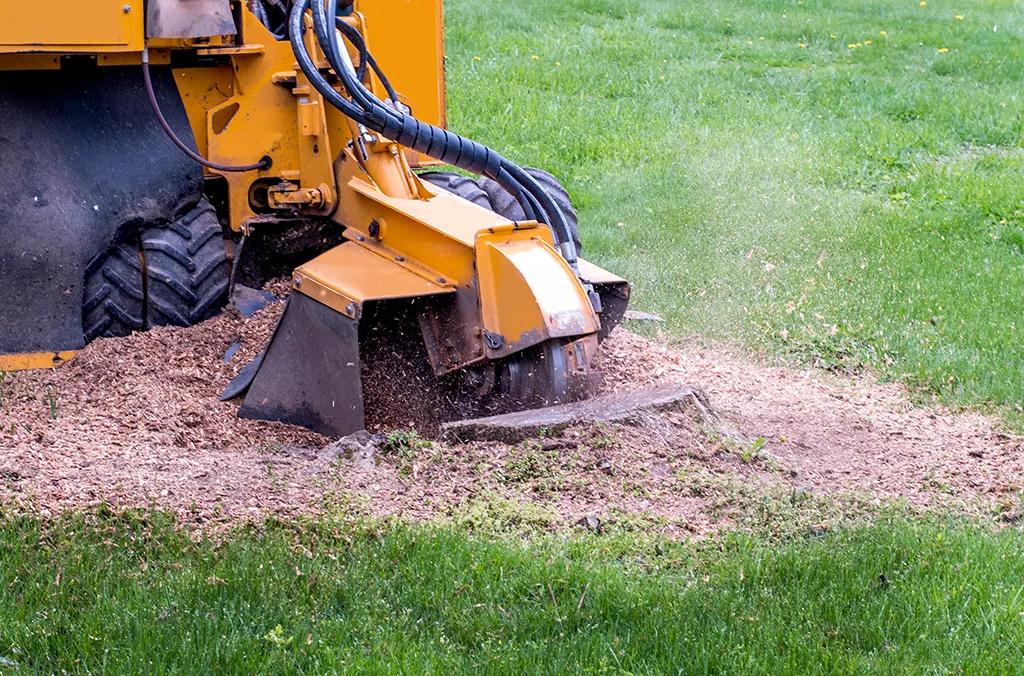
- Roots and stumps
- Hauled to the right site
After tree work
- Tops and offcuts
- Sawdust and rakings
- Chips left as mulch on request
- A swept surface at the end
What a pile is made of
What the cleanup includes
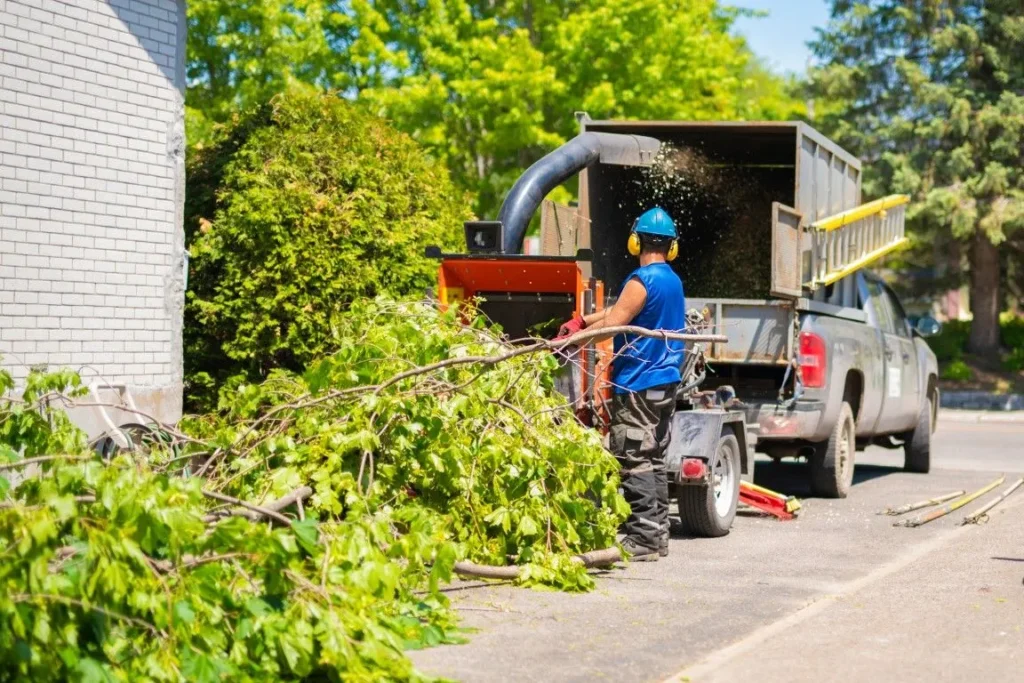
Tree debris
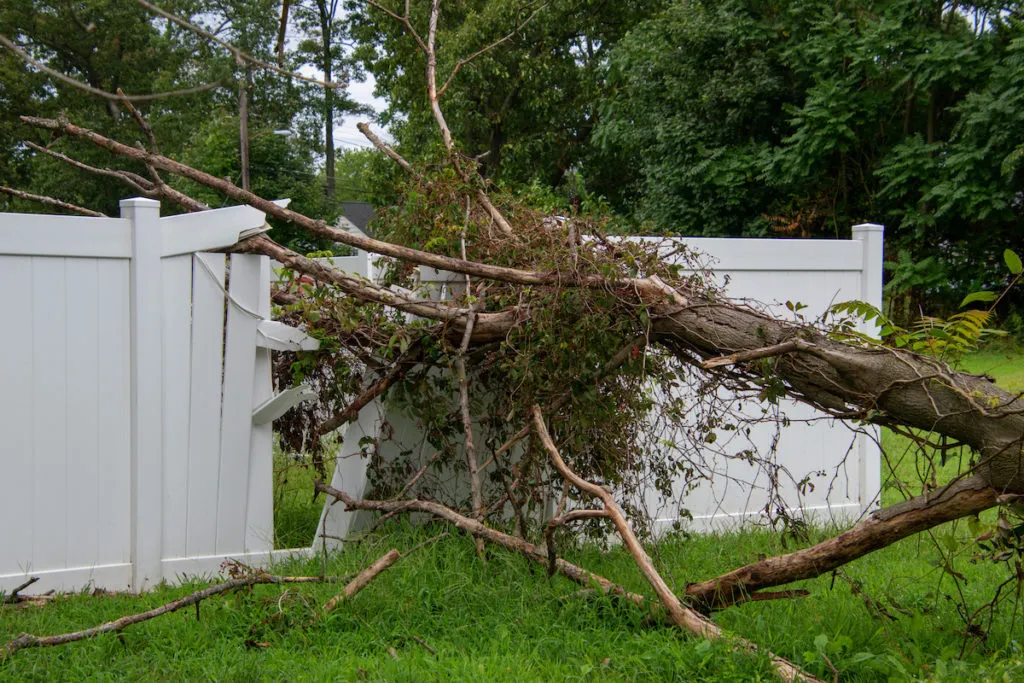
Branches, logs and brush left after tree work are gathered and removed.
Storm debris
Fallen limbs and scattered wood after high wind are separated and hauled.
Yard debris
Leaves, brush piles and leftover wood from yard work are cleared.
Property cleanup
Debris around driveways, fences and outdoor areas is cleared so the space is usable again.
Why it matters that the pile goes now, not next month
A brush pile is a habitat. In South Carolina’s climate it is a good one: damp, shaded, and full of the insects that carpenter ants and termites feed on. The pile itself does not usually attract termites into a house, but a pile against a foundation keeps the wall wet, and wet wood is the condition that matters.
The second problem with waiting is storm water. Limbs and leaves dam a downspout or a swale, water stands, and the next heavy rain finds the lowest point, which is often a crawl space vent. That is a repair that starts with a pile somebody meant to deal with.
The third is the one that shows up in a county truck. Richland County’s curbside programme takes sticks and small limbs up to four feet long and four inches in diameter, roughly two loose roll carts or six 30-gallon bags a week, and anything beyond that is meant to go to a drop-off centre. A tree’s worth of debris is many times that limit. Stacking it at the curb does not make it disappear; it makes it a complaint.
And then there is the storm record. The National Weather Service recorded gusts of 60 to 70 mph in Richland County during Hurricane Helene in September 2024, with many trees and power lines down, some roads closed, sections of the county without power, a few structures damaged by falling trees, 18 homes destroyed and 232 others damaged. A property that cleared its debris after Helene has less to move when the next system arrives, and the next system does not wait for a convenient weekend.
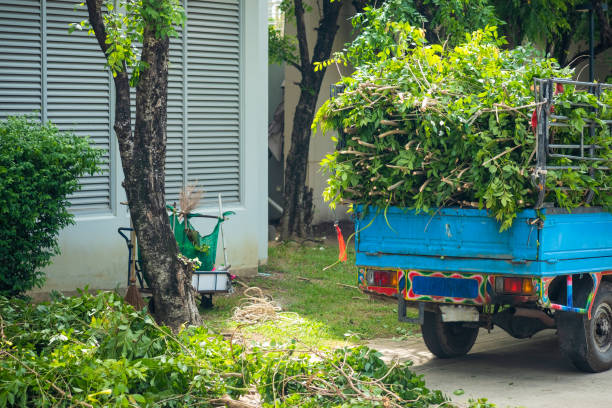
What a pile does to a property while it sits
- Access: limbs across a driveway stop every other job on the property.
- Drainage: debris in a swale holds water against a foundation.
- Damp: a pile against a wall keeps the siding wet long after the rain.
- Insects: damp wood is the condition that carpenter ants look for.
- Records: photographs before the cleanup are what an insurer asks for later.
What backs the work, and what we will not claim
Fallen Tree Removal Columbia works from 1205 Mason Rd and hauls debris across Columbia and the towns around it. We are not going to tell you the crew holds a credential or a registration number we cannot show you, and we are not going to give a figure over the phone for a pile nobody has seen. What we will do is look at the pile, separate what can be chipped from what has to be hauled, and put the scope in writing before the truck is loaded.
What Richland County will and will not take
The county’s curbside rules are specific: sticks and small limbs no longer than four feet and no thicker than four inches, about two roll carts or six 30-gallon bags a week, with larger volumes going to a drop-off centre. Trunk sections, root balls and construction material do not fit that description. Knowing the rule before the pile is built is what keeps a property from being cited, and it is also what decides whether a chipper comes to the property or a truck does. A pile that is too big for the cart and too small for a roll-off is the commonest version of the problem, and it is why the volume is measured before anything is scheduled. The drop-off centres exist for exactly this gap, and the load that goes there is the one the truck would otherwise have carried twice.
Why chipping on site changes the number of loads
A chipper turns branches into material that fits in a fraction of the space, which can cut a job from several loads to one. It also produces mulch that can stay on site if the owner wants it. The limit is access: a chipper needs a route in and a place to throw the chips, and a pile behind a fence or at the back of a narrow lot may have to be carried out by hand before anything is chipped. On a corner lot in West Columbia with a side gate, the chipper stays on the driveway and the brush comes to it, which is faster and leaves the lawn alone. Chips from a cleanup can also be spread under shrubs on site, which saves a load and keeps the mulch out of a landfill.
What storm debris does to a drainage path
Limbs and leaves move in water. A pile at the top of a slope ends up in the swale at the bottom after one heavy rain, and the swale is usually where the property drains. Blocked drainage shows up as standing water against a foundation, a soggy patch that never dries, or a crawl space that smells of damp a week after the storm. Clearing the drainage path is part of a storm cleanup even when the pile is not in the way, and it is the part a homeowner is least likely to notice until the water has already found the low spot. The fix is usually an hour with a rake and a look at where the water is meant to go, done before the next system arrives rather than after, and it takes the least work of anything in a storm cleanup.
What cannot go in the same load
Soil, rock, fencing, treated lumber, paint, tires and anything from a demolition are not brush, and mixing them into a green-waste load is how a hauler ends up with a rejected trailer. On properties where a fence came down with the tree, the two materials leave separately. That is a small piece of planning that saves a wasted trip, and it matters most on a job where the tree took a fence panel with it and the owner assumed the whole pile was one load. Sorting at the pile is faster than sorting at the transfer station, where the load has already been paid for by volume. It also keeps a fence panel out of a green-waste trailer, which is the kind of mistake that turns a half-day into two.
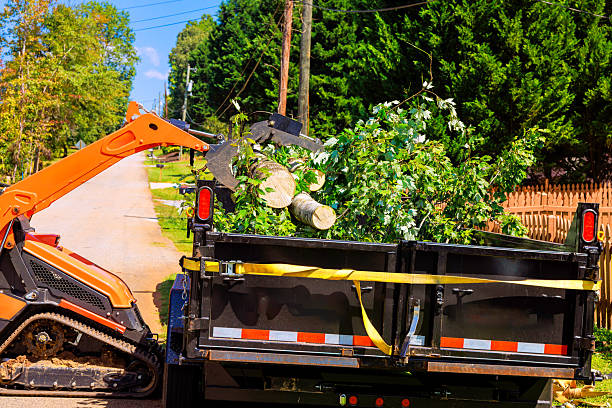
What a cleanup is done with
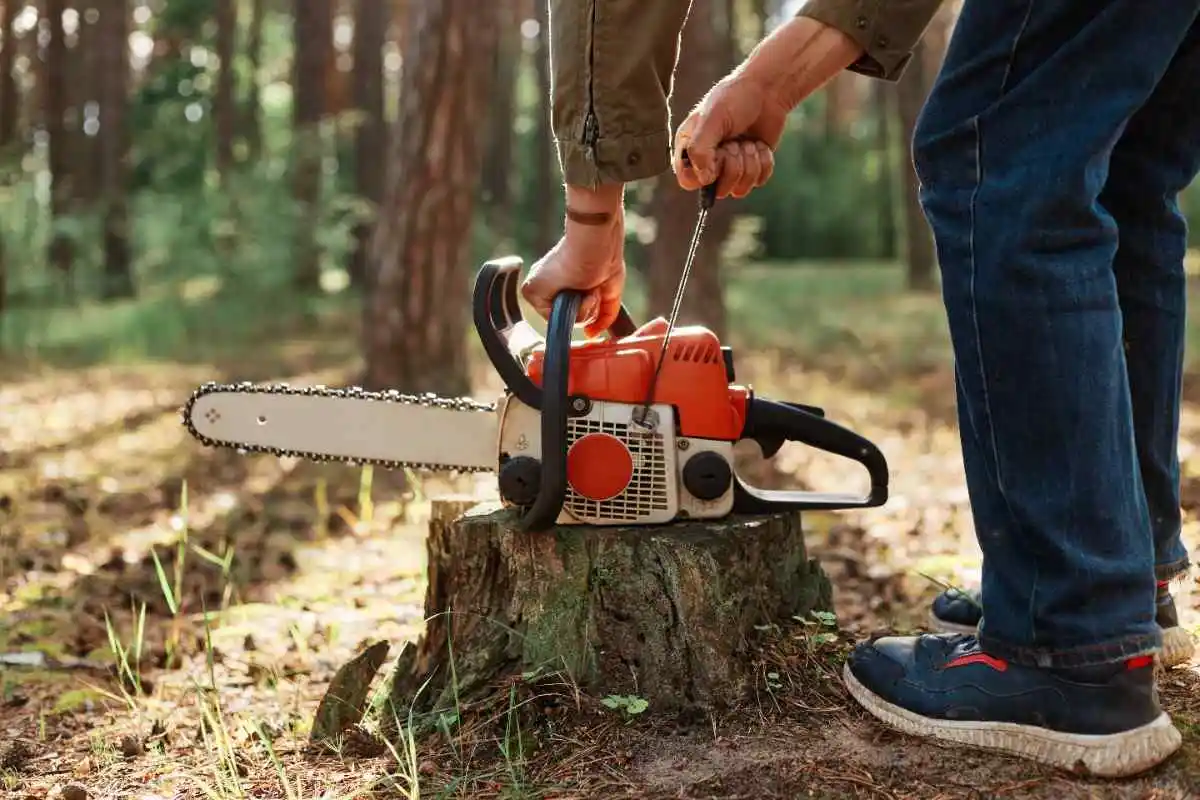
Chainsaws
Sections trunk wood to a size that can be handled and loaded.
Chipper
Turns brush into chips, which can cut the number of loads.
Trailer and truck
Moves the material that cannot be chipped, including trunk sections and root balls.
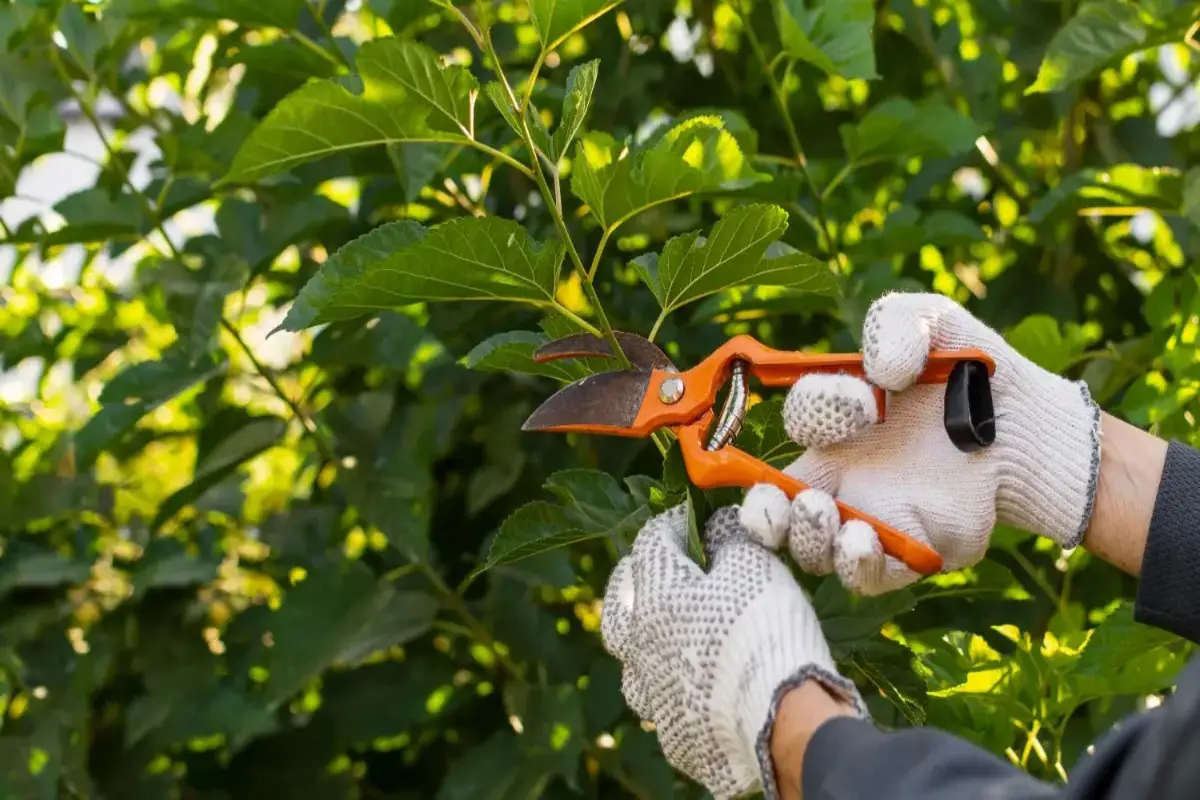
Rakes and hand tools
Clear the last of it from gravel, beds and the edges of a lawn.
Personal protective equipment
Eye, hand and hearing protection, worn for the whole job.
The scenario that gets missed: the neighbour's tree
The tree was next door. The limbs are on this side of the fence. The neighbour says the tree was healthy, and the county will not take a trunk section, and the pile is now against the side of a garage that was repainted last summer. That is the call that arrives a month after the storm, when the urgency has gone but the problem has not.
The answer starts with what the pile is made of. Small limbs and brush can be chipped and hauled in a normal cleanup. Trunk sections need a different truck and a different hand. If a structure is involved, photographs taken before anything moves are what an insurer will ask for, and South Carolina Farm Bureau’s guidance is that damage caused by trees falling on covered property is typically covered, with debris removal usually covered up to a specified limit that depends on the policy.
Then the pile is separated and the loads are planned: brush first, because it is the volume; trunk wood second, because it is the weight; and anything that is not green waste last, because it needs a different destination. The property ends the day with a swept surface and a written scope that says what left and where it went.
The same sequence works for a landlord between tenants. A vacant unit with a back yard full of limbs does not rent, and a cleanup that happens between move-out and the photographer is worth more than one that happens after the first complaint. Doing it in one pass, with the brush chipped and the wood hauled, is what makes the turnaround fit the schedule. The photograph goes up on a Tuesday instead of waiting for a Saturday that never quite arrives.
There is one more version of this call that comes from a property manager with several sites. One address has a pile and the others have a limb or two each, and the temptation is to send a truck to each one separately. Grouping them into a route, with the brush from all of them chipped in one stop and the wood collected in another, is how a portfolio gets cleared without a truck making the same drive four times.
Photograph first
The pile, the fence and the structure, before anything moves.
Separate
Brush, wood and non-green material, because they go to different places.
Load once
Chipped, hauled and raked in one pass rather than over three weekends.
Clear the drainage
Swales and gutters cleared so the next rain runs where it should.
Walk it
A final pass with a rake and a look at the edges.
Next step for a pile on your property
If a pile has been sitting since the last storm, the material is still there and the drainage is still blocked. Tell us the address and what the pile is made of, and we will plan the loads.
Where we clear debris around Columbia
Debris removal runs across Columbia and the towns within about ten miles: Lexington, West Columbia, Cayce, Springdale, Forest Acres, Arcadia Lakes, Irmo, Blythewood, Elgin, Hopkins, Garners Ferry, Eastover, Gaston, Gilbert and Little Mountain.
- Lexington
- West Columbia
- Cayce
- Forest Acres
- Irmo
- Blythewood
Properties across the Midlands carry large shade trees and older growth, and the debris after a storm is proportional to the canopy. Give the address and we will confirm it is inside the service area.
Debris Removal FAQs
What kinds of debris do you take away?
Branches, limbs, brush, trunk sections, root balls, leaves, and the yard waste that collects around a property. Fencing, treated lumber, soil, rock, paint and demolition material are separated and handled differently, because they cannot go in a green-waste load.
Do you remove storm debris after a hurricane or a heavy storm?
Yes. Storm work is separate from routine cleanup only in scale: the material is the same, but there is more of it and it is often mixed with damaged fencing or roof material. The pile is separated first, then chipped or hauled in planned loads.
Will the county take the pile at the curb instead?
Only up to its limits. Richland County’s curbside programme takes sticks and small limbs up to four feet long and four inches in diameter, about two roll carts or six 30-gallon bags a week. A tree’s worth of debris is far beyond that, and the balance belongs at a drop-off centre or on a truck.
How long does a cleanup take?
A single tree’s debris on an accessible lot is usually a day. A property with several trees down, a fence involved, or a pile that has to be carried out by hand takes longer, and the scope says which one it is before the work starts.
Can a pile left too long damage the yard or the house?
It can. A pile against a foundation keeps the wall wet, limbs in a swale block drainage, and a brush pile holds the damp conditions that insects like. None of that is dramatic on the day, and all of it shows up in the season after.
What happens to the chips and the wood?
Chips can stay on site as mulch if the owner wants them, or leave with the crew. Trunk wood is hauled unless it has been cut and set aside for firewood at the owner’s request. Either way the property ends the day clear rather than tidier.