Emergency Tree Service in Columbia, SC
What a storm call involves
Drop zone first
Lines before limbs
Sections, not luck
What to do in the first hour, before anyone arrives
A limb comes down on a Saturday afternoon, the power goes off on one side of the house, and the tree is still attached at the trunk. That is the moment people search for emergency tree service in Columbia, and it is the moment when the wrong decision is easiest to make: cutting the wrong end, walking under a hanging limb, or assuming the tree is finished moving. The first job is to keep everyone out from under it until someone who does this for a living has looked at it.
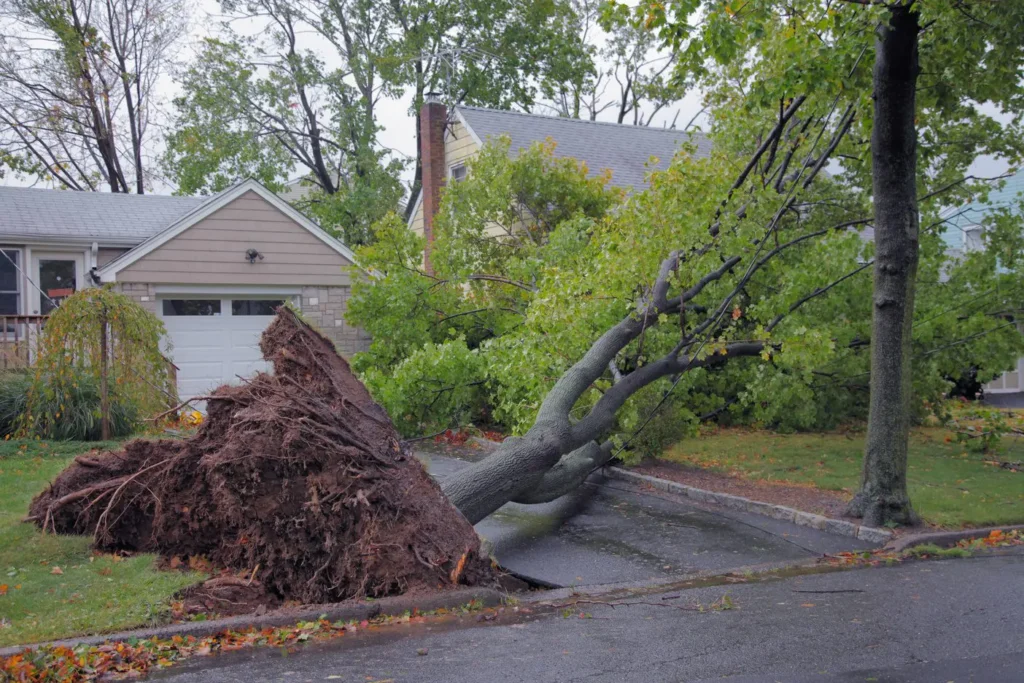
Get people and pets out of the drop zone, which is wider than it looks: a tree is at least as tall as it is long, and a broken limb can swing further than the trunk suggests. Stay off the roof and out of the driveway if the tree is touching a service drop. If a line is down, treat it as live and call 911 and the utility before anyone touches the tree, because no tree crew can make an energized line safe.
Photograph the tree from two angles before anything moves. Insurers ask for the position of the tree relative to the structure, and photos taken after a cut are worth much less. If the tree has hit a building, keep a path to the damaged area clear and do not start removing material to “see how bad it is” – a cut limb can release a load that was resting on the roof.
Then call. We work from 1205 Mason Rd in Columbia and the call is a conversation about the tree, not a sales script. If the situation is dangerous at any hour, keep everyone clear and call the utility or 911 first, then call us when the line is open.
What a storm call covers
- Fallen trees on a roof, driveway, fence or vehicle
- Trees split at the trunk and still standing
- Hanging limbs and widow-makers over a walkway
- Trees leaning after a root plate has lifted
- Debris that has to leave before the driveway is usable
Richland County
1205 Mason Rd, Columbia SC
WHAT WE HANDLE
Storm work and standing hazards
Most storm calls fall into four groups: a tree already down, a tree partly down, a tree that has moved, and a tree that has dropped something onto the ground that has to be cleared. Each one is a different job.
Down and blocking
A tree across a driveway, a fence or a lane is cleared first, because access is what everything else depends on.
Partly down
A tree hung up on another tree or a structure is the least predictable job on the list and the one that needs the most planning.
Moved, not fallen
A lifted root plate or a fresh crack at the base means the tree has begun to fail, whether or not a limb has dropped.
Call (803) 866-3855
Call (803) 866-3855
Local crew
Working from Mason Road in the north of Columbia
HOW A CALL RUNS
Why property owners in Columbia call a crew instead of a chainsaw
The difference between a tree that is lying down and a tree that has not finished falling is tension. A limb pinned under a trunk, a split leader leaning against a fence, a trunk that has lifted its root plate by four inches: each of these stores energy that releases when the wrong cut is made. That is the reason the same tree that looks like an hour of work to a homeowner takes a crew with rigging, wedges and a plan.
The second reason is what is underneath. A water oak over a Columbia ranch house sits above a roof, a service drop and usually a fence. Taking it down in controlled sections means the pieces land where they were planned to land, not where gravity and the wind decide.
The third reason is the paperwork. A removal on private property other than a single-family residential lot needs a City of Columbia tree removal permit, and work inside the drip line of a public right-of-way or city-owned land needs a forestry permit. A grand tree, which the ordinance defines as a hardwood 24 inches or more across, a softwood 30 inches or more, or a small hardwood 10 inches or more, needs city permission before removal and replacement when the city approves it. A crew that does not know that can turn a storm cleanup into a stop-work order.
One tree, one plan
The plan is made for the tree in front of us, not for a template job.
Clear drop zone
The zone is marked and kept clear before the first cut, including the swing radius.
Utility called first
If a service drop is in the work zone, the utility is called before anything is moved.
Debris leaves with us
Wood and brush go in the same pass, so the property is not left with a pile to deal with.
Call (803) 866-3855
Call (803) 866-3855
TREE WORK IN THE MIDLANDS
Why it matters that this is handled before the storm, not after
Columbia does not need a hurricane to lose trees. The National Weather Service recorded maximum wind gusts of 60 to 70 mph in Richland County during Hurricane Helene in September 2024, with many trees and power lines down, some roads closed, sections of the county without power, a few structures damaged by falling trees, 18 homes destroyed and 232 others damaged. Those gusts are within reach of an ordinary summer thunderstorm cell in the Midlands.
The trees that fail in that wind are usually the ones that were already compromised. Clemson’s Home and Garden Information Center notes that drought stress is the most significant factor in Hypoxylon canker, a stress-related fungal disease that attacks weakened oaks including water oak and southern red oak. A dry summer followed by a wet fall is the pattern that leaves a stand of oaks hollow at the base while the canopy still looks full.
Storm damage is a judgment call, not a slogan. Clemson’s storm and weather damage guidance is that the extent and type of damage determines whether a tree will live. A tree with one broken scaffold limb and an intact leader can often be pruned and kept. A tree with a split trunk, a lifted root plate or more than half its crown gone is a removal. The difference decides whether a homeowner loses a tree or keeps one, and it is decided by looking, not by guessing.
Pruning
Dead and weak limbs taken out before they become storm debris.
- Remove dead and weak branches
- Correct a poor structure early
- Reduce the load a wind storm finds
- Keep the crown in proportion
Trimming
Clearance over a roof, a driveway or a service drop.
- Clear overhanging limbs
- Restore clearance over a roof
- Open the canopy for light
- Shape what the storm will load
Stump grinding
Ground below grade so a mower can pass over it.
- Grind the stump below grade
- Reclaim the yard space
- Remove the rot that attracts pests
- Leave a raked surface
Land clearing
Brush, volunteer growth and small trees off a lot line.
- Clear brush and volunteer growth
- Open a lot for a build
- Take out small stems and debris
- Leave the ground walkable
Debris removal
Storm wood and brush hauled rather than stacked.
- Branches and storm wood
- Brush and yard waste
- Chipping where access allows
- A swept surface at the end
Storm response
Trees down on a structure, a fence or a lane.
- Assess the load before cutting
- Take down in controlled sections
- Protect what is underneath
- Clear access first
What happens after you call
The call is short. We ask where the tree is, what it is touching, whether a line is involved and whether anyone is underneath it. From those answers we either talk you through making the situation safer or set a time to look at it in daylight.
The call
Address, what the tree is touching, whether a line is down, and whether anyone is inside the drop zone.
The look
The tree is assessed for load, lean and root plate movement, and the drop zone is set before any equipment is started.
The work
The tree comes down in sections, the debris leaves in the same pass, and the stump is ground below grade.
The call that is not on the list: a tree that has not fallen yet
Fallen Tree Removal Columbia will not promise work it cannot back. What you get is the assessment, the sequence the work will follow and the scope in writing, and what the city requires of the job before anything is cut.
The work itself follows a sequence that does not change with the weather. The tree is assessed for load and lean, the drop zone is set, the utility is called if a line is involved, and the tree comes down in sections that are controlled by rigging rather than by luck. The stump is ground below grade, the debris leaves in the same pass, and the ground is raked where the wood landed.
What a City of Columbia tree removal permit covers
The city’s landscape and tree ordinance requires a tree removal permit for removals on private property other than single-family residential lots, and the permit itself carries no fee. Work inside the drip line of a public right-of-way or city-owned property needs a forestry permit, which is a different application. Grand trees need city permission before removal, and replacement is required when the city approves one. For a storm-damaged tree the permit question is usually the last thing a homeowner thinks about and the first thing that stops a job, so it is checked before the crew is scheduled, and the replacement obligation is explained before the stump is ground. A homeowner who learns about replacement after the tree is gone has lost the chance to plan where the new tree goes.
Why storm-damaged trees keep failing after the storm
A tree that survives the wind can still fail a month later. A lifted root plate leaves the root system partly severed, and the tree leans a little further with every wet week. A split union that has not separated holds water and starts to decay from the inside. Clemson’s guidance is that damage type decides the outcome, and the follow-up inspection is what catches the tree that lost a third of its root support without losing a branch. That is why a storm walk is worth doing twice: once in the week after the wind, and once when the ground has dried enough to show whether the root plate moved. Neither visit takes long, and together they are the difference between a cleanup and a repair.
The insurance question, answered honestly
South Carolina Farm Bureau’s guidance for homeowners is that damage caused by trees falling on covered property is typically covered by the homeowners policy, and that debris removal is usually covered up to a specified limit that depends on the policy. That limit is the part people miss: the tree on the roof may be covered while the five truckloads of wood are only partly covered. Read the policy or call the agent before assuming the cleanup is included, and keep the photographs from before the first cut. An adjuster who can see the tree in place reads the claim differently from one who is shown a bare driveway and a story about what used to be there. Keep the scope we write as well, because it records what was found and what was done on the day.
What changes when the tree is on a structure
A tree resting on a roof is a load path problem. Cutting the trunk first can drop the remaining weight onto the structure, so the removal starts at the top and works back toward what is supporting it, with the roof protected and the pieces lowered rather than dropped. It also changes the order of the calls: the insurer, then the tree, then whoever repairs the roof, because the adjuster needs to see the tree in place before it is gone. On a house with a damaged service mast, the utility comes before all three, because the drop has to be made safe before anyone stands under it with a saw. Sorting that order on the phone saves a wasted visit, and it is the reason the first question on the call is always about the line.
Storm situations
Tree on a structure
Tree across access
Hanging limb
Situations we handle
Fallen tree removal
A tree down across a yard, a driveway or a structure is cut into controlled sections and removed.
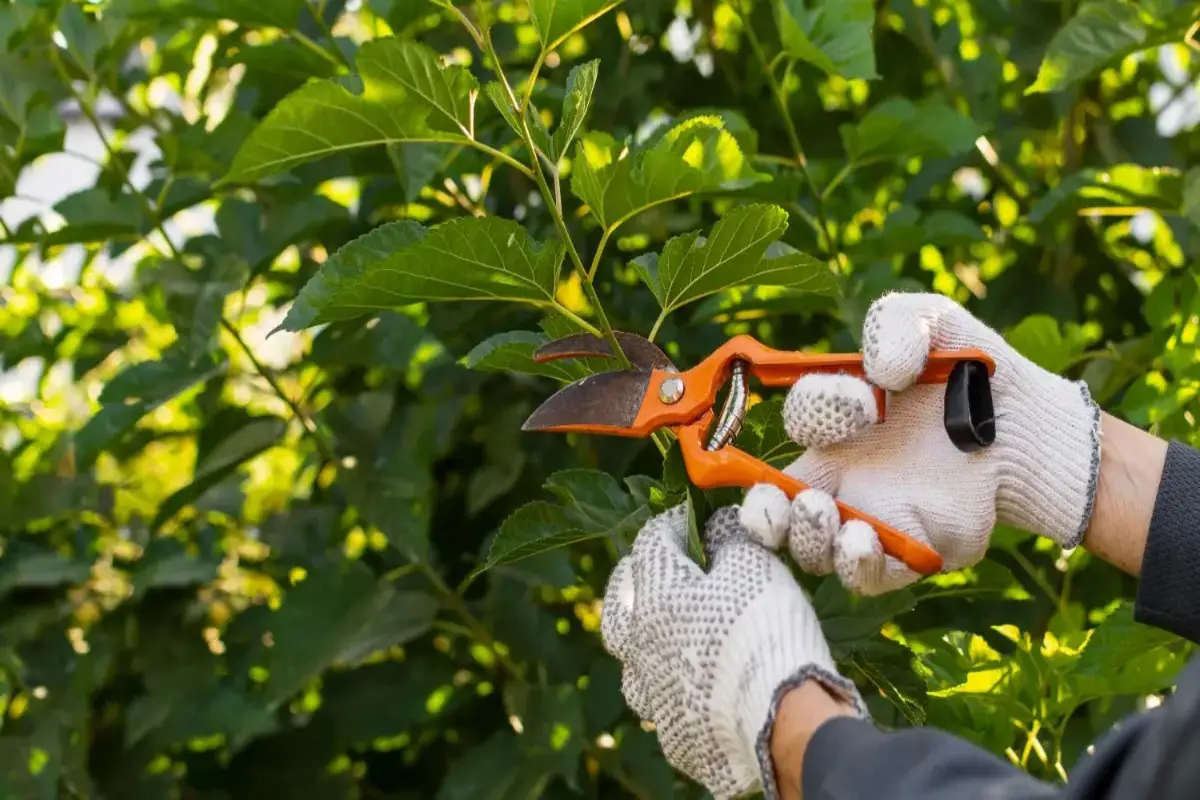
Storm-damaged trees
Split trunks and broken scaffold limbs are assessed before anything is cut.
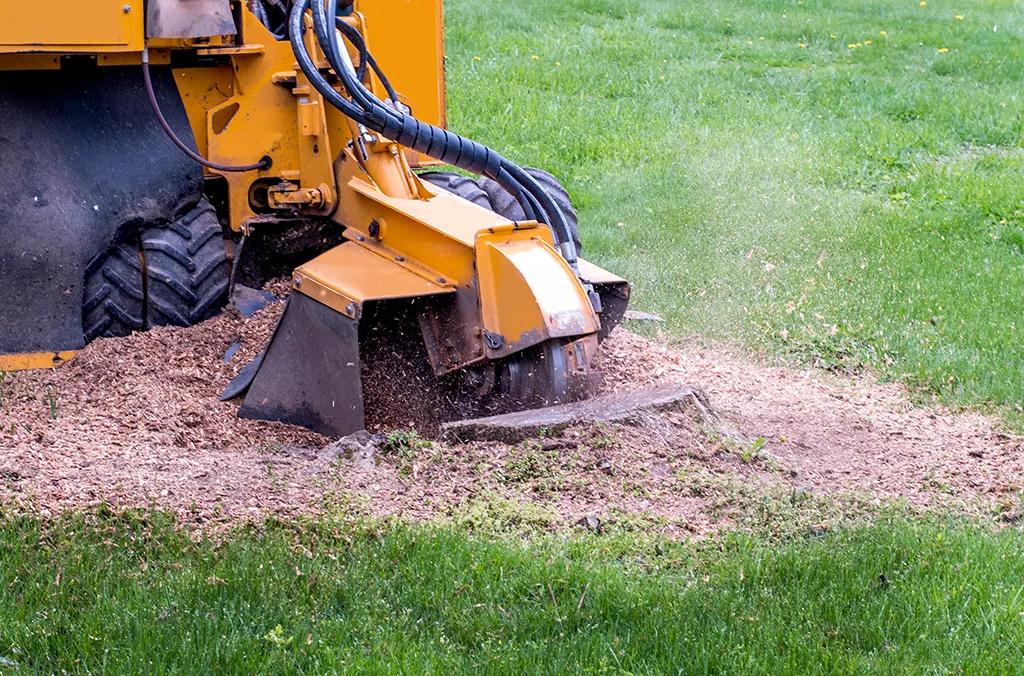
Leaning trees
A new lean is treated as a finding until the root plate and base are checked.
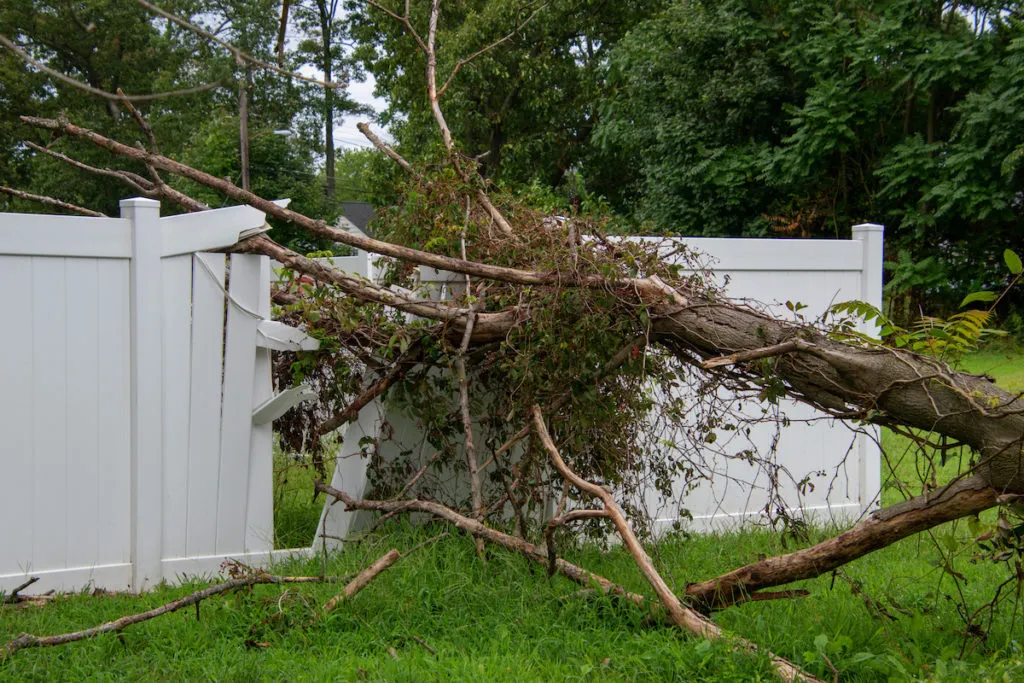
Broken limbs
Hanging limbs come down before they fall on their own schedule.
The scenario nobody calls in: a tree that has not fallen yet
The hardest job to schedule is the one nobody reports. A pine on a Blythewood lot has leaned two degrees since the spring, the soil at the base is proud on one side, and the tree is thirty feet from a bedroom window. Nothing has happened, so nothing gets called in, and then a 50 mph gust finishes a process that started months earlier.
We treat a new lean as a finding until it is proven otherwise. The assessment looks for a lifted root plate, fresh cracks at the base, soil heaving on the tension side, and a canopy that has shifted relative to the trunk. If the root plate has moved, the tree is a removal and it is scheduled in daylight with the driveway closed, not at night with a chainsaw and a flashlight. If the lean is old and the base is sound, the tree may be reduced instead, which keeps the shade and takes the weight off the side that is loaded.
There is a second version of this call that comes from a neighbour’s tree. Under South Carolina practice as described by the same insurer guidance, a healthy tree that falls from a neighbour’s yard is usually the responsibility of the owner of the property it lands on, while negligence changes that. The practical answer is the same either way: document the condition of the tree before it falls, in writing, with photographs, and send it to the neighbour and the insurer. A record made in March is worth a great deal more than an argument in September.
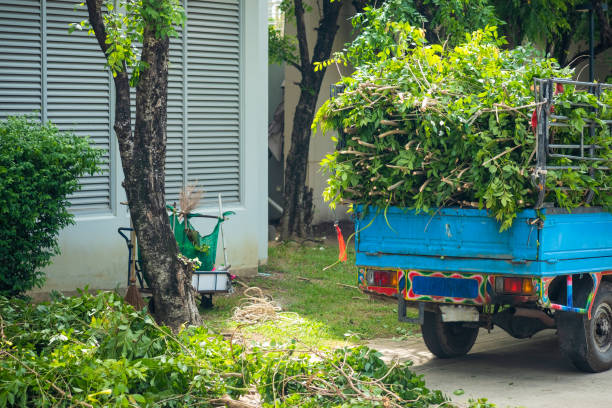
What a downed tree changes on a property
- Access: a tree across a driveway stops every other job on the property until it is cleared.
- Safety: hanging limbs fall without warning, and the drop zone is wider than the tree is tall.
- Water: a limb through a roof lets rain in from the first storm after the damage.
- Further failure: a split union or a lifted root plate continues to move with every wet week.
- Record: photographs and a written scope are what an insurer asks for later.
What the rest of the property still needs
A storm rarely damages one tree and leaves the rest alone. The same wind that brought a limb down loads every other canopy on the property, and the trees that were already carrying dead wood are the next to go. Once the urgent tree is cleared, the rest of the work is a walk and a list: what is dead, what is leaning, what is over a line, and what can wait.
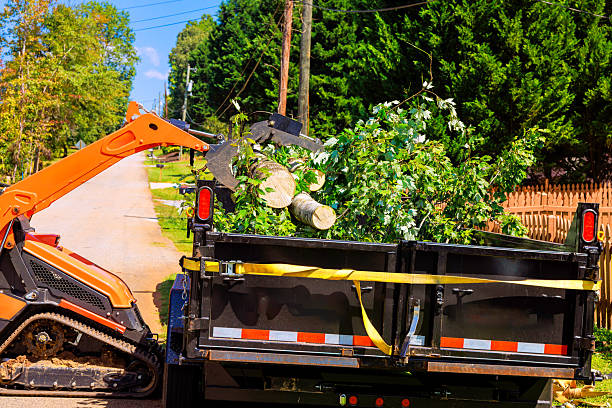
Equipment on a storm call
Chainsaws
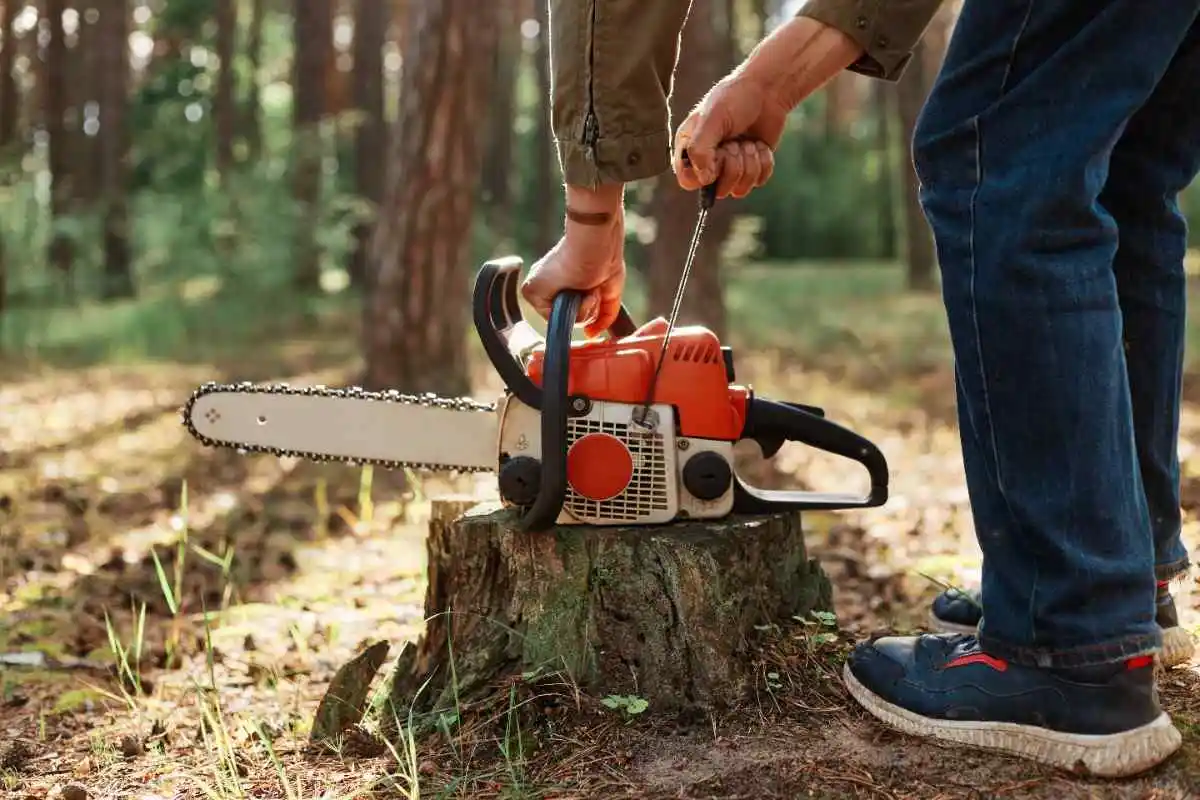
Controlled cutting of trunks and limbs, sized to the bar rather than to the tree.
Rigging rope and blocks
Lowers sections instead of dropping them, which is what protects a roof or a fence underneath.
Chipper
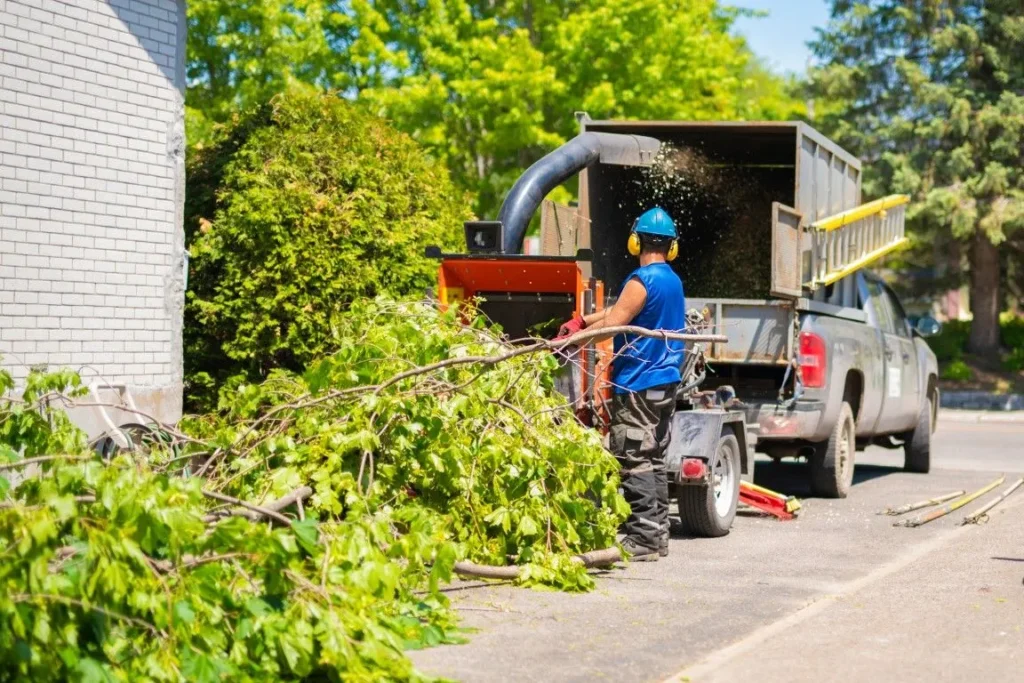
Processes brush on site where access allows, which cuts the number of loads that leave.
Stump grinder
Grinds the stump below grade so the ground can be planted or mown over.
Personal protective equipment
Helmets, chaps, eye and hearing protection, worn for the whole job rather than for the photograph.
The order of work on site
Assess the load
Which way the tree wants to go, and what is holding it up.
Set the drop zone
Marked and kept clear, including the swing radius of every section.
Call the utility
Before anything moves, if a service drop is inside the work zone.
Take it down in sections
Rigged from the top, lowered rather than dropped.
Clear and check
Debris leaves, the stump is ground, and the ground is walked once more before we go.
Before the next storm
A tree that has already moved will move again. If a limb is hanging, a trunk has split or the base has lifted, the next 50 mph gust is the test, and there is less work in dealing with it in daylight than after it lands.
Where we work
Storm work runs across Columbia and the towns within about ten miles: Lexington, West Columbia, Cayce, Springdale, Forest Acres, Arcadia Lakes, Irmo, Blythewood, Elgin, Hopkins, Garners Ferry, Eastover, Gaston, Gilbert and Little Mountain.
- Lexington
- West Columbia
- Cayce
- Forest Acres
- Irmo
- Blythewood
Properties across the Midlands carry large shade trees and older growth that becomes unstable in a wind storm. Give the address and we will confirm it is inside the service area.
Emergency Tree Service FAQs
Is a tree on my house an emergency if nobody is hurt?
Treat it as one until the tree is assessed. The load on the roof can shift, and the parts still attached are under tension. Keep people out of the rooms underneath, keep the area outside clear, and call during business hours on (803) 866-3855. If a utility line is involved, call 911 and the utility first.
Can I cut a fallen tree myself?
Small limbs on the ground are one thing. A trunk under tension, a limb pinned beneath it, or any part of a tree still attached to a standing trunk is a different job, and the kickback from a bound saw is the injury that shows up most often. If the tree is touching a structure, a fence or a line, leave it and get it looked at.
Do I need a permit to remove a storm-damaged tree in Columbia?
Often yes. The City of Columbia requires a tree removal permit for removals on private property other than single-family residential lots, and a forestry permit for work inside the drip line of a right-of-way or city-owned land. Grand trees need city permission, and replacement is required when the city approves removal.
Will my insurance pay for the tree and the cleanup?
South Carolina Farm Bureau’s guidance is that a tree falling on covered property is typically covered under the homeowners policy, and that debris removal is usually covered up to a specified limit that depends on the policy. Coverage depends on the policy, so confirm it with your insurer and photograph the tree before it is cut.
What happens to the stump and the wood?
The stump is ground below grade as part of the removal, and the wood and brush leave in the same pass. Richland County’s curbside program takes sticks and small limbs up to four feet long and four inches across, about two carts a week, which a full tree does not fit into.
How quickly can a crew get to a tree that is leaning?
A new lean is scheduled as a priority, but the honest answer depends on what is already booked and on the weather. We will tell you on the call what the next available slot looks like, and if the tree is in a dangerous position we will tell you what to do with it in the meantime rather than leave you guessing.
Treat it as one until the tree is assessed. The load on the roof can shift, and the parts still attached are under tension. Keep people out of the rooms underneath, keep the area outside clear, and call during business hours on (803) 866-3855. If a utility line is involved, call 911 and the utility first.
Small limbs on the ground are one thing. A trunk under tension, a limb pinned beneath it, or any part of a tree still attached to a standing trunk is a different job, and the kickback from a bound saw is the injury that shows up most often. If the tree is touching a structure, a fence or a line, leave it and get it looked at.
Often yes. The City of Columbia requires a tree removal permit for removals on private property other than single-family residential lots, and a forestry permit for work inside the drip line of a right-of-way or city-owned land. Grand trees need city permission, and replacement is required when the city approves removal.
South Carolina Farm Bureau’s guidance is that a tree falling on covered property is typically covered under the homeowners policy, and that debris removal is usually covered up to a specified limit that depends on the policy. Coverage depends on the policy, so confirm it with your insurer and photograph the tree before it is cut.
The stump is ground below grade as part of the removal, and the wood and brush leave in the same pass. Richland County’s curbside program takes sticks and small limbs up to four feet long and four inches across, about two carts a week, which a full tree does not fit into.
A new lean is scheduled as a priority, but the honest answer depends on what is already booked and on the weather. We will tell you on the call what the next available slot looks like, and if the tree is in a dangerous position we will tell you what to do with it in the meantime rather than leave you guessing.
Related guide: Fallen Trees, Storm Damage and Your Property in Columbia, SC.