
Professional Tree Removal Services in Garners Ferry, SC
Call us
(803) 866-3855
Hours
Scheduled visits
Booked ahead, not promised at short notice

What the trees in Garners Ferry are doing
Tree Service in Garners Ferry, SC
Garners Ferry is a corridor, not a town, and it does not appear in the Census as a place at all. What exists is a stretch of road with businesses on the frontage, driveways opening onto it every few hundred feet, and neighbourhoods tucked in behind the lots. That arrangement puts trees in an awkward position: they stand between a sign and the traffic that is meant to read it, over an entrance that has to stay open, and along a verge where the ground has been cut and filled for drainage. Tree service Garners Ferry businesses and households ask for is usually about a tree in one of those three places.
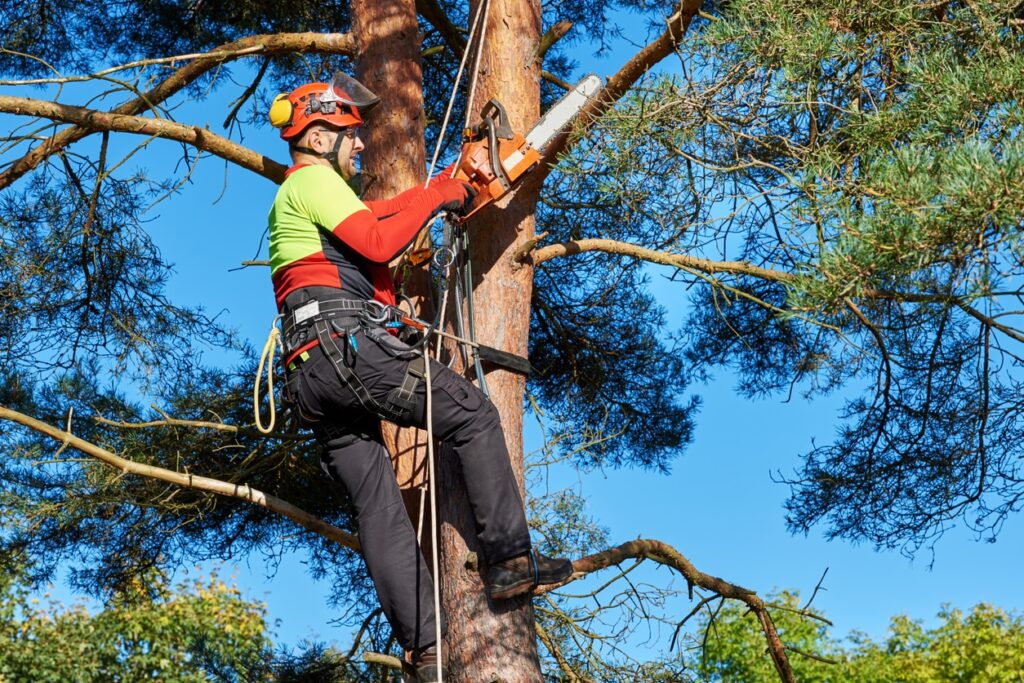
The homes in Garners Ferry and the trees around them
A corridor rather than a town
Because there is no town boundary to draw, the tree cover here follows the road and the parcels behind it rather than a street grid. Frontage lots are narrow and deep, so a single stem near the entrance can be the most conspicuous tree on the property while the larger ones stand unremarked at the back. Work on the frontage has to happen in the gap between the pavement and the building, with traffic passing, and that sets the method: short sections, tied and lowered, with the road edge kept clear throughout. Nothing on a corridor is done in a single drop. The road also brings a complication a town street does not: the verge and the first few feet of ground usually sit in a right-of-way rather than on the lot, so a stem on the boundary strip is a conversation before it is a job.
235.9 feet, and where the water goes
At 235.9 feet the corridor sits on ground that has been graded for drainage along most of its length, which means the soil a tree stands in is often fill rather than the original profile. Fill drains differently, holds differently, and roots that developed in it are shallower and less widespread than the same species would build in undisturbed ground. After a wet spell, a stem on filled ground is working with less anchorage than its size suggests. On the frontage strips, where the ground was cut and reshaped when the lot was developed, that is the first thing worth checking. Water also has to go somewhere on a graded corridor, and the low point of a car park is often the spot where a tree was planted years later, in ground that stays soft for days after rain.
Frontage trees and the entrances they sit over
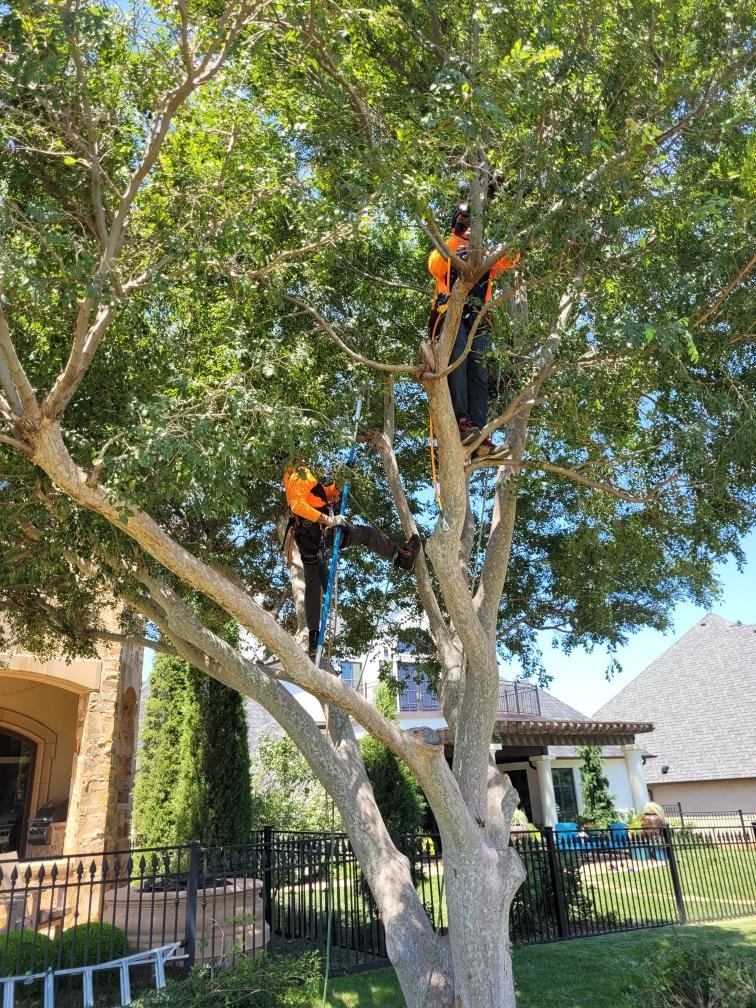
A tree over an entrance is a different problem from a tree over a garden. The crown has to clear a vehicle, the limb that drops has to miss the drive, and the trunk has to be far enough from the sign that the wording stays legible from the road. Over time a crown closes that gap; the clearance that was designed at planting disappears, and the first limb to come down lands where the traffic is. Pruning restores that clearance, and on a frontage it is the work that keeps a canopy and a business entrance in the same place without one paying for the other. The tree that needs it is usually the one nobody looks at, because it has been there long enough to be part of the scenery.
What the county’s figures say, and what they cannot
There is no town-level Census figure for Garners Ferry, so the only housing numbers available are the county’s, and they describe Richland County rather than this corridor. Read that way, the county’s median build year is 1989 and 39.0% of its housing was standing before 1980, out of a population of 418,725. Those figures cannot say anything specific about the houses behind this road. What they can do is set an expectation: a stock with a median near the end of the eighties means trees and buildings that have been together for three decades, which is exactly the age at which clearance problems become structural ones. It is worth saying plainly that no published figure describes the houses on this road, rather than borrowing the county’s and calling it local. The honest position is that the county numbers set the pattern and the individual address decides the job.
Talk to us about a tree in Garners Ferry
Tell us the address, what the tree is doing and what has to stay open while the work happens. We will set a time to walk the property and put the scope in writing before anything is scheduled.
Tree work in Garners Ferry
Tree services in Garners Ferry
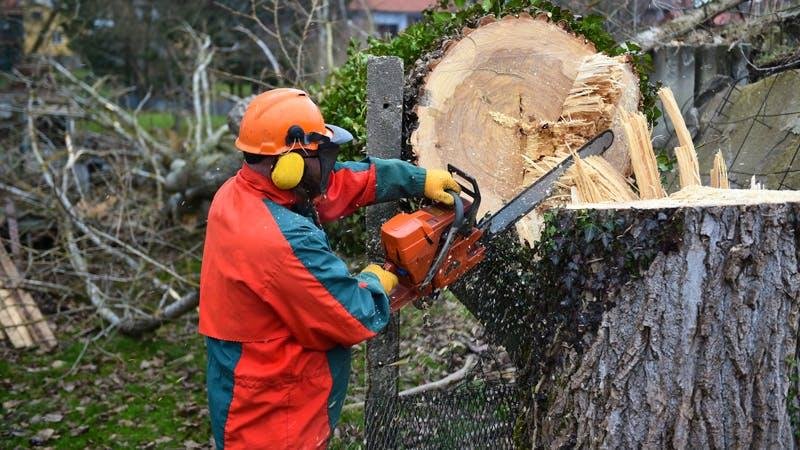
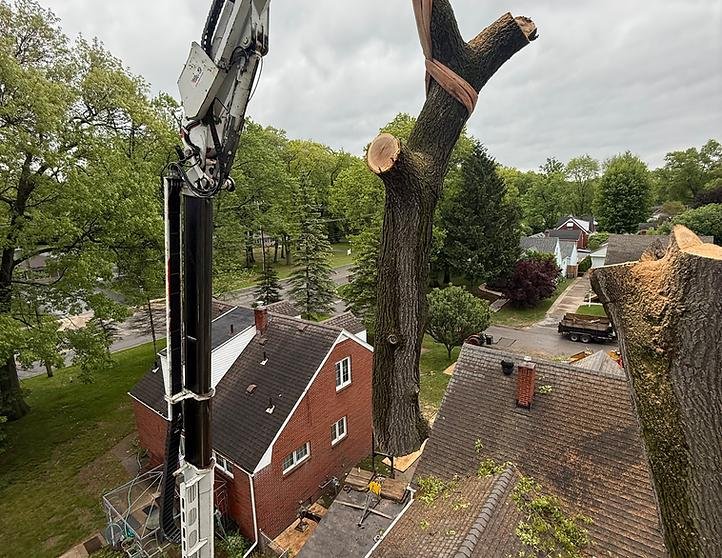
Frontage work sets the pattern. Tree removal on a corridor is usually a climb, since the drop zone is a pavement, a car park or an entrance, and the stem is taken down in sections that are tied and lowered rather than felled. Where a lot runs deep and the tree stands behind the building, it can come down whole and be cut up where it lies, which is quicker and quieter. On a frontage the working window also matters: an entrance that has to take deliveries in the morning is better worked in the afternoon, and a car park is easier to clear for an hour than for a day.
Grinding is booked with the removal where the ground allows, because a stump in a frontage strip is a trip hazard in a public-facing space and a mowing obstacle for whoever maintains it. Tree pruning does the clearance work that keeps a corridor usable: limbs lifted clear of vehicle height, deadwood out of a crown over an entrance, and weight taken off a side that leans toward parked cars. Timing matters as much as the cut, since a limb taken back hard in spring pushes regrowth that has to be dealt with again before the season is out.
Land clearing covers a lot being redeveloped, where the trees to keep are usually decided by the site plan rather than by the canopy, and the ones worth arguing for are the big stems at the back that no plan will replace in a lifetime. Debris removal clears the sections and the old piles that gather at the back of a commercial yard. For a trunk already down over an entrance or a delivery route, emergency tree service is the call, and commercial tree services is the main line of work along this road, where a blocked entrance is a lost trading day rather than an inconvenience.
We work Garners Ferry from Columbia and cover the addresses around it: Hopkins to the south-east, Eastover out beyond it, and the city itself to the north. If an entrance has to stay open, say so when you call, since the sequence of the work changes when a drive cannot be shut.
How a visit runs
- Walk the property and note what is at risk
- Check the base, the crown and the access
- Confirm what the city or county requires
- Put the scope in writing before the work
- Clear the debris and rake at the end
What we will not do
- We will not promise a response time we cannot keep
- We will not claim a credential we cannot show
- We will not give a figure for a tree nobody has seen
- We will not stack debris at the curb and call it cleared
- We will not cut a tree that can be pruned and kept
Why property owners in Garners Ferry work with us
A corridor has two kinds of caller and one shared problem: a tree that has grown into the space between the road and the building. On a frontage that means a crown over an entrance and a sign that no longer reads from a moving car; at the back it means a limb over a shed or a parked trailer. Fallen Tree Removal Columbia works both, and the approach does not change with the size of the parcel: read the tree, agree which side the weight comes off, keep the working area clear of traffic and customers, and leave the ground so that nobody has to close anything afterwards. On a road like this, the tidy finish is not decoration; it is what allows the entrance to reopen in the same visit, with the sign readable again and the roof edge clear of sawdust.
Why it matters now in Garners Ferry
Timing on this corridor is set by two things: the age of the county’s housing and the storm record that goes with it.
The county’s median build year is 1989, and 39.0% of its housing predates 1980, so a large share of the buildings along and behind this road were finished before the trees around them reached their current size. That gap is now closed. A limb that cleared an eave in 1990 has been resting against it for years, and the clearance designed into a frontage at the same date has gone. The county’s Helene entry makes the consequence plain: winds reaching 60 to 70 mph, timber and wires brought down, road closures in places, outages across sections of the county, trees onto buildings, flooding in low ground, eighteen homes destroyed and 232 damaged. On a corridor those numbers translate differently from anywhere else. A stem across a road does not just block a garden; it stops the traffic that every business on the frontage depends on, and it takes the utility line with it more often than not, because the two share the same strip of ground. That strip is where the verge, the sign and the service all compete for the same few feet, which is why a single stem there is worth more attention than a dozen at the back of the lot. A frontage stem and a garden stem get the same look; the only difference is what sits underneath.
Tree work around Garners Ferry
Frequently
Asked
Questions
Is there a Census figure for Garners Ferry itself?
No. This is a corridor rather than a Census place, so no town-level figure exists for it. The numbers that are published describe Richland County: a median build year of 1989, 39.0% of housing built before 1980, and a population of 418,725. Those are county figures and they say nothing specific about any single address along this road.
What did Helene do to the county?
The National Weather Service entry records stems and wires down, closures on some roads, sections left dark, buildings struck by falling trees, flooding, winds of 60 to 70 mph, and eighteen homes destroyed with 232 more damaged. On a corridor, the road-closure entries are the ones that hurt most.
Why does the frontage need more attention than a back garden?
Because the tree is in a working space. A crown over an entrance shades a car park in summer and drops limbs onto it in a storm, and a trunk close to a sign hides the thing the sign exists for. A back garden tree can be left with a defect for years; a frontage tree with the same defect sits over traffic every day. The same applies to a tree over a delivery route at the side of a building, which nobody notices until a lorry takes a limb off it.
What does the 235.9 foot elevation tell you?
That the ground has been shaped. Much of the corridor is graded for drainage, so a tree may be standing in fill rather than original soil, with roots that spread less than the species would usually manage. Fill also drains differently after rain, and the anchorage a tree has in it is worth knowing before a wind.
Are the trees behind the road older than the buildings?
Often, and the county figures give the reason to expect it. With a median build year of 1989 across the county, a lot developed in that era kept whatever stood on it, and those stems have since had three decades to close the gaps the design assumed. The buildings have not moved; the trees have.
What can be put out for collection after a removal?
Richland County collects branches and small limbs no longer than four feet and no thicker than four inches, in the region of two carts’ worth or six thirty-gallon bags a week, with larger loads going to a drop-off centre. A frontage removal produces more than that in an hour, so the material leaves with the crew and the site is left clear for the next trading day. Piling it at the kerb overnight is not an option on a corridor with traffic passing.
No. This is a corridor rather than a Census place, so no town-level figure exists for it. The numbers that are published describe Richland County: a median build year of 1989, 39.0% of housing built before 1980, and a population of 418,725. Those are county figures and they say nothing specific about any single address along this road.
The National Weather Service entry records stems and wires down, closures on some roads, sections left dark, buildings struck by falling trees, flooding, winds of 60 to 70 mph, and eighteen homes destroyed with 232 more damaged. On a corridor, the road-closure entries are the ones that hurt most.
Because the tree is in a working space. A crown over an entrance shades a car park in summer and drops limbs onto it in a storm, and a trunk close to a sign hides the thing the sign exists for. A back garden tree can be left with a defect for years; a frontage tree with the same defect sits over traffic every day. The same applies to a tree over a delivery route at the side of a building, which nobody notices until a lorry takes a limb off it.
That the ground has been shaped. Much of the corridor is graded for drainage, so a tree may be standing in fill rather than original soil, with roots that spread less than the species would usually manage. Fill also drains differently after rain, and the anchorage a tree has in it is worth knowing before a wind.
Often, and the county figures give the reason to expect it. With a median build year of 1989 across the county, a lot developed in that era kept whatever stood on it, and those stems have since had three decades to close the gaps the design assumed. The buildings have not moved; the trees have.
Richland County collects branches and small limbs no longer than four feet and no thicker than four inches, in the region of two carts’ worth or six thirty-gallon bags a week, with larger loads going to a drop-off centre. A frontage removal produces more than that in an hour, so the material leaves with the crew and the site is left clear for the next trading day. Piling it at the kerb overnight is not an option on a corridor with traffic passing.