Professional Tree Removal Services in Forest Acres, SC
Call us
(803) 866-3855
Hours
Scheduled visits
Booked ahead, not promised at short notice
What the trees in Forest Acres are doing
Tree Service in Forest Acres, SC
Forest Acres holds 10,491 people in 4.63 square miles, and 76.3% of its housing was standing before 1980. A city built out that early does not have a young canopy. It has an established one with a head start of decades on the houses beneath it, planted for shade and set close to the street, on streets that are narrow. When one of those trees fails it rarely lands in open ground. It lands across a driveway, a footpath or a utility drop, and the first part of the job is always getting past whatever is now sitting in the way.
Homes in Forest Acres and the trees around them
10,491 people on 4.63 square miles
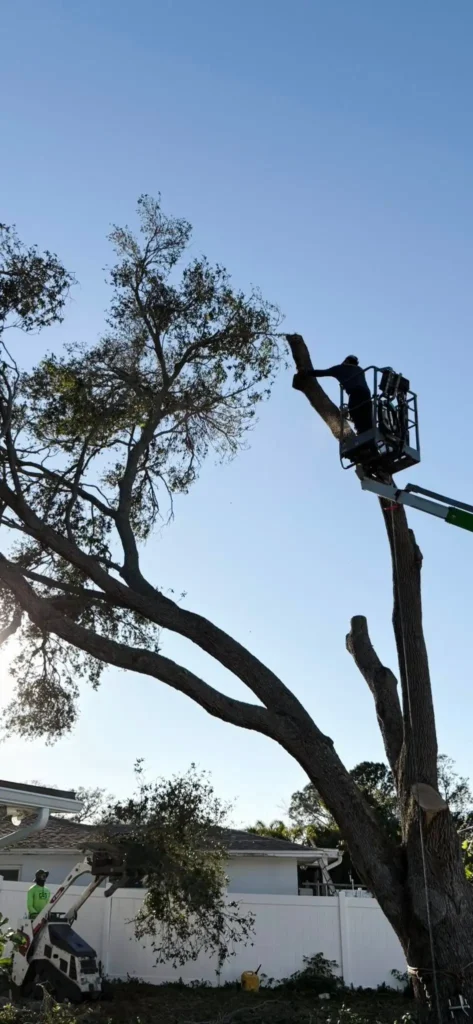
That is a little over 2,200 people per square mile, and the lots reflect it: narrow frontages, houses close together, and a canopy that runs almost continuously along the block. Trees on that kind of street are shared whether or not anyone planned it that way. A limb from one property hangs over the kerb, over a neighbour’s walk, and often over the line where a service drop crosses. The practical consequence is that most work here is done in the gap between two buildings rather than in a yard, with the truck placed where it blocks the least and the pieces lowered into a space barely wider than the crown. Reading that space correctly is most of the planning. A wider lot is usually a corner, and a tree there has two frontages and twice the exposure to whatever passes on either one.
The 63.3% of homes built before 1960
Close to two thirds of the housing here predates 1960, which puts the original plantings in the sixty to seventy year range. A shade tree of that age is not simply an old tree. It is a tree with a record: every cut made by every previous owner, every season of drought, every year the ground beside it was dug for a line. Some of that shows as a swelling around an old wound, some as a seam where two stems grew together without a proper union, some as a hollow that a child could put a hand into. None of those findings decide the job on their own. Together they set the limits on what can be climbed, what can be rigged from, and which pieces can be dropped rather than lowered.
254.5 ft, low ground and the water under it
At 254.5 ft, this is low ground for the Midlands, and low ground behaves differently in a wet winter. Water that would run off a slope sits in the soil here, and a root system in saturated ground holds less than one in dry ground, which is why some of the trees that come down in a storm were standing in mud for a month beforehand. The same water explains why a trunk can look sound in July and feel soft at the base in January. It also explains the moss, the ferns and the darker bark on the north side of a trunk, which are useful clues about how wet a particular corner stays. A removal on ground like that needs a plan for the ruts as much as for the wood.
A 1965 median build year and sixty years of shade
The median house here went up in 1965, so the typical street tree was planted around the time the family moved in and has now had sixty years to grow. That is long enough for a maple to have pushed a limb through a wire zone and for an oak to have lifted a section of walk with its roots. It is also long enough that the tree which was the right size for a 1965 yard is now twice the size of that yard. The result is a canopy that shades the street beautifully and sits closer to the roof edge than anyone intended. Most of the pruning work in Forest Acres is a negotiation with that arithmetic, not a matter of cutting something back because it looks untidy.
Talk to us about a tree in Forest Acres
Tell us the address, what the tree is doing and what has to stay open while the work happens. We will set a time to walk the property and put the scope in writing before anything is scheduled.
Tree work in Forest Acres
Tree services in Forest Acres
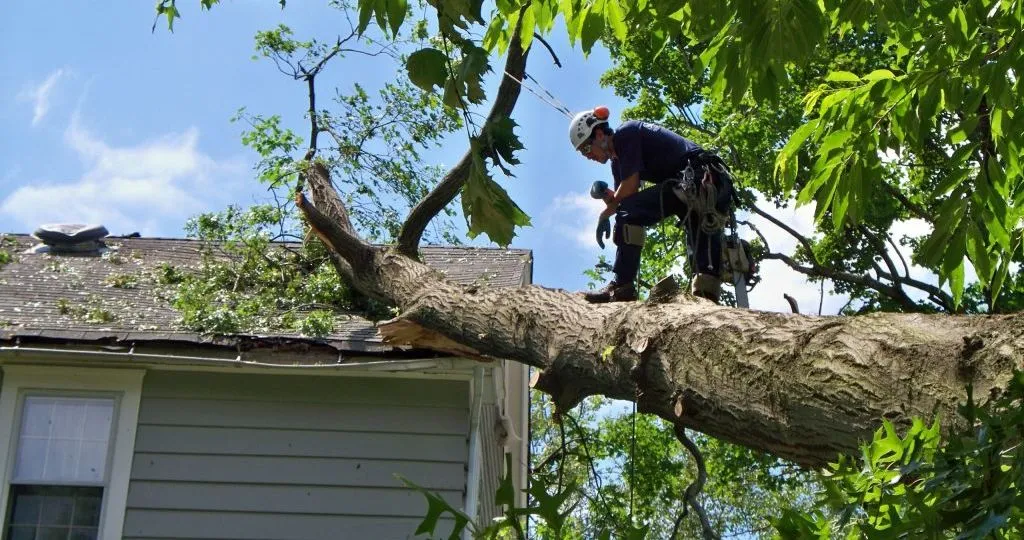
Most work on these blocks starts with tree removal, because the tree in question is usually too close to something to be left to gravity. The sequence is set before the first cut: which limbs are lowered on a line, which are taken in short sections, and where the pieces can be set down without taking out a fence or a parked car. On a block where the drop zone is a strip of grass between a house and a kerb, that plan is the work, and the cutting is the easy part of it.
Debris removal is where this city differs from a lot of places, because Richland County’s curbside yard waste service has limits. It takes sticks and small limbs up to 4 ft long and 4 in round, roughly two roll carts or six 30-gallon bags a week, and larger loads have to go to a drop-off centre. A removal produces far more than that in an afternoon, which is why the wood and brush leave with the crew rather than becoming a pile at the kerb that nobody will collect. Left out, that pile also holds moisture against the fence and draws the kind of insects nobody wants beside a kitchen door.
Tree pruning handles the trees that are staying: deadwood out, weight off a long limb, clearance restored over a walk. Stump grinding finishes a removal so the ground can be replanted or paved, and land clearing covers the occasional lot being opened up between two built ones, where the boundary of the cleared area is usually decided by a fence rather than by the trees. Emergency tree service is for the tree already down, and commercial tree services covers the shops, offices and rentals along the main roads, where the work has to fit around opening hours and a car park that cannot be closed for a day.
Columbia wraps around most of the city, Arcadia Lakes shares the northern edge, and Blythewood is a short drive up the road.
How a visit runs
- Walk the property and note what is at risk
- Check the base, the crown and the access
- Confirm what the city or county requires
- Put the scope in writing before the work
- Clear the debris and rake at the end
What we will not do
- We will not promise a response time we cannot keep
- We will not claim a credential we cannot show
- We will not give a figure for a tree nobody has seen
- We will not stack debris at the curb and call it cleared
- We will not cut a tree that can be pruned and kept

Why property owners in Forest Acres work with us
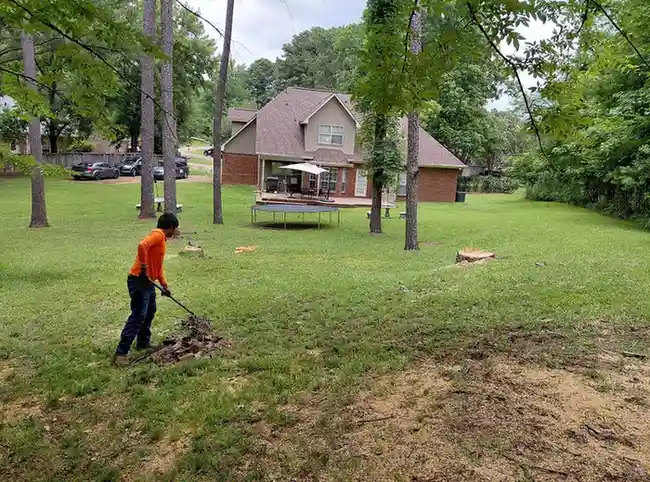
On streets this tight, a job is public. The truck is on the road, the rope runs over a hedge, and half the block can see whether the pieces are landing where they were meant to. We plan around that: the scope is agreed before the work starts, the order of the day is explained to whoever is at home, and the ground is left raked where the wood came down. Hours are daily, and the call is about your tree, its position and what is under it. We make no claim to a title we have not earned and no promise about a tree we have not seen. What we offer is a plain reading of the tree and a plan that keeps the damage to the yard. Because the properties here are close, the plan is usually worked out with one eye on the neighbour’s side of the fence, where a dropped section would land if the rigging failed.
Fallen Tree Removal Columbia works from Mason Road in Columbia and covers Forest Acres on the same schedule, so the walk, the scope and the crew come from the same place.
Why it matters now in Forest Acres
Three things line up on these blocks. The housing is old, the canopy is older, and the ground under it is low. Hurricane Helene in September 2024 produced a Richland County record of 60 to 70 mph gusts, 18 houses destroyed and 232 damaged, flooding in low areas, roads shut by fallen trunks and lines, sections of the county left without power, and a few structures hit by falling trees. Those figures describe a county-wide event, and a street of sixty-year-old trees in saturated ground is exactly where the damage concentrates. A gust does not need to be extreme to finish a tree that has been hollowing since the 1990s. The useful question is not whether the next storm will be bad. It is which tree on the block is already past the point where a normal wind would hold it, and that is answered by looking now, while the ground is dry enough to stand on. Trees do not fail at random on a street like this. They fail in order, and the order was set years earlier by a wound, a lean or a root that was cut when a walk was replaced. Reading that order is the whole point of a visit made in dry weather.
Tree work around Forest Acres
Frequently
Asked
Questions
Why do these streets lose so many trees when a storm comes through?
Age and water, mostly. Three quarters of the housing here predates 1980, so the canopy is old, and old trees carry the wounds and hollows that come with decades of growth. The ground at 254.5 ft holds water longer than higher ground does, and a root plate in wet soil gives way sooner. A tree that has stood through twenty storms can still be the one that goes in the twenty-first. The base is what tells you which.
What can go out for yard waste pickup here, and what cannot?
Richland County’s curbside service takes sticks and small limbs up to 4 ft long and 4 in round, about two roll carts or six 30-gallon bags a week. Larger loads go to a drop-off centre. A full removal is well past those limits, which is why the wood leaves with the crew instead of waiting at the kerb. Ask before stacking anything out there, because a rejected pile becomes the homeowner’s problem again.
Does living at 254.5 ft affect how stable a tree is?
It can. Lower ground drains more slowly, so the soil stays wet after rain and a root system has less grip than it would on a slope. That does not make every tree unsafe, but it does mean the base deserves a closer look here than on higher ground, especially in a winter that has been wet for weeks. Wet ground also changes where a truck can stand without leaving a trench across a lawn.
Is a sixty-year-old shade tree finished?
Not by age alone. A tree planted around 1965 can have decades left if the unions are sound and the base is intact. What tends to end them is a combination: an old wound that never closed, a limb that grew too long over a street, and a root system that has been cut or covered. Age is a reason to look, not a reason to remove. The unions and the flare are read together, because one without the other tells half a story.
How do you take a tree down between two narrow lots?
In small pieces, lowered rather than dropped, with the rigging point set high enough that the swing stays inside the gap. It takes longer than an open-lot removal and it produces more cuts, which is the trade for not landing a section on a fence or a parked car. The plan is walked with the neighbour’s side of the line in mind, because that is where the pieces would go if something slipped. That conversation happens before the day of the work, not during it.
What does the county record say about the September 2024 storm?
For Richland County the National Weather Service lists 18 homes destroyed and 232 damaged, a few structures hit by falling trees, roads closed, outages in sections, flooding, and gusts of 60 to 70 mph. That was Hurricane Helene in September 2024, and the damage was spread across the county rather than confined to one neighbourhood.
Age and water, mostly. Three quarters of the housing here predates 1980, so the canopy is old, and old trees carry the wounds and hollows that come with decades of growth. The ground at 254.5 ft holds water longer than higher ground does, and a root plate in wet soil gives way sooner. A tree that has stood through twenty storms can still be the one that goes in the twenty-first. The base is what tells you which.
Richland County’s curbside service takes sticks and small limbs up to 4 ft long and 4 in round, about two roll carts or six 30-gallon bags a week. Larger loads go to a drop-off centre. A full removal is well past those limits, which is why the wood leaves with the crew instead of waiting at the kerb. Ask before stacking anything out there, because a rejected pile becomes the homeowner’s problem again.
It can. Lower ground drains more slowly, so the soil stays wet after rain and a root system has less grip than it would on a slope. That does not make every tree unsafe, but it does mean the base deserves a closer look here than on higher ground, especially in a winter that has been wet for weeks. Wet ground also changes where a truck can stand without leaving a trench across a lawn.
Not by age alone. A tree planted around 1965 can have decades left if the unions are sound and the base is intact. What tends to end them is a combination: an old wound that never closed, a limb that grew too long over a street, and a root system that has been cut or covered. Age is a reason to look, not a reason to remove. The unions and the flare are read together, because one without the other tells half a story.
In small pieces, lowered rather than dropped, with the rigging point set high enough that the swing stays inside the gap. It takes longer than an open-lot removal and it produces more cuts, which is the trade for not landing a section on a fence or a parked car. The plan is walked with the neighbour’s side of the line in mind, because that is where the pieces would go if something slipped. That conversation happens before the day of the work, not during it.
For Richland County the National Weather Service lists 18 homes destroyed and 232 damaged, a few structures hit by falling trees, roads closed, outages in sections, flooding, and gusts of 60 to 70 mph. That was Hurricane Helene in September 2024, and the damage was spread across the county rather than confined to one neighbourhood.