
Professional Tree Removal Services in Hopkins, SC
Call us
(803) 866-3855
Hours
Scheduled visits
Booked ahead, not promised at short notice

What the trees in Hopkins are doing
Tree Service in Hopkins, SC
Sixteen and a half square miles with 947 houses in it is a spread of roughly one house for every eleven acres, and that ratio is the whole story of tree work here. There is no street wall of houses packed under a shared canopy, as there is in the towns nearby. There are long parcels, wooded gaps between neighbours, and drives that run a hundred yards before they reach a building. A tree that comes down out here can fall without touching anything, which is the good news, and it can also fall across the only way in and out. Tree service Hopkins owners ask for usually starts with that question of access.
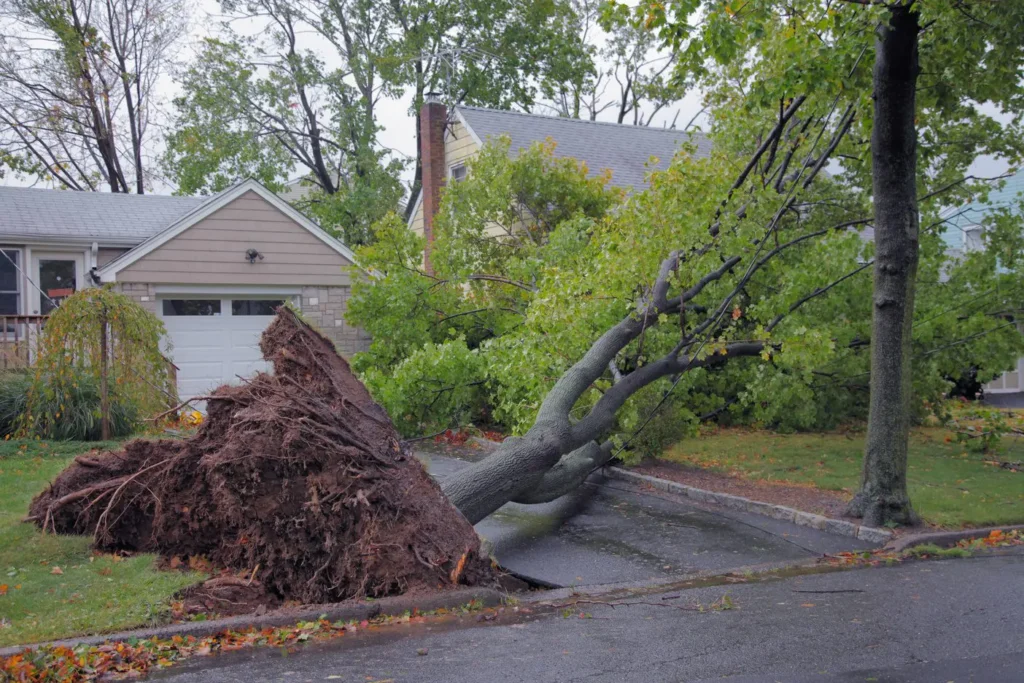
The homes in Hopkins and the trees around them
947 houses spread over sixteen and a half square miles
A parcel this size changes what a tree job is. The stem that worries a household can stand well back from the building, at the end of a fence line, on ground that a truck cannot reach without crossing a lawn or a culvert. Where a house sits two hundred feet from the road, the working area is the corridor between the gate and the wall, and everything that comes off the tree has to travel that corridor twice. It also means work is planned in daylight and in dry weather, since a loaded truck on soft ground leaves ruts that outlast the job by a year. A chipper cannot follow every track either, so brush is often stacked at the field edge and lifted out on a second pass rather than reduced where it fell.
Ground at 155.7 feet, where water stands
At 155.7 feet this is low ground, and low ground holds water after rain. A root plate in saturated soil has far less to grip than one in dry earth, and the trees most exposed to that are the ones with wide, shallow systems rather than a deep tap. That is why a wind that passes without incident in November can put a tree over in February, after three wet weeks have done the work the gusts only finished. On the low parts of a parcel, the ones that stay soft through winter, it is worth knowing which stems are standing in that ground before the next system arrives. A plate that has begun to lift shows as a crescent of bare soil on the side away from the lean, a heave where the ground was flat, and sometimes a crack running out from the butt.
The water oaks and southern red oaks in the gaps
The wooded ground between properties here holds oak, and water oak and southern red oak are the two species Clemson’s fact sheet singles out in its note on Hypoxylon canker. The disease is stress-related and follows weakness, with drought stress named as the most significant factor in infection. A tree that has come through a dry summer with a thin crown is the one to look at, and the tell is a patch of grey or black bark that spreads while the wood beneath it dies. Because the trees here stand in blocks rather than as single street specimens, one infected stem tends to sit among healthy ones that will need watching. An affected tree is not automatically a removal: what counts is how much of the crown still works and whether the stem can reach anything built.
A third of the housing predates 1980
32.2% of the housing stock was standing before 1980, and 19.5% before 1960, which for a place this rural means farm-era houses with farm-era plantings. Those gardens hold trees that were set out deliberately: a shade oak by the gate, a pecan or a cedar at the corner of the yard, a line of something along a boundary that has since been fenced twice. Three or four decades of growth on a tree planted close to a house produces exactly the defects that matter — a hollow centre, bark trapped in a fork, a limb that has swallowed the wire it grew around. Those are the stems that read sound from the ground and turn out hollow at the first cut, so they are the ones worth a slow walk rather than a glance from the drive.
Talk to us about a tree in Hopkins
Tell us the address, what the tree is doing and what has to stay open while the work happens. We will set a time to walk the property and put the scope in writing before anything is scheduled.
Tree work in Hopkins
Tree services in Hopkins
Distance shapes the schedule. Tree removal on a rural parcel is often the simplest kind, since a stem with clear ground on three sides can be felled whole and cut up where it lands, which is faster and quieter than working it down in pieces. Where the tree stands near a building, a drive or a fence, it comes apart in sections instead, and the pieces are carried to a landing spot the truck can actually reach. Choosing that spot is half of the planning out here, because it decides how far every section has to travel and whether the wheels stay on hard ground.
Stump grinding follows whatever the ground will take. On soft winter soil the machine is left until the surface firms up, because a grinder that sinks is a grinder that leaves a hole; on a dry parcel it can go in straight after the stem is down. Tree pruning does the routine work on the trees that are staying, mostly deadwood out of the oaks and clearance put back over a track that the crowns have closed in on.
Land clearing is a bigger part of the work here than in town, since parcels get reopened for pasture, for a shed or for a building pad, and the edge of the cleared ground is decided by drainage as much as by trees. Where a stem stands too close to a fence line to fell, the same climbing method used in town comes out here, just with more room to lay the pieces down. Debris removal handles the piles that accumulate behind a barn or at the back of a field after a wind, including the old stacks nobody remembers making. A stem already lying over a drive, a shed or a line is the emergency tree service call, and for the yards and frontages on the main routes we use commercial tree services.
Hopkins sits south-east of Columbia, and we work it alongside Garners Ferry and Eastover, with Gaston across the way and Columbia itself to the north. Long drives are worth describing on the phone, since a gate width or a soft patch of ground decides how the job is set up.
How a visit runs
- Walk the property and note what is at risk
- Check the base, the crown and the access
- Confirm what the city or county requires
- Put the scope in writing before the work
- Clear the debris and rake at the end
What we will not do
- We will not promise a response time we cannot keep
- We will not claim a credential we cannot show
- We will not give a figure for a tree nobody has seen
- We will not stack debris at the curb and call it cleared
- We will not cut a tree that can be pruned and kept
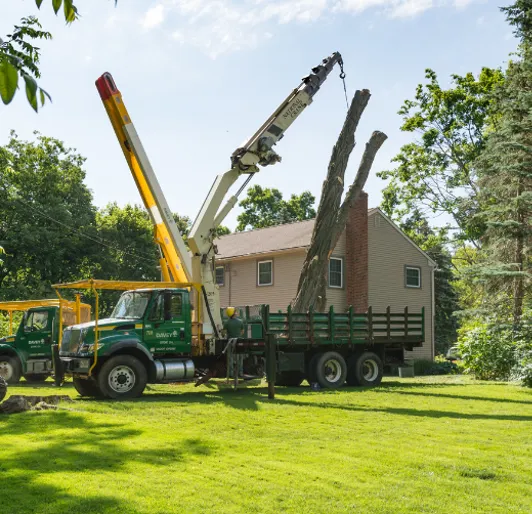
Why property owners in Hopkins work with us
On a parcel with room to spare, the temptation is to leave a doubtful tree alone and hope the wind goes the other way. That works until it does not, and out here the consequence is usually a drive blocked for a week rather than a hole in a wall. Fallen Tree Removal Columbia works the middle line: a stem that can stay is left standing with the weight taken out of the side it leans toward, and one that has to go is felled or climbed depending on what is underneath it. Because the ground here is soft and the distances long, the plan is set before the truck leaves the road, and the ruts are the part of the job we take most seriously. That is not caution for its own sake; a rutted track on a working parcel is a repair somebody has to live with for years.
Why it matters now in Hopkins
Two figures describe the risk in this place, and neither is about the trees themselves.
The first is the water. At 155.7 feet, parts of the ground here sit low enough that a wet winter leaves the soil saturated long after the rain stops, and a root plate in that condition holds a fraction of what it holds in summer. The second is the storm record. Helene’s entry for Richland County lists winds of 60 to 70 mph, timber and lines brought down, roads shut in places, stretches of the county dark, buildings struck by falling trees, standing water in the low spots, and a final tally of eighteen homes destroyed with 232 damaged. In a county that includes dense town streets, that damage total is spread across every kind of property, and the rural share of it is the part nobody photographs: a stem across a drive, a shed flattened, a fence line gone. Out here the failure is rarely dramatic from the road. It is quiet, it happens on a parcel nobody is watching, and the owner finds it a day later when the truck cannot get out. That is the reason the work out here tends to be scheduled before a forecast rather than after one: a stem read in calm weather is a stem that can be dealt with on a dry day, with the ground firm and the route known.
Tree work around Hopkins
Frequently
Asked
Questions
Why does low ground make a difference to a tree?
Because the roots hold by friction against soil, and saturated soil gives very little. A tree that stands firm in July can shift in February after weeks of rain, and once a root plate has lifted even slightly it does not settle back. The lean that follows is slow, and the tree rarely recovers the grip it had.
What did Helene do across Richland County?
The National Weather Service entry records what the wind did rather than how it felt: stems and wires down across Richland County, roads closed in places, outages in sections, trees onto buildings, flooding, 60 to 70 mph gusts, eighteen homes destroyed and 232 damaged. On a parcel this size the fallen timber was the visible part; the blocked drives were the part that lasted.
Does a big parcel make a tree job easier?
Usually, yes — a stem with clear ground around it can be felled in one go, which is quicker than climbing. The complication is access. A long drive, a narrow gate or soft ground in the wrong place can add more time than the felling saves, so the route is walked before the work is scheduled. Where the ground stays wet into spring, the job may be better held back a few weeks than forced through and left rutted.
Which trees here are most at risk from disease?
Clemson’s fact sheet names water oak and southern red oak in its note on Hypoxylon canker, a stress-related fungus that follows weakness rather than causing it, with drought stress the most significant factor. Both grow in the woods between properties here. A thin crown after a dry summer is the signal to look at the bark rather than the leaves.
What is different about the pre-1960 farm properties?
They hold planted trees rather than volunteer ones, set where somebody wanted shade or a windbreak, often within a few paces of the house. Six decades of growth on a tree planted that close produces hollow centres and included bark, and the old fence wire grown into the trunk is a common find. Those stems need reading before they need cutting.
Why do trees at the edge of a field fail first?
An edge tree has grown with wind on one side only, so its wood is laid down unevenly and its crown is weighted away from the field. When the trees behind it are cleared, or when the field side is opened further, the balance goes. That is why a line of timber beside pasture is worth checking after any change in land use. The stems most likely to go are the tallest on the edge, and they usually lean into the field where there is nothing to catch them.
Because the roots hold by friction against soil, and saturated soil gives very little. A tree that stands firm in July can shift in February after weeks of rain, and once a root plate has lifted even slightly it does not settle back. The lean that follows is slow, and the tree rarely recovers the grip it had.
The National Weather Service entry records what the wind did rather than how it felt: stems and wires down across Richland County, roads closed in places, outages in sections, trees onto buildings, flooding, 60 to 70 mph gusts, eighteen homes destroyed and 232 damaged. On a parcel this size the fallen timber was the visible part; the blocked drives were the part that lasted.
Usually, yes — a stem with clear ground around it can be felled in one go, which is quicker than climbing. The complication is access. A long drive, a narrow gate or soft ground in the wrong place can add more time than the felling saves, so the route is walked before the work is scheduled. Where the ground stays wet into spring, the job may be better held back a few weeks than forced through and left rutted.
Clemson’s fact sheet names water oak and southern red oak in its note on Hypoxylon canker, a stress-related fungus that follows weakness rather than causing it, with drought stress the most significant factor. Both grow in the woods between properties here. A thin crown after a dry summer is the signal to look at the bark rather than the leaves.
They hold planted trees rather than volunteer ones, set where somebody wanted shade or a windbreak, often within a few paces of the house. Six decades of growth on a tree planted that close produces hollow centres and included bark, and the old fence wire grown into the trunk is a common find. Those stems need reading before they need cutting.
An edge tree has grown with wind on one side only, so its wood is laid down unevenly and its crown is weighted away from the field. When the trees behind it are cleared, or when the field side is opened further, the balance goes. That is why a line of timber beside pasture is worth checking after any change in land use. The stems most likely to go are the tallest on the edge, and they usually lean into the field where there is nothing to catch them.