Professional Tree Removal Services in Cayce, SC
Call us
(803) 866-3855
Hours
Scheduled visits
Booked ahead, not promised at short notice
What the trees in Cayce are doing
Tree Service in Cayce, SC
Cayce is the oldest housing stock in this group by a wide margin. Six in ten houses here went up before 1980 and just over half before 1960, so the trees around them were planted by people who are no longer around to say what was done to them. Add the low ground — the town sits at about 129 feet, the lowest of any of the places we cover — and you get lots where water stands after a storm and root plates lift in soil that has been wet for a week. Tree service Cayce residents call about is usually one old oak and one very small yard.
Homes in Cayce and the trees around them
Lots laid out when the median house was built in 1970
A 1970 house came with a yard sized for a car, a shed, and a clothesline, not for a water oak that has since doubled in girth. The result is a town where trunks stand a few paces from a wall, a drive, and a neighbouring wall at once, and where the drop zone for any limb is somebody’s parking space. We work these lots in short sections with a rope on everything, because there is no version of the job where a piece can simply fall. The good part is that a trunk in that position has usually been pruned before, so there is a shape to work with, and an old wound line tells you where the wood is sound. What we cannot do is fell it. Every limb goes down on a rope to a spot that was chosen before anyone leaves the ground.
The 51.1 percent standing since before 1960
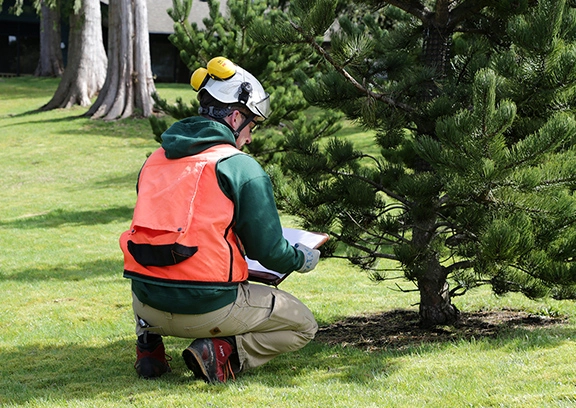
Half the housing here predates 1960, which makes this a town of mature canopies and narrow gaps. A tree that was already grown when the house was built has had sixty years to send roots under the slab, lift the walk, and close over the line drop. Those are the calls that need a proper look rather than a quick cut: a stem that has grown around a fence post, a fork that has been splitting slowly since the eighties, a stem leaning over a detached garage nobody uses. We take the time to read the whole tree before anything is cut, because on these lots there is no second attempt: a section dropped in the wrong place takes out a fence, a car, or the corner of a room.
Sixteen square miles of ground at 129 feet
Cayce covers almost seventeen square miles, and a good share of it sits low. Low ground means a water table close to the surface, and a tree rooted in that has less grip than one on a ridge, especially after days of rain. When a storm passes and the soil is saturated, the whole plate can rotate and the tree goes over with the root ball still attached. That failure looks different from a snapped stem — the ground opens in a crescent, and the tree lies down rather than falling over in pieces. It is also the failure that damages a lawn rather than a wall, and the failure most likely to take the line drop with it on the way down.
What Helene did to the old oaks here
Read the county’s storm entry and the pattern is familiar: trunks and conductors brought down together, routes blocked, current lost across whole sections, several buildings hit by falling wood, ground under water, and wind in the 70 to 80 mph band. Across Lexington County that left three homes destroyed and forty-one damaged. In a town of pre-1960 houses and old oaks, that combination is the worst case: heavy wood over houses that were never built for it, on ground already holding water. Two years on, the trees that came through it are the ones worth checking: an old oak can hold a wound that only shows when the bark starts to lift along one side, and the summer after a storm is when a lot of that becomes visible.
Talk to us about a tree in Cayce
Tell us the address, what the tree is doing and what has to stay open while the work happens. We will set a time to walk the property and put the scope in writing before anything is scheduled.
Tree work in Cayce
Tree services in Cayce
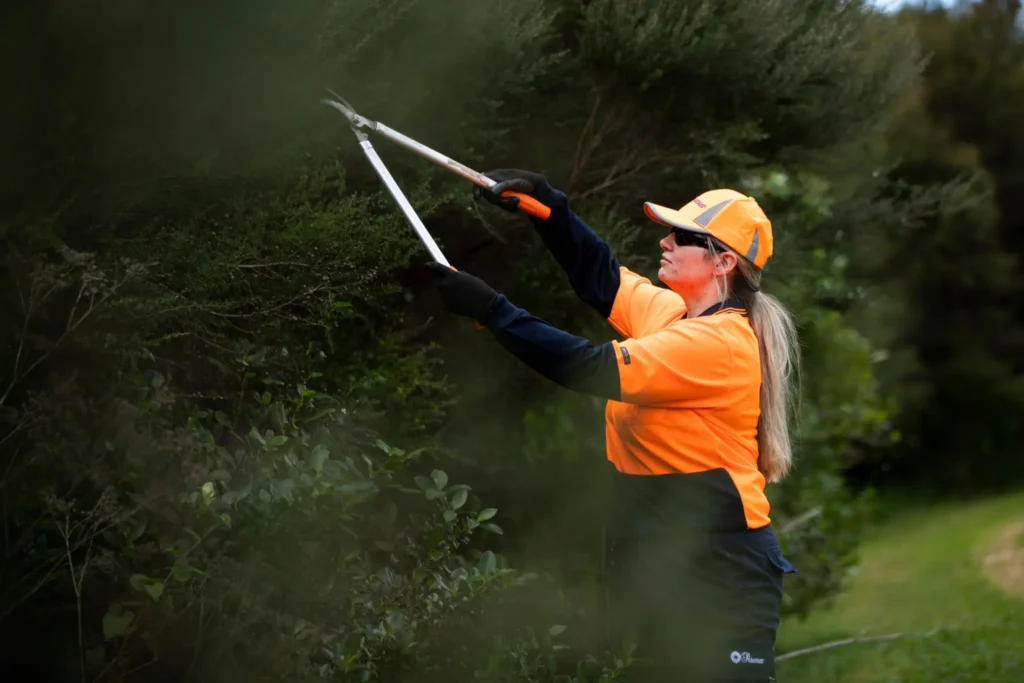
Old trees on tight lots set the order of work here. Tree removal comes first in most jobs, and in Cayce it almost always means a sectioned take-down: the climber goes up, sets a line, and lowers each piece to a spot picked before the saw starts. Stump grinding then clears the stool so the yard stops being an obstacle course, which matters more here than on a big lot because there is nowhere to walk around it. Tree pruning is the work that keeps an old canopy from becoming a removal — deadwood out, weight off a long limb, clearance restored over a drive or a walk.
The rest of the list covers the situations that come up when a property has been in the same hands for decades. Land clearing handles an overgrown back section or a lot being reset ahead of construction. Debris removal takes the piles that accumulate behind a shed — the brush, the fence panels, the limbs cut and stacked by somebody who meant to deal with them. Emergency tree service is the call after a storm has put a trunk on a carport or across a drive. Commercial tree services looks after the grounds of the small businesses along the main roads, where a fallen limb is a closed entrance rather than an inconvenience. That last one runs on a schedule rather than a call-out.
A word on sequence, since it saves work. If a stump is coming out and a fence is being replaced, grinding before the new posts go in means the machine reaches the stool without lifting panels first. We ask about plans like that at the walk-around.
We work through Cayce and the places packed around it: West Columbia to the north, Springdale close by, Lexington out to the west, and Columbia across the boundary. The town’s shape means most jobs sit within a short drive of each other, so a morning here usually covers more than one address.
How a visit runs
- Walk the property and note what is at risk
- Check the base, the crown and the access
- Confirm what the city or county requires
- Put the scope in writing before the work
- Clear the debris and rake at the end
What we will not do
- We will not promise a response time we cannot keep
- We will not claim a credential we cannot show
- We will not give a figure for a tree nobody has seen
- We will not stack debris at the curb and call it cleared
- We will not cut a tree that can be pruned and kept
Why property owners in Cayce work with us
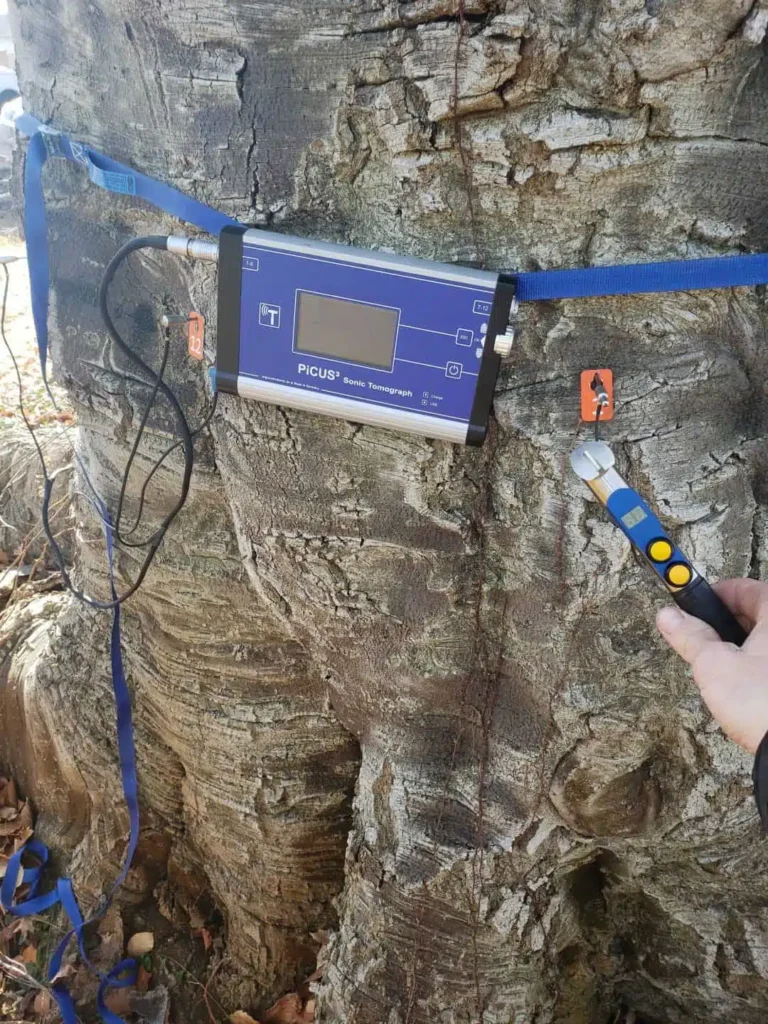
The trees in this town are old enough that the decision is rarely simple. An oak that has been in a yard since the fifties may be the reason somebody bought the property and also the thing most likely to come through a bedroom wall, and both statements can be true at the same time. We walk the lot, look at the lean, the soil, the fork, and what is underneath, and then say which parts of that tree are worth keeping. When the answer is that it has to come out, we explain what happens to the stump and the ground afterwards so there are no surprises on the day. On an old property that conversation matters more, because removing a canopy changes how the yard drains, how much sun reaches the wall, and where the next planting can go. None of that is guesswork; it follows from where the trunk stands and which way the ground falls.
Fallen Tree Removal Columbia works from Mason Road in Columbia and covers Cayce on the same schedule, so the walk, the scope and the crew come from the same place.
Why it matters now in Cayce
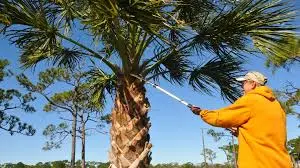
Age is the story here, and it is compounding. With a median build year of 1970 and 51.1 percent of homes standing before 1960, Cayce has a canopy that is reaching the end of its working life at the same time as the houses underneath it. Old oaks in this condition are also the ones most exposed to drought stress, and Clemson’s Home and Garden Information Center notes that Hypoxylon canker is a stress-related fungus that attacks weakened oaks such as water oak and southern red oak, with drought the most significant factor in infection. A cankered limb dies from the outside in and drops without warning. There is also the ordinary weight problem: an oak that has added a decade of wood since the house last had work done is carrying more mass over the same small yard, and the bracket holding it has not grown at all. On a lot where the tree is four paces from the wall, that is the risk worth acting on before the next dry summer rather than after it. The same drought that weakens an oak also dries the soil that holds it, so a cankered tree and a loose root plate tend to arrive in the same season, which is the season this town does not need both.
Tree work around Cayce
Frequently
Asked
Questions
Why do so many trees in Cayce fail at the roots rather than the trunk?
Because much of the town sits low, at roughly 129 feet, and the soil stays wet longer than it does on higher ground nearby. A saturated root plate holds less than a dry one, so the tree rotates out of the ground with the ball still attached instead of snapping. After a week of rain and a gusty day, that is the failure we expect to hear about.
Does the age of the housing change how a removal is done?
It changes almost everything about it. A house built before 1960 usually has a detached garage, a narrow drive, mature shrubs against the wall, and an overhead line at the eave. That leaves no clear drop zone, so the tree comes down in small pieces on a rope. It takes longer than a take-down on an open lot, and it is the only safe way to do it. On the plus side, an older property usually has room behind the shed for the brush to be stacked while the cutting is going on.
How does the county handle the brush after a job?
The programme over in Richland County takes sticks no longer than four feet and nothing thicker than four inches round, roughly two roll carts’ worth or six thirty-gallon bags a week, with bigger loads going to a drop-off centre. Cayce sits in Lexington County, so the local arrangement differs, and in practice a take-down here produces far more than any curbside service will lift. The material leaves with us rather than becoming a pile at the kerb.
What is Hypoxylon canker and should I be looking for it?
It is a fungal disease that gets into oaks already under stress, and drought is the biggest single factor in whether a tree becomes vulnerable. The visible sign is a dead limb with bark peeling back to leave a grey or black patch, often high in the crown where it is hard to see from the ground. If you spot a dead top on an old oak here, it is worth having it looked at. The wood behind a canker is brittle, so a limb that looks like it is holding is often the one that comes off in the next blow.
Will taking a large old tree out leave my yard bare?
It will change it, and it is fair to say so before the work rather than after. An old oak canopy shades a good part of a Cayce yard, and grass that has grown thin under it will not fill in overnight. What usually helps is deciding in advance where the stump goes, whether a replacement goes in the same spot, and how much of the sawdust and chips you want cleared away.
Can you get a truck into a narrow drive between two houses?
Often not, and we plan around it instead of forcing it. Where a drive is too tight, the chipper stays on the street and the brush is carried out by hand or dragged on a tarp in small loads. The truck can sit where a parking space would, which is usually all the room the job needs once the tree is coming down in pieces.
Because much of the town sits low, at roughly 129 feet, and the soil stays wet longer than it does on higher ground nearby. A saturated root plate holds less than a dry one, so the tree rotates out of the ground with the ball still attached instead of snapping. After a week of rain and a gusty day, that is the failure we expect to hear about.
It changes almost everything about it. A house built before 1960 usually has a detached garage, a narrow drive, mature shrubs against the wall, and an overhead line at the eave. That leaves no clear drop zone, so the tree comes down in small pieces on a rope. It takes longer than a take-down on an open lot, and it is the only safe way to do it. On the plus side, an older property usually has room behind the shed for the brush to be stacked while the cutting is going on.
The programme over in Richland County takes sticks no longer than four feet and nothing thicker than four inches round, roughly two roll carts’ worth or six thirty-gallon bags a week, with bigger loads going to a drop-off centre. Cayce sits in Lexington County, so the local arrangement differs, and in practice a take-down here produces far more than any curbside service will lift. The material leaves with us rather than becoming a pile at the kerb.
It is a fungal disease that gets into oaks already under stress, and drought is the biggest single factor in whether a tree becomes vulnerable. The visible sign is a dead limb with bark peeling back to leave a grey or black patch, often high in the crown where it is hard to see from the ground. If you spot a dead top on an old oak here, it is worth having it looked at. The wood behind a canker is brittle, so a limb that looks like it is holding is often the one that comes off in the next blow.
It will change it, and it is fair to say so before the work rather than after. An old oak canopy shades a good part of a Cayce yard, and grass that has grown thin under it will not fill in overnight. What usually helps is deciding in advance where the stump goes, whether a replacement goes in the same spot, and how much of the sawdust and chips you want cleared away.
Often not, and we plan around it instead of forcing it. Where a drive is too tight, the chipper stays on the street and the brush is carried out by hand or dragged on a tarp in small loads. The truck can sit where a parking space would, which is usually all the room the job needs once the tree is coming down in pieces.