Professional Tree Removal Services in Arcadia Lakes, SC
Call us
(803) 866-3855
Hours
Scheduled visits
Booked ahead, not promised at short notice
What the trees in Arcadia Lakes are doing
Tree Service in Arcadia Lakes, SC
Arcadia Lakes is 0.56 square miles with 397 housing units inside it, which makes it the kind of town where a tree is rarely alone. Every trunk worth worrying about has a neighbour’s fence within reach, a drive on one side and a utility line somewhere overhead, and the distance between houses is short enough that a limb does not have to travel far to become somebody else’s problem. That geometry shapes every job here. The question is never whether a tree can be taken down. It is which way the pieces can be sent without crossing a line that matters to someone.
Homes in Arcadia Lakes and the trees around them
397 housing units inside 0.56 square miles
Put another way, the whole town is smaller than a single large subdivision elsewhere, and 843 people live inside it. At that scale, the canopy is continuous rather than patchy: one yard’s oak is the next yard’s shade, and the roots of a single mature tree can cross three boundaries without anyone noticing. It also means the work is quick to survey. A tree at the back of one lot has its drop zone hanging over two other gardens, and the plan has to be agreed with everyone whose ground the pieces might touch. On a property this small, a removal is a neighbourhood event whether or not it is treated as one. The saving is that nothing is far: the survey takes minutes, and the whole job can be judged from one corner of a garden before a rope goes up.
The half of the town built before 1960
Half the housing here, 50.4%, predates 1960, and those original plantings are now well past sixty-five years old. Trees of that age in a space this tight have usually been cut before, and often cut by someone working around a fence rather than around the tree. The evidence is in the shape: a crown that leans away from a wall it was pruned off, a low limb with a scar where a mower hit it, a trunk that forks at head height because the leader was taken out decades ago. Each of those is a structural decision made by somebody else, and the job now is to work with the tree that resulted rather than the tree that was planted. A forty-foot crown built around a wall is a different object from a forty-foot crown in open ground, and it is read differently.
209.9 ft, and what wet ground does to a stump
At 209.9 ft this is low ground, and low ground changes what happens after the tree is down as much as before. A stump left in soil that stays damp rots from the cut face inward, which sounds convenient until the rot reaches the root crown and the ground above it softens and sinks. Grinding takes the stump out of that equation, and on a wet site the grindings are worth clearing rather than raking back into the hole, because a mound of damp chips holds water against whatever is planted next. The hole itself is filled with soil that drains, not with the clay that came out of it, or the new planting sits in a basin. Where the tree stood next to a path, the grade is checked afterwards so water still runs away from the house.
A 1970 median year with a fourteen-year margin
The median build year is 1970, and the margin on that figure is fourteen years, the widest spread in the area. That is the arithmetic of a small town that grew in stages: a cluster of houses from the late 1950s, another from the early 1970s, a few infill lots later. The trees follow the same pattern, so a walk down one street can pass a sixty-five-year-old oak, a fifty-year-old pine and a much younger planting in a garden that was subdivided. Treating the town as one housing cohort would be wrong. Each block has its own vintage, and each vintage has its own set of problems to look for. That is also why a plan made for one house cannot be carried across the street, since the two trunks may be thirty years apart in age.
Talk to us about a tree in Arcadia Lakes
Tell us the address, what the tree is doing and what has to stay open while the work happens. We will set a time to walk the property and put the scope in writing before anything is scheduled.
Tree work in Arcadia Lakes
Tree services in Arcadia Lakes
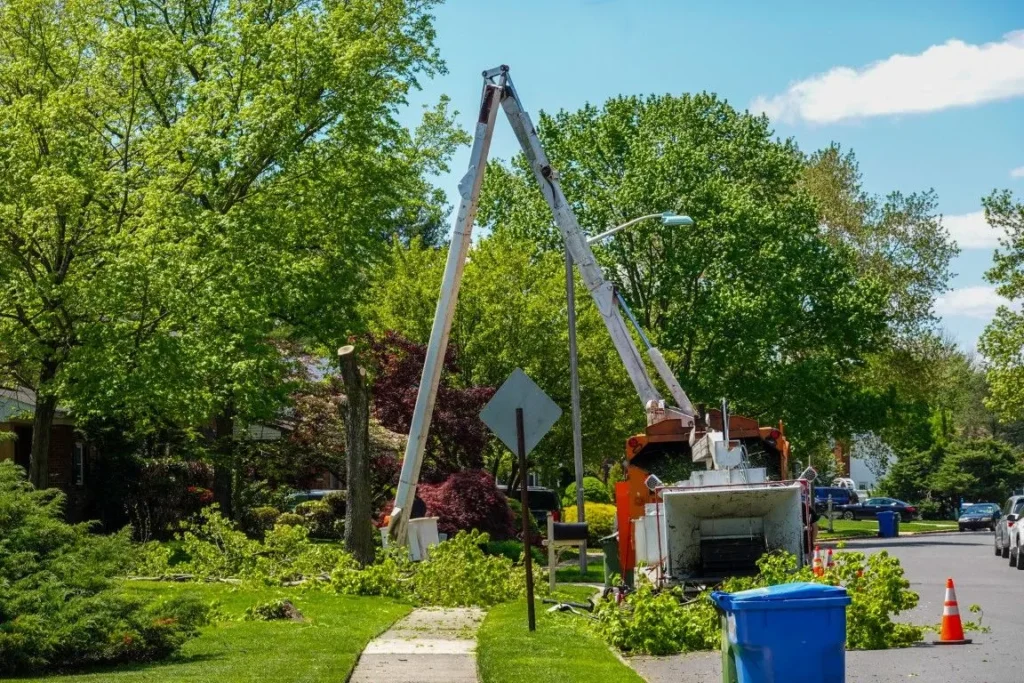
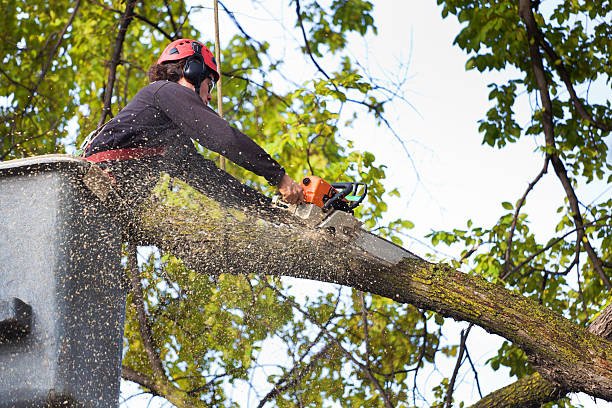
Because the lots are close, tree removal here is almost always a rigging job rather than a felling job. The trunk is climbed, the limbs are tied off and lowered in sequence, and the spar comes down in sections short enough to land inside a garden rather than across two. That takes longer than dropping a tree in a field, and it is the only way to work when the alternative landing zone belongs to somebody else. The rigging point is chosen so the arc of every swing stays inside one garden, and the ground crew watches the fence line rather than the saw.
Tree pruning does most of the preventive work in a town this size: deadwood out of a crown that overhangs a shared drive, clearance restored over a walk, weight taken off the side a tree leans toward. Done on a five-year rhythm, it keeps a mature tree inside the space it has to live in, which is a smaller space here than almost anywhere else in the county. Stump grinding follows a removal and takes the wood below the surface so the ground can be replanted. The grindings go with the crew on a tight lot, because there is nowhere to lose a mound of chips between two hedges. Debris removal takes the sections, the brush and the rakings away in the same visit, which matters here because there is no spare corner of a lot to stack a week’s worth of wood in. A cord left beside a shed in a garden this size takes up the whole path.
Emergency tree service is for the tree that has already come down, and commercial tree services covers the small offices and rental properties inside the town boundary. Land clearing is rarer, usually a single infill lot where the choice is which trunks earn their place as a screen between neighbours.
Forest Acres wraps around most of the town, and Columbia is a short drive out. Both are on the same working day.
How a visit runs
- Walk the property and note what is at risk
- Check the base, the crown and the access
- Confirm what the city or county requires
- Put the scope in writing before the work
- Clear the debris and rake at the end
What we will not do
- We will not promise a response time we cannot keep
- We will not claim a credential we cannot show
- We will not give a figure for a tree nobody has seen
- We will not stack debris at the curb and call it cleared
- We will not cut a tree that can be pruned and kept
Why property owners in Arcadia Lakes work with us
With 397 homes, a call from here is usually about one specific tree that somebody has been watching for a while. That suits the way the work is done. We walk the property, look at the tree from the side the pieces would fall toward, and say what we see, including when the answer is that the tree can wait another year. Hours are daily. Everything is set out on paper before the first cut, so a job that crosses two gardens is clear to both households. Nothing here is dressed up as a title we have not earned, or a promise about timber we have not opened. What the visit gives you is an honest read of one tree and a plan for taking it down without damage either side of the fence. If the tree turns out to be sound, that is a useful answer too, and you will hear it plainly.
Fallen Tree Removal Columbia works from Mason Road in Columbia and covers Arcadia Lakes on the same schedule, so the walk, the scope and the crew come from the same place.
Why it matters now in Arcadia Lakes
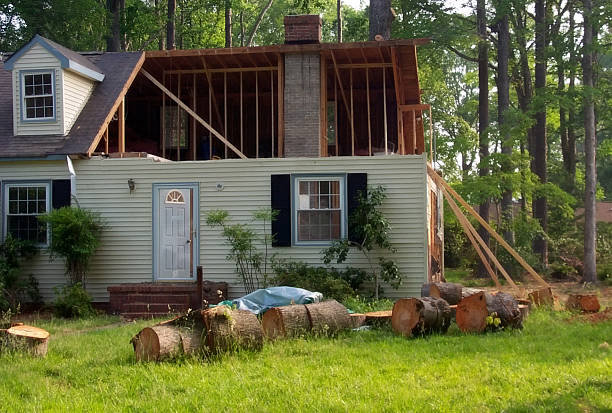
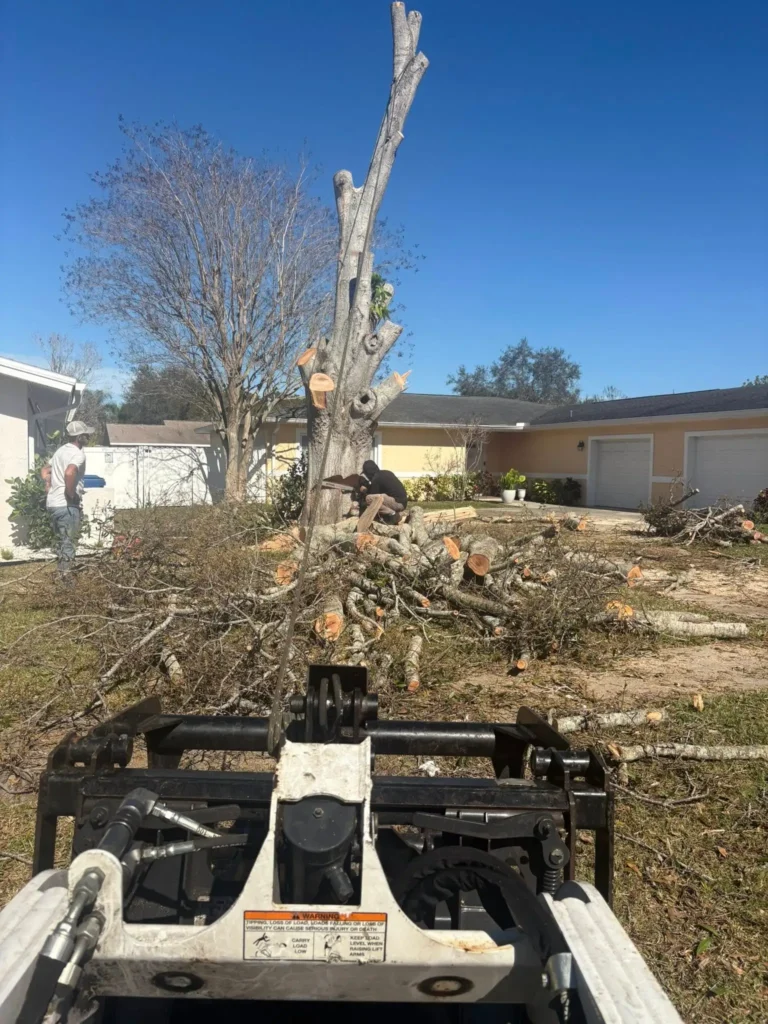
The numbers here point the same way. Half the town was standing before 1960, the ground under it is low, and the space between houses is measured in feet rather than yards. The storm that did the damage arrived in September 2024: Hurricane Helene, which the National Weather Service measured at 60 to 70 mph across Richland County, leaving trees and lines down, roads shut, sections of the county without power, 18 homes destroyed, 232 damaged, a few structures struck by falling trees, and flooding on low ground. In a town of 0.56 square miles, a single failure of that kind does not affect one property; it affects the street. A tree that comes down across a shared drive takes the neighbours’ access with it, and one that lands on a fence starts an argument that outlasts the cleanup. That is the reason the leaning trunk at the back of the lot is worth a look before the next named storm rather than after it. Half the town is past sixty years old, and the trees around those houses have had every one of those years to develop the defect that decides the outcome.
Tree work around Arcadia Lakes
Frequently
Asked
Questions
How much of Arcadia Lakes was built before 1960?
The figure is 50.4%, so roughly half the housing here predates 1960, and the trees planted around those houses are now in their sixties and seventies. That age band is where old pruning wounds, hollow centres and included bark start to matter. It is also where a tree can still be perfectly sound, which is why the base and the unions are checked rather than the age alone. Age sets the questions; the trunk answers them.
At 209.9 ft, does the wet ground change what happens to a stump?
It does. A stump in ground that stays damp rots unevenly, and the soft spot often reaches the root crown before the top looks any different, which leaves a hollow under a lawn. Grinding removes that risk, and the grindings are better cleared than raked back into the hole. The hole is then filled with well-draining soil so a new planting is not sitting in a basin. On a lot this size, that hole is often the only place a garden has room for anything new.
The town is only 0.56 square miles. Can a truck get in?
Usually, but the approach matters more than the distance. Drives are short, turning space is limited, and a truck parked in the wrong place can block a neighbour’s access for the whole visit. The route and the parking spot are settled on arrival, before equipment comes off, and the pieces are lowered into a garden rather than dropped into a shared drive. If a drive has to be blocked for an hour, both households are told in advance.
What did the September 2024 storm do in this part of Richland County?
The Richland County entry opens with gusts of 60 to 70 mph and closes with 232 homes damaged and 18 destroyed, with trees and lines down, roads shut, outages and flooding in between. One storm did all of that, in September 2024. In a town this compact, a single tree from that list landing in the wrong place closes the road for everyone.
Why is the median build year given as 1970 with such a wide range?
Because the town grew in stages rather than all at once. A fourteen-year margin means the middle house could as easily be from the late 1950s as from the early 1980s, so the housing stock is a mix of vintages. The trees follow the same pattern, which is why two houses on the same street can need completely different work. A margin that wide is a warning against assuming anything from the address.
Who do I talk to about a tree that leans over a neighbour’s garden?
Start with the neighbour, because the tree stands on one property while the risk sits over another, and talking it through is the simplest first step. Photographs of the lean, the base and the ground around it are worth taking before anything changes. We can describe what we see and where the tree sits, but the decision about a boundary tree belongs to the people on either side of it. Getting that agreed early takes far less than settling it after a limb lands.
The figure is 50.4%, so roughly half the housing here predates 1960, and the trees planted around those houses are now in their sixties and seventies. That age band is where old pruning wounds, hollow centres and included bark start to matter. It is also where a tree can still be perfectly sound, which is why the base and the unions are checked rather than the age alone. Age sets the questions; the trunk answers them.
It does. A stump in ground that stays damp rots unevenly, and the soft spot often reaches the root crown before the top looks any different, which leaves a hollow under a lawn. Grinding removes that risk, and the grindings are better cleared than raked back into the hole. The hole is then filled with well-draining soil so a new planting is not sitting in a basin. On a lot this size, that hole is often the only place a garden has room for anything new.
Usually, but the approach matters more than the distance. Drives are short, turning space is limited, and a truck parked in the wrong place can block a neighbour’s access for the whole visit. The route and the parking spot are settled on arrival, before equipment comes off, and the pieces are lowered into a garden rather than dropped into a shared drive. If a drive has to be blocked for an hour, both households are told in advance.
The Richland County entry opens with gusts of 60 to 70 mph and closes with 232 homes damaged and 18 destroyed, with trees and lines down, roads shut, outages and flooding in between. One storm did all of that, in September 2024. In a town this compact, a single tree from that list landing in the wrong place closes the road for everyone.
Because the town grew in stages rather than all at once. A fourteen-year margin means the middle house could as easily be from the late 1950s as from the early 1980s, so the housing stock is a mix of vintages. The trees follow the same pattern, which is why two houses on the same street can need completely different work. A margin that wide is a warning against assuming anything from the address.
Start with the neighbour, because the tree stands on one property while the risk sits over another, and talking it through is the simplest first step. Photographs of the lean, the base and the ground around it are worth taking before anything changes. We can describe what we see and where the tree sits, but the decision about a boundary tree belongs to the people on either side of it. Getting that agreed early takes far less than settling it after a limb lands.