
Professional Tree Removal Services in Irmo, SC
Call us
(803) 866-3855
Hours
Scheduled visits
Booked ahead, not promised at short notice

What the trees in Irmo are doing
Tree Service in Irmo, SC
Irmo’s median home dates to 1984, which tells you most of this town was subdivided while the pines were already standing, and the lots were drawn to leave the bigger stems in place. That was a good decision for shade and a poor one for the houses now sitting under forty-year-old pines with shallow root plates. The calls we get here are rarely about clearing land. They are about a tree that was deliberately kept, and has since grown into the space the plan assumed it would not fill. Tree service Irmo households arrange with us starts with that history.
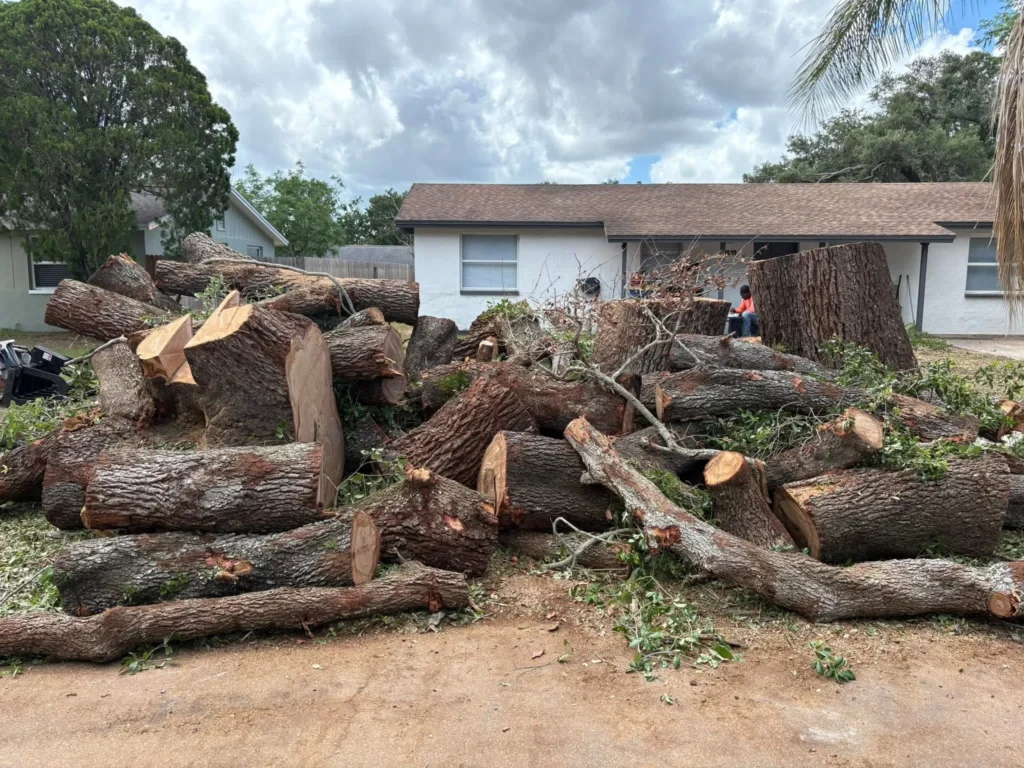
Homes in Irmo and the trees around them
The pines that were left standing in 1984
A subdivision built in the early eighties kept its pines because clearing them was expensive and the shade sold houses. Forty years on, those stems are full height, and a loblolly at that age is heavy at the top with a root system that spreads wide and shallow rather than deep. In sandy ground after rain, that is the profile that snaps at the butt or lifts a plate, and it is why a pine that looks solid a week after dry weather can be a different tree after two days of rain. What we find on these lots is often a pine that has already lost its top third to wind at some point, and has since grown a heavy side limb into the gap, which leaves the tree lopsided and the wood at the break full of water.
The handful of houses older than 1960
The housing here is almost all recent. Only about four houses in a hundred were standing before 1960, and the few that were are the ones with the deep-rooted hardwoods and the wide canopies — a different problem entirely from the pines. On those properties the work is about clearance and deadwood rather than structural risk, and the trees have usually been shaped by decades of someone cutting back what overhung a path. Those old lots are also where a neighbour’s tree tends to be the issue, because the canopy was planted before the boundary mattered. There are only a few hundred of these properties in town, and they are usually the ones where the work is small and the history is long, with a hedge, a wall, and an outbuilding all added since the tree took up its space.
Six point eight square miles and 4,996 homes
The town covers just under seven square miles, which makes it the smallest footprint on our list, and it holds 4,996 housing units. That produces a particular layout: short streets, culs-de-sac, and a strip of common ground or right-of-way behind the back fences that no single household actually owns. When a tree on that strip comes down, the question of who deals with it can take longer than the work itself. We look at the strip before booking a job, because half the time the trunk is not on the property that called. The other feature of a footprint this tight is that a fallen stem blocks more than one household’s access, so the first question on arrival is often about whose car needs to move rather than which tree is going.
Eighteen homes destroyed and 232 damaged
Hurricane Helene is still the benchmark here. The National Weather Service entry for Richland County reads as a list of consequences rather than a single event: trunks across the roads, wires down with them, whole sections dark, a few buildings struck, water standing in low ground, gusts of 60 to 70 mph, and a final tally of eighteen homes destroyed with 232 damaged. That is a lot of damage for wind below 80 mph, and it points to how the trees failed: not whole stands blown flat, but individual stems and limbs coming down across a wide area. A single pine through a single house accounts for a lot of that damage figure, and the pattern is scattered rather than concentrated, which is what makes it hard to predict from a glance down the street.
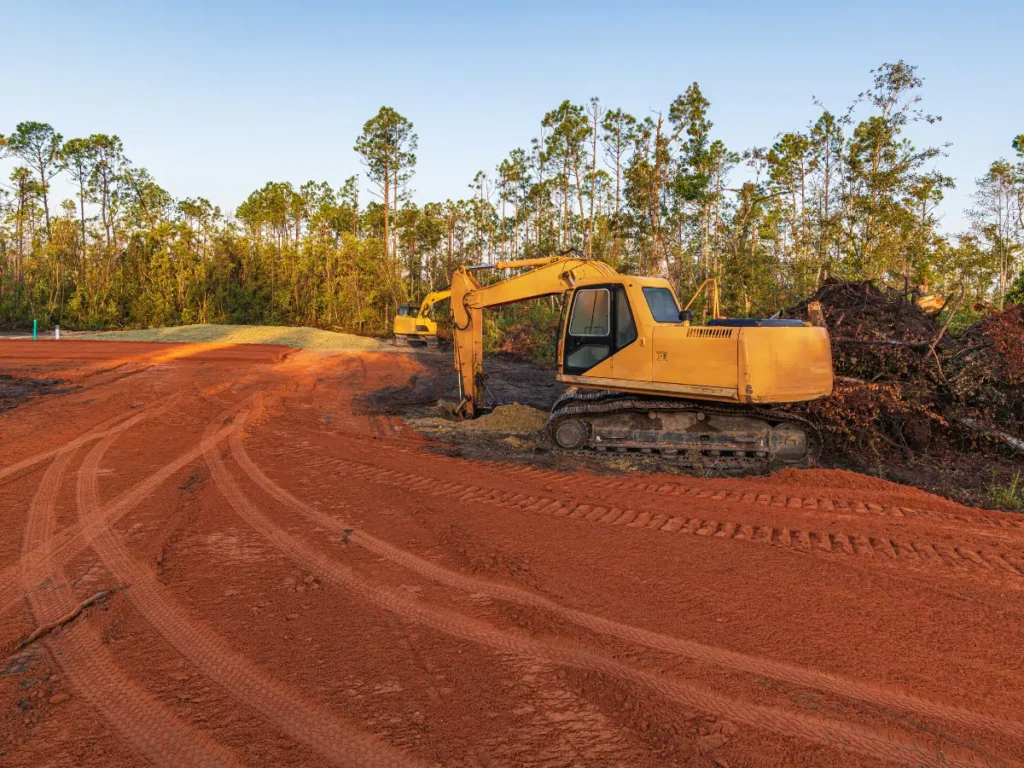
Talk to us about a tree in Irmo
Tell us the address, what the tree is doing and what has to stay open while the work happens. We will set a time to walk the property and put the scope in writing before anything is scheduled.
Tree work in Irmo
Tree services in Irmo
Subdivision pines set the pattern of work. Tree removal is the main job, and on a lot with a house on one side and a fence on the other it means taking the stem down in sections, with the lower trunk left as a hinge for control. Stump grinding follows so the ground can be levelled and replanted, which matters here because a pine stool in a lawn is a mower-blade trap for years. Tree pruning handles the smaller, more regular work — deadwood out of a hardwood, a pine limb taken back off a house, low branches lifted clear of a path.
The wider list covers the rest. Land clearing is for a lot being reset or a wooded back section being brought into use. Debris removal clears storm piles, old brush, and the limbs stacked behind a fence after the last round of cutting. Emergency tree service is for the morning when something has come down across a drive, a fence, or the line to the house. Commercial tree services covers the shopping frontages and office grounds on the main roads, where a limb on the entrance is a lost morning’s trade.
A note on the sequence, because it comes up on nearly every street here. Where a pine stands between two fences, the stump is usually left until the removal is finished and the ground has been cleared, since a machine cannot cross the line of a fence that is still standing. Grinding is a separate visit on those properties, and it is worth booking both at once rather than calling twice.
We work across Irmo and the places around it: Chapin to the north-west, Lexington across the county line, Blythewood out to the east, and Columbia on the southern edge. Six point eight square miles is a short drive, so we can usually fit a look at a neighbouring address into the same visit, which is useful when two properties share a line of pines.
How a visit runs
- Walk the property and note what is at risk
- Check the base, the crown and the access
- Confirm what the city or county requires
- Put the scope in writing before the work
- Clear the debris and rake at the end
What we will not do
- We will not promise a response time we cannot keep
- We will not claim a credential we cannot show
- We will not give a figure for a tree nobody has seen
- We will not stack debris at the curb and call it cleared
- We will not cut a tree that can be pruned and kept
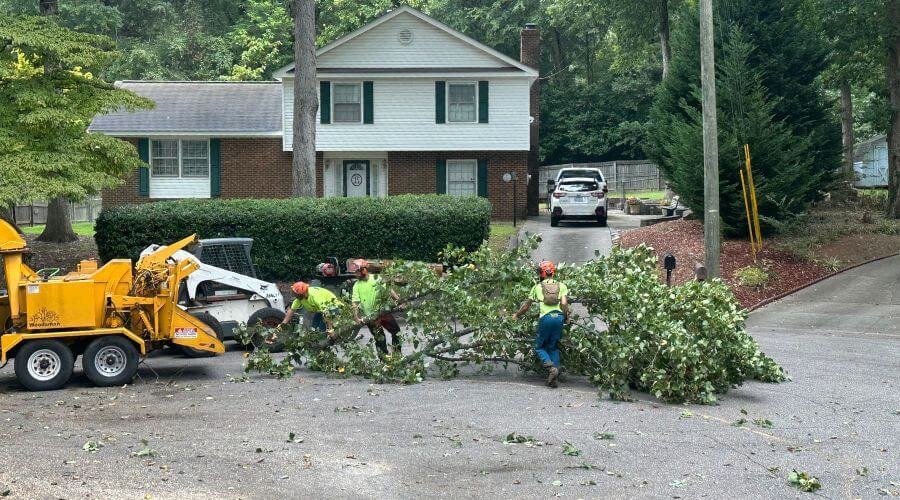
Why property owners in Irmo work with us
Most of the trees in this town were kept on purpose, and people are attached to them. That changes the conversation. Rather than arriving with a list of what has to go, we start with what can stay and what has to change around it: a limb lifted, a crown thinned, a pine that leans taken out before it chooses its own direction. When a stem does have to come down, we take it apart so the pieces land where we planned, and we leave the ground in a state you can use rather than a crater and a pile. None of that is unusual, but it is what people in a town of retained trees actually want: the tree gone only where it has to be, and the rest of the canopy still doing its job. That is also why we would rather spend twenty minutes on the walk-around than arrive on the day with a list already written.
Fallen Tree Removal Columbia works from Mason Road in Columbia and covers Irmo on the same schedule, so the walk, the scope and the crew come from the same place.
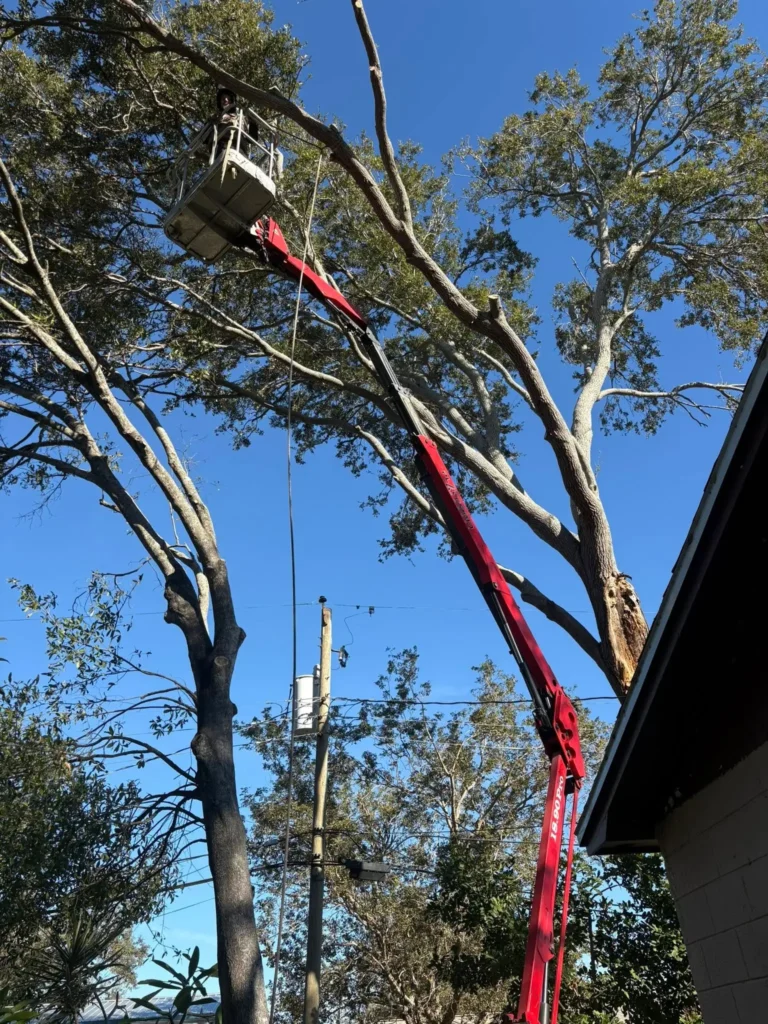
Why it matters now in Irmo
The pines that define this town are at the age where the failures start. A tree that was mature when the subdivision went in has spent forty years adding height without adding much root depth, and the wood at the base is the part that gives way. That is consistent with the county record from Helene: 60 to 70 mph gusts, and still eighteen homes destroyed and 232 others damaged across Richland County. A wind that moderate does not flatten a forest. It picks off the stems that were already compromised — the ones with a lean, a fork, or a base that had begun to rot where a limb was cut badly years ago — and it picks them one at a time, house by house, over the whole county. Two years after that storm, the trees that survived are carrying the same defects, and the ones nearest a house are the ones worth a look before the next system arrives. The town’s pines also drop lower limbs without warning as they age, which is a slow problem rather than a dramatic one and shows up as a dead branch hanging in a fork above a path, a swing, or the spot where the car goes.
Tree work around Irmo
Frequently
Asked
Questions
Why do the pines here come down in wind that is not especially strong?
Because of how they grow. A loblolly puts on height quickly and keeps its roots wide and shallow, so it holds well in dry ground and badly in wet. The county record from Helene shows gusts of 60 to 70 mph with eighteen homes destroyed and 232 damaged, which is the pattern of individual stems failing rather than whole stands going over. On a street of thirty pines that produce thirty small failures, a handful will reach a house.
My house was built in the eighties. Is the tree risk higher or lower than on a new lot?
Higher, in the sense that the trees kept at the time of the build are now at full size while the house has not moved. A tree planted or retained in 1984 has had four decades to close the gap the plan allowed, and the limb that cleared the eave then is often resting against it now. On a lot built in the last few years the same tree would still be small enough to prune from the ground with a pole saw.
Where does the county stand on yard waste collection?
Richland County takes sticks and small limbs up to four feet long and four inches round at the kerb, in the region of two roll carts or six thirty-gallon bags a week, and sends larger loads to a drop-off centre. A take-down produces far more than that, so the material leaves with us. Irmo sits in Richland County, so those are the rules that apply to what you can put out.
Can you tell whether a pine is going to fail before it does?
Not with certainty, but there are signs worth reading. A lean that has increased, a curve low in the trunk, a crack at the butt, or a ring of soft wood where a limb was removed all point the same way. Conks or a white fungal sheet at the base are a stronger signal. If you see any of those on a tree within falling distance of the house, have it looked at, since the failure mode takes about as long as it takes to read this paragraph.
What happens when the tree sits on common ground behind the fence?
That is common in this town, and it changes who is responsible. A stem on shared ground or on a right-of-way is not simply the nearest household’s to cut, and the answer usually sits with whoever holds that land. We will look at where the trunk stands and tell you what we find before any work is booked, including whether the strip is shown as shared on the plan.
Will removing a large pine leave the garden exposed?
It will, and it is worth planning for rather than discovering. A pine that has shaded a bed for decades has made that bed into a shady bed, and the plants in it may not enjoy the change. The stump is the other consideration: grinding it out and backfilling gives you usable ground, while leaving it means working around it for years, and a pine stool does not rot quickly enough to solve itself.
Because of how they grow. A loblolly puts on height quickly and keeps its roots wide and shallow, so it holds well in dry ground and badly in wet. The county record from Helene shows gusts of 60 to 70 mph with eighteen homes destroyed and 232 damaged, which is the pattern of individual stems failing rather than whole stands going over. On a street of thirty pines that produce thirty small failures, a handful will reach a house.
Higher, in the sense that the trees kept at the time of the build are now at full size while the house has not moved. A tree planted or retained in 1984 has had four decades to close the gap the plan allowed, and the limb that cleared the eave then is often resting against it now. On a lot built in the last few years the same tree would still be small enough to prune from the ground with a pole saw.
Richland County takes sticks and small limbs up to four feet long and four inches round at the kerb, in the region of two roll carts or six thirty-gallon bags a week, and sends larger loads to a drop-off centre. A take-down produces far more than that, so the material leaves with us. Irmo sits in Richland County, so those are the rules that apply to what you can put out.
Not with certainty, but there are signs worth reading. A lean that has increased, a curve low in the trunk, a crack at the butt, or a ring of soft wood where a limb was removed all point the same way. Conks or a white fungal sheet at the base are a stronger signal. If you see any of those on a tree within falling distance of the house, have it looked at, since the failure mode takes about as long as it takes to read this paragraph.
That is common in this town, and it changes who is responsible. A stem on shared ground or on a right-of-way is not simply the nearest household’s to cut, and the answer usually sits with whoever holds that land. We will look at where the trunk stands and tell you what we find before any work is booked, including whether the strip is shown as shared on the plan.
It will, and it is worth planning for rather than discovering. A pine that has shaded a bed for decades has made that bed into a shady bed, and the plants in it may not enjoy the change. The stump is the other consideration: grinding it out and backfilling gives you usable ground, while leaving it means working around it for years, and a pine stool does not rot quickly enough to solve itself.