Professional Tree Removal Services in Little Mountain, SC
Call us
(803) 866-3855
Hours
Scheduled visits
Booked ahead, not promised at short notice

What the trees in Little Mountain are doing
Tree Service in Little Mountain, SC
Little Mountain sits at 615 ft, higher than Chapin, Gilbert or Lexington, with 446 people on 1.52 square miles and only 215 housing units. Close to half of those homes, 47.9%, were standing before 1980. A town that small carries one feature that matters when timber comes down: the road through it is often also the way around it, so a trunk across the carriageway does not inconvenience one household, it closes a route for everyone on the far side.
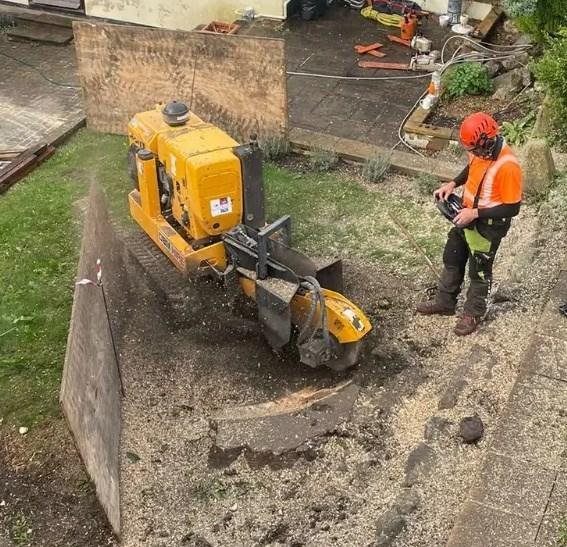
The homes in Little Mountain and the trees around them
615 ft and the wind that gets there first
Every ridge in the Midlands takes the weather before the ground below it, and 615 ft is the highest number any of the towns around here can put on a map. Newberry County’s own storm record makes the point: Hurricane Helene in September 2024 arrived with gusts put at 70 to 90 mph, the strongest figure attached to any county around this town. Wind at that speed does not need a rotten tree. It needs a fork with bark caught in the seam, a limb that grew out over a lane, or a trunk whose roots were shaved on one side by a grader. The upper crown catches the load and the seam decides what happens next. In practice, the tallest trees on the highest ground carry the first load, and they tend to be the ones nearest the road.
215 housing units on 1.52 square miles
A housing stock of two hundred and fifteen homes is few enough that a single removal is a visible event, and the town’s street layout leaves little slack around it. Where a machine has to stand on the road rather than a drive, the plan includes the traffic as well as the tree: where the pieces go, how long the route stays shut, and which neighbouring gate is the one that has to stay usable. It also means the trees that come down are rarely anonymous. A resident can usually name the tree that has been leaning since the last storm, which makes the first conversation shorter and the walk to the right corner of the property quicker. The upside is that nobody has to explain the situation twice; the tree in question is usually the one the street has been watching.
47.9% of the housing predates 1980
Nearly half the housing was built before 1980, and in a town of this size that means the older houses sit on the older lots, with the older trees, in the part of town that has been built up longest. On those lots the trunk is frequently within a limb’s length of a wall, and the yard behind it has been used for sheds, gardens and parking for forty years or more. The trees have been pruned by whoever owned the place, to whatever standard they knew, which leaves a crown with a history of cuts at different heights. Reading that history is most of the job. Age alone is no reason to cut a tree. It is a reason to look at the unions and the base, since a crown pruned by four owners over four decades carries weight nobody planned for.
A 1981 median and forty-five years under the same canopy
The median house here went up around 1981, and the tree that was planted or kept with it has had forty-five years to fill the space it was given. That is long enough for a shade tree to have lifted a path, pushed against a roof edge and grown a limb out over the lane where the bin lorry passes. It is also long enough that the first owners’ pruning has been buried under new growth, so the shape of the crown no longer shows where the old cuts were made. The result is a canopy that suits the house and no longer suits the access, which is what most of the work turns on. That is why the walk from the gate to the tree matters: the answer usually sits in the gap between the crown and the thing it overhangs, not in the trunk.
Talk to us about a tree in Little Mountain
Tell us the address, what the tree is doing and what has to stay open while the work happens. We will set a time to walk the property and put the scope in writing before anything is scheduled.
Tree work in Little Mountain
Tree services in Little Mountain
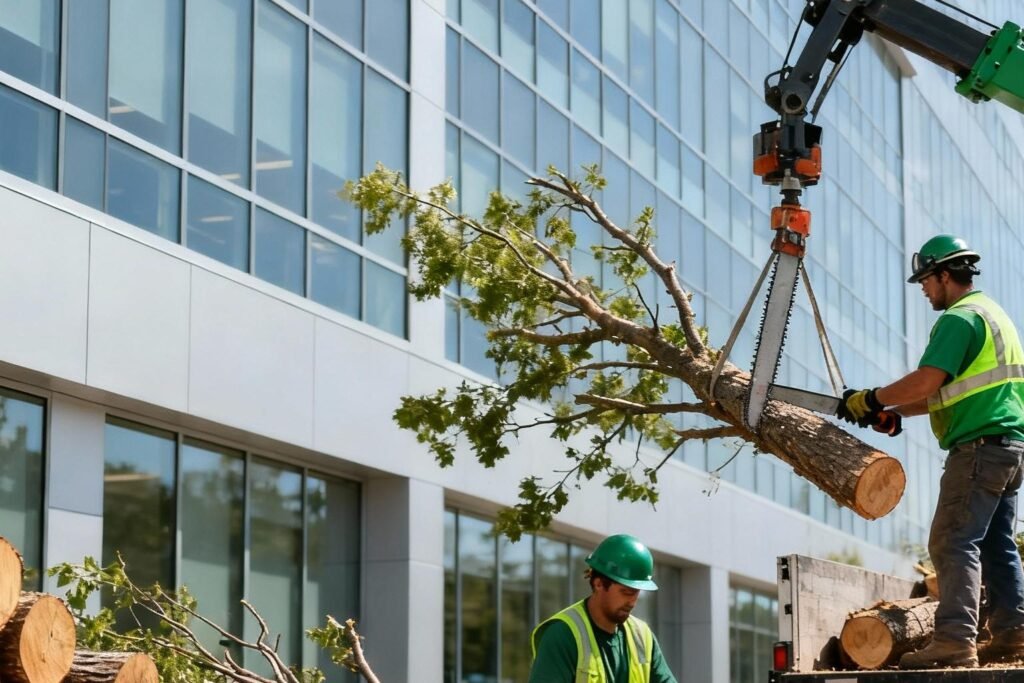
The first job on most properties is tree removal, and what sets it apart here is the route rather than the trunk. A tree that overhangs the lane has to come down in sections small enough to be carried clear, because there is no corner of the property where a long piece can lie while the road stays open. That planning happens on the ground, before anything goes up. Where the lane cannot be shut at all, the work is done between traffic, one section at a time.
Work on a lane like this is measured in pieces rather than hours. A limb that would be dropped in an open field is tied off and lowered, then cut again on the ground so it can be carried through a gate or along a verge. That is slower, and it is the reason one tree can take a day that would otherwise be an afternoon. The verge is left raked and the sawdust bagged, not spread across the lane.
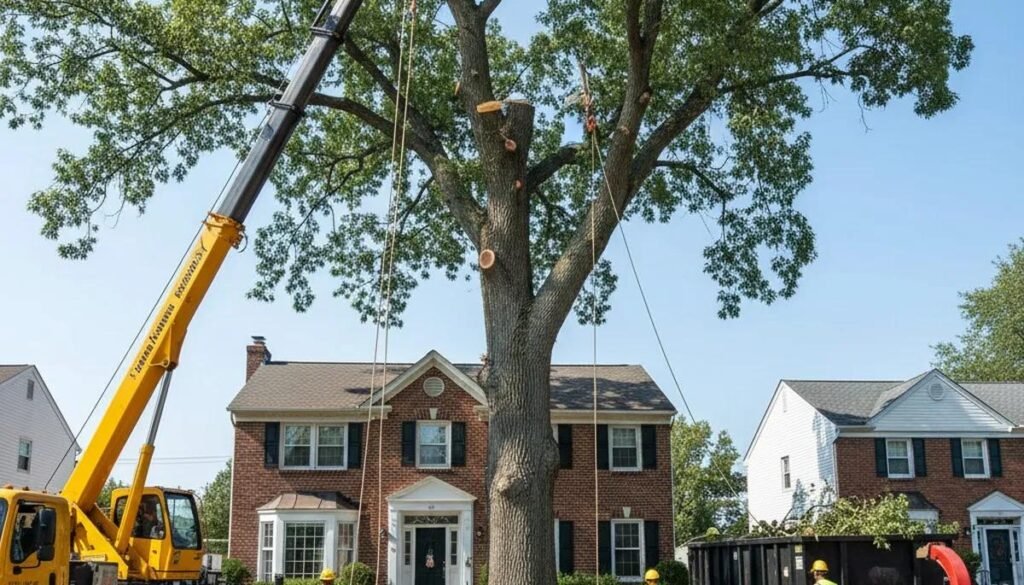
Where a tree is staying, tree pruning takes the dead wood out, shortens a long limb and restores height over a path or a lane. Stump grinding finishes the job so a mower can pass where the stump was, and debris removal takes the brush and cordwood away rather than leaving it for a collection that a town this size does not run. Wood stacked at the kerb is the most common thing we are asked to clear a second time.
Land clearing suits the small parcel being opened up behind an existing house, where the limit is the fence and the neighbour’s shed rather than the trees. Emergency tree service deals with a trunk already across the way through, and commercial tree services serves the businesses fronting the main road.
Chapin is the nearest town to the south, Gilbert lies east along the road, and Lexington is a longer run beyond it.
How a visit runs
- Walk the property and note what is at risk
- Check the base, the crown and the access
- Confirm what the city or county requires
- Put the scope in writing before the work
- Clear the debris and rake at the end
What we will not do
- We will not promise a response time we cannot keep
- We will not claim a credential we cannot show
- We will not give a figure for a tree nobody has seen
- We will not stack debris at the curb and call it cleared
- We will not cut a tree that can be pruned and kept
Why property owners in Little Mountain work with us
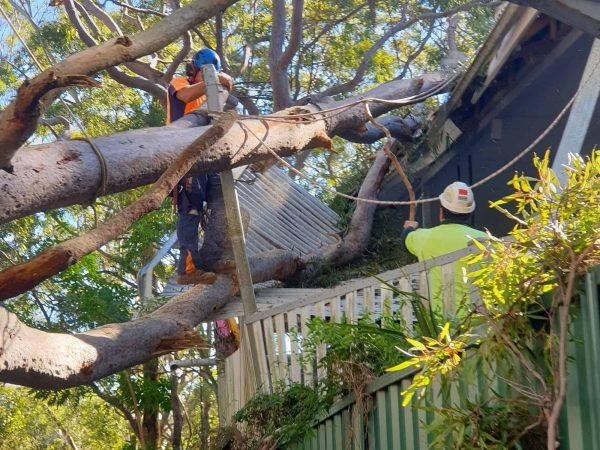
A closed road in a town of 446 people is a problem for everyone, so the first thing we establish is how the route stays passable while the work is done. The order of the day is agreed on site, the drop zone is chosen with the lane in mind, and the pieces are carried out rather than dragged through a gate. Fallen Tree Removal Columbia operates from 1205 Mason Rd in Columbia, with hours of daily. No opinion is offered on a trunk seen only from the road, and no commitment is given about a tree nobody has stood beside. What we offer is an honest account of what the tree will do, and a plan that keeps the lane open. If the trunk stands where the lane narrows, we say up front how long that stretch will be shut and who needs to move a car, because the neighbours are the ones who live with the delay.
Why it matters now in Little Mountain
Newberry County’s record from September 2024 is the reason the timing matters here more than in most places around this town. Helene produced gusts put at 70 to 90 mph across the county, widespread trees and power lines down, many roads closed with some shut for an extended period, large sections without power, many structures damaged by falling trees, 10 homes destroyed and 118 others damaged. Read that list again with a town of two hundred and fifteen homes in mind: more than half the housing stock of Little Mountain would fit inside the damaged count for the county. Add 47.9% of housing built before 1980, which means the trees beside those houses have had four decades or more to grow into the space above the lane, and a gust does not have to be at the top of that range to finish a trunk that has been hollowing since the 1990s. The useful work is done in dry weather, on the trees that lean over the road, before the next system arrives. What that record describes is a county where the routes themselves became the casualty, and a town this size has no second way round to fall back on.
Tree work around Little Mountain
Frequently
Asked
Questions
Why were roads closed for so long in Newberry County after Helene?
Because the damage was widespread rather than local. The county record lists many trees and power lines down, many roads closed with some shut for an extended period, and large sections without power, alongside gusts put at 70 to 90 mph, 10 homes destroyed and 118 damaged. When timber is down across a network of rural roads at once, crews work through it one route at a time, and the roads with the most traffic are cleared first. In a small town, that order is felt.
Does 615 ft make a difference to how trees fail here?
It puts the town above Chapin, Gilbert and Lexington, so the wind arrives with less to interrupt it. That shows up first in the upper crown, which is where a fork or a long limb is tested before the trunk is. The ground being higher also means it dries faster than the low country around Columbia, so a root plate here is less often sitting in water, and a failure is more likely to come from a seam or a hollow than from soft ground.
How old are the trees beside a house built in the early 1980s?
Somewhere around forty-five years if the tree went in with the house, and older if it was kept from the woodland that was there before. That age is when a shade tree has usually outgrown its original space: limbs over a lane, roots under a path, a crown that meets the neighbour’s. It is also when the first serious hollows appear behind old pruning cuts, which is why the trunk is worth a look at that age rather than the crown alone.
What happens when a fallen tree blocks the only way out?
The first job is to clear a passable width rather than to tidy the whole tree, so people can get out and services can get in. The rest is worked back from that opening in sections, with the wood stacked clear of the carriageway. If a line is involved, the utility has to deal with it before anyone cuts, because a trunk under tension against a conductor is a different job from one lying in a ditch.
Can the wood be left for a collection?
There is no town-wide collection that will take a removal’s worth of timber. Brush and cordwood have to be hauled or kept on the property, and a heap at the edge of a yard holds moisture against a fence and takes years to break down. If you want the wood for burning, it needs stacking off the ground and under cover. If not, it is better gone the same week.
Is a tree on a small lot here harder to take down than a big one?
Often, yes. A small lot means the tree is close to a wall, a fence and a lane at the same time, so there is no clear direction to drop into and every piece has to be controlled. The work is slower and produces more cuts. The compensation is that the pieces are smaller, which matters when they have to be carried out through a gate rather than dragged.
Because the damage was widespread rather than local. The county record lists many trees and power lines down, many roads closed with some shut for an extended period, and large sections without power, alongside gusts put at 70 to 90 mph, 10 homes destroyed and 118 damaged. When timber is down across a network of rural roads at once, crews work through it one route at a time, and the roads with the most traffic are cleared first. In a small town, that order is felt.
It puts the town above Chapin, Gilbert and Lexington, so the wind arrives with less to interrupt it. That shows up first in the upper crown, which is where a fork or a long limb is tested before the trunk is. The ground being higher also means it dries faster than the low country around Columbia, so a root plate here is less often sitting in water, and a failure is more likely to come from a seam or a hollow than from soft ground.
Somewhere around forty-five years if the tree went in with the house, and older if it was kept from the woodland that was there before. That age is when a shade tree has usually outgrown its original space: limbs over a lane, roots under a path, a crown that meets the neighbour’s. It is also when the first serious hollows appear behind old pruning cuts, which is why the trunk is worth a look at that age rather than the crown alone.
The first job is to clear a passable width rather than to tidy the whole tree, so people can get out and services can get in. The rest is worked back from that opening in sections, with the wood stacked clear of the carriageway. If a line is involved, the utility has to deal with it before anyone cuts, because a trunk under tension against a conductor is a different job from one lying in a ditch.
There is no town-wide collection that will take a removal’s worth of timber. Brush and cordwood have to be hauled or kept on the property, and a heap at the edge of a yard holds moisture against a fence and takes years to break down. If you want the wood for burning, it needs stacking off the ground and under cover. If not, it is better gone the same week.
Often, yes. A small lot means the tree is close to a wall, a fence and a lane at the same time, so there is no clear direction to drop into and every piece has to be controlled. The work is slower and produces more cuts. The compensation is that the pieces are smaller, which matters when they have to be carried out through a gate rather than dragged.