
Tree Service in Lexington, SC
Call us
(803) 866-3855
Hours
Scheduled visits
Booked ahead, not promised at short notice
What the trees in Lexington are doing
Tree Service in Lexington, SC
Lexington grew outward faster than almost anywhere else in the county. Nine out of ten houses standing in town went up after 1980 and the median home here dates to 2003, so most of the shade across these 11.97 square miles was planted rather than inherited. That is what we meet on a normal visit: a pine or maple set out to shade a new build, now thirty feet tall, its roots running under a driveway poured the same season. Tree service Lexington owners ask us for is rarely about a forest. It is about one tree that has outgrown the plan the lot was drawn around.
Homes in Lexington and the trees around them
The planted yards behind the 2003 median
A yard attached to a 2003 house is not old by tree standards, but it is old enough to have become a problem. Loblolly pines put in as six-foot whips during the building years are now past thirty feet, and a canopy that looked generous on a site plan reaches the roof edge, the fence, and the neighbour’s shed at the same time. Because these trees grew in open ground with nothing competing for light, they kept their lower limbs instead of shedding them. That low branching is the first thing we look at, because it is what fails first when wind gets under it. The other tell is the root flare: on a lot graded flat before planting, the flare is often buried, and a buried flare rots quietly while the crown above it looks healthy. Nobody notices either fault until a limb is on the ground.
The 9.4 percent that predates 1980
The housing here is not all new. About one house in eleven was standing before 1980, and those are the properties with canopies that were never planned around a building. A water oak that was a sapling when the house was framed now spans most of the yard, and its trunk sits closer to the wall than any modern setback would allow. Roots on these lots have had fifty years to lift a walkway, crack a patio, and find the line running out to the street. Work on that kind of tree is slow and sectioned, because there is nowhere for a limb to fall. It also tends to be work that has been put off for years, which is why the first visit to one of these yards often turns up a hollow at the base, a shelf fungus on a buttress, or bark worn through on one side.
Lot lines inside 11.97 square miles
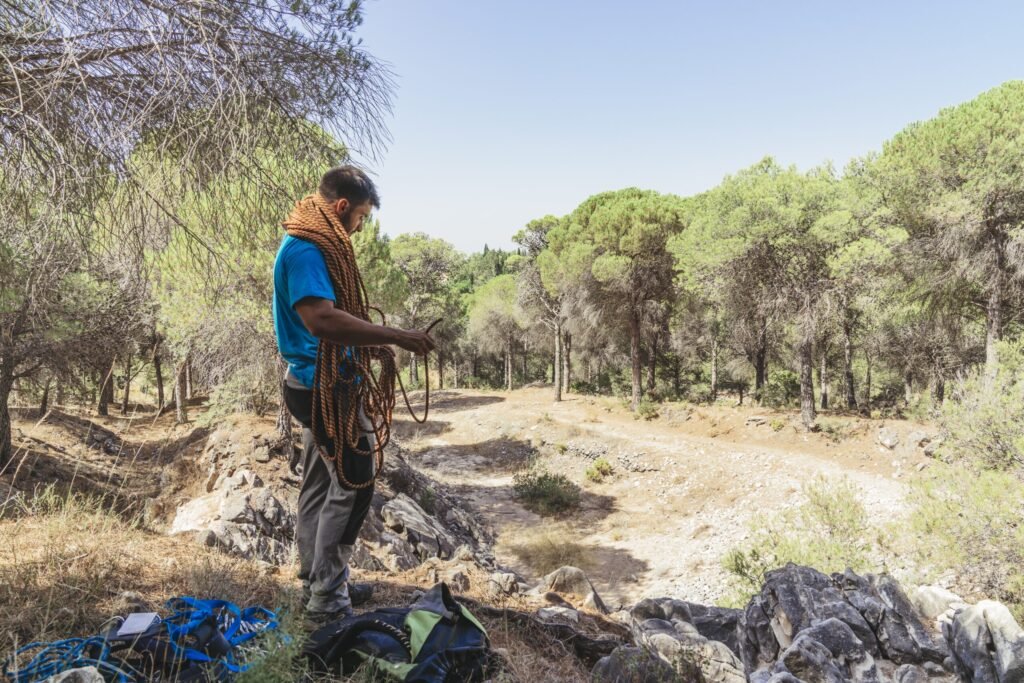
Lexington covers just under twelve square miles, and the way that land is divided shapes every job. Newer subdivisions give a house a front, a back, and a strip down one side, and the tree that has to come down usually stands in that strip, hemmed by two fences and a utility drop. Trucks cannot always reach it, so the work happens from the driveway with rope and a chipper parked where the street allows. Knowing which side of the line a trunk sits on matters too, since a stem leaning over a boundary is a conversation between two households, and the answer decides who books the work. A trunk can also stand on a strip that belongs to nobody in particular, where a utility easement runs behind the fences and the town has an interest in what happens to it.
Streets that took 70 to 80 mph in September 2024
Hurricane Helene is still the reference point for most calls we take here. Lexington County’s entry in the National Weather Service record reads as a list rather than a story: timber and lines across the carriageway, stretches of road shut, neighbourhoods dark for days, a few buildings struck, standing water in the low spots, and gusts reckoned at 70 to 80 mph. Three homes in the county were destroyed and forty-one more damaged. What that left behind is not always obvious from the street: a hanger caught in a fork forty feet up, a split crotch held by bark, a root plate lifted an inch out of the soil. Those are the trees that come down on a calm afternoon six months later, which is why the walk-around matters as much as the cutting.
Talk to us about a tree in Lexington
Tell us the address, what the tree is doing and what has to stay open while the work happens. We will set a time to walk the property and put the scope in writing before anything is scheduled.
Tree work in Lexington
Tree services in Lexington
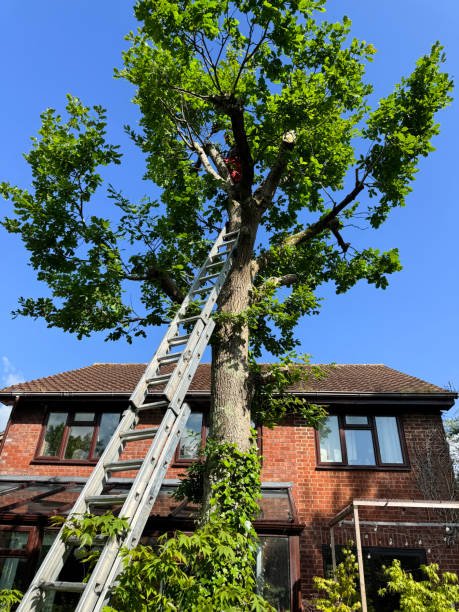
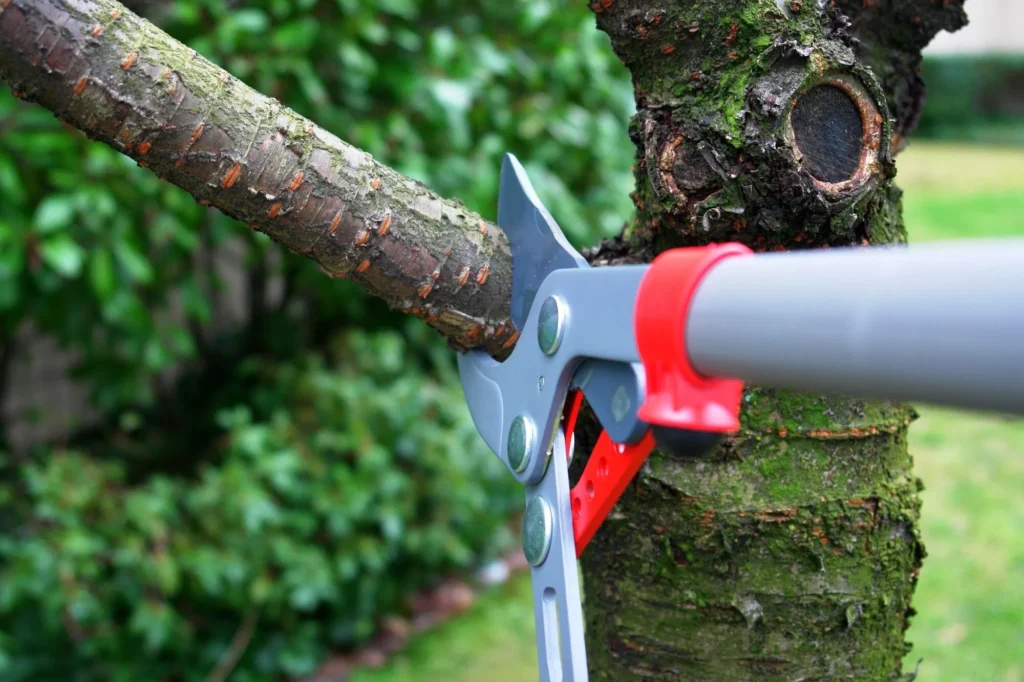
Most of what happens in this town divides into a handful of jobs, and the order they run in matters more than the labels. Tree removal is the sectioned work: a stem taken down in pieces, roped or rigged, so nothing lands on a fence, a parked car, or a window. Stump grinding follows, taking the leftover stool below the grade line so a mower can pass over it and a new planting can go in the same spot. Tree pruning is the smaller, more frequent visit — deadwood out of a canopy, a limb pulled back off a drive, low branching lifted clear of a path.
Then there is the work that follows a change of use. Land clearing covers a lot being reset for a build or a paddock, where the trees come out and the ground is left ready for the next stage. Debris removal handles everything the other jobs leave on the ground, including the brush piles that accumulate on a property nobody has touched in years. Emergency tree service is for the mornings after a storm, when a trunk is already across something and the question is how to get it off without making the damage worse. Commercial tree services covers the lots where a business, a small block of units, or a manager needs the grounds kept in order month after month instead of when somebody complains.
We travel across Lexington and the places that sit against it: Cayce and West Columbia toward the river, Irmo up on the Richland County line, Chapin out to the north-west, and Columbia itself when a property sits on the boundary. The town is small enough that a job on one side of it usually means passing three more on the way home, and we would rather tell you that a job in Chapin fits the same afternoon than have you sit on a waiting list for a ten-minute cut.
How a visit runs
- Walk the property and note what is at risk
- Check the base, the crown and the access
- Confirm what the city or county requires
- Put the scope in writing before the work
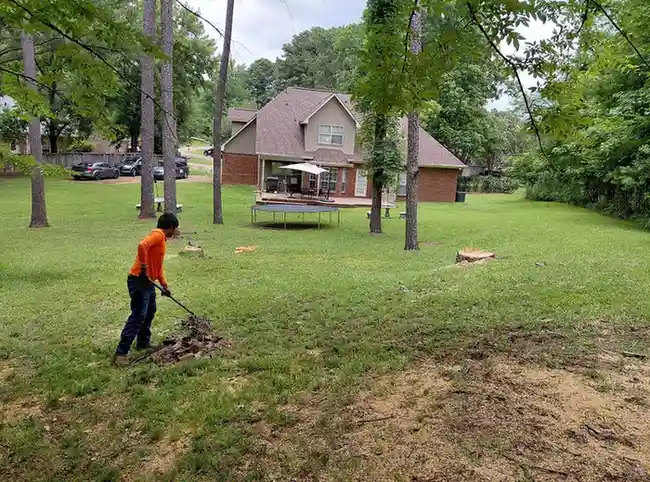
- Clear the debris and rake at the end
What we will not do
- We will not promise a response time we cannot keep
- We will not claim a credential we cannot show
- We will not give a figure for a tree nobody has seen
- We will not stack debris at the curb and call it cleared
- We will not cut a tree that can be pruned and kept
Why property owners in Lexington work with us
Because the trees here are mostly young, the faults here are mostly hidden. A planted pine that looks sound from the lawn can have a girdling root two feet down, or a co-dominant top that has been waiting for the right gust since the canopy closed over. Owners call when a limb has already come down, or when a neighbour’s tree has made them look at their own line of them differently. We start by walking the property and telling you what is actually holding, what is not, and what can wait another season. Sometimes the honest answer is that three trees need nothing and one needs a single cut. We would rather leave a sound tree standing and tell you why than sell you a removal you do not need, because a cleared yard on a 2003 lot only means you will be planting shade again in a decade.
Fallen Tree Removal Columbia works from Mason Road in Columbia and covers Lexington on the same schedule, so the walk, the scope and the crew come from the same place.
Why it matters now in Lexington
Timing on a 2003-median town is different from timing on an old one. The trees are entering the years when they put on the most wood, which means the limbs are heaviest exactly when the roots are most confined by paving, driveways, and the compacted ground left behind by construction. Add the drought stretches this part of Lexington County gets, and the picture is a canopy adding weight over a root system working in a smaller volume of soil every year. Helene showed what 70 to 80 mph does to that arrangement: the county lost three homes outright and saw forty-one others damaged, and most of those were not in old woods but on streets built in the last two decades. A tree that stood through it is not automatically fine. Storm damage often shows up as a crack that opens over the following spring rather than on the day itself, and the same gust that stripped a limb off one trunk will have moved the root plate on another without breaking anything you can see from the kitchen window. Two seasons on, the trees that failed in that storm have been cleared and the ones that merely shifted are still standing over driveways.
Tree work around Lexington
Frequently
Asked
Questions
Is a permit needed to take a tree down in Lexington?
The City of Columbia’s tree ordinance, which is the one most often cited to us, applies to Columbia property and exempts single-family residential lots from its removal permit. Lexington sits in Lexington County under its own arrangements, so the answer depends on where the trunk stands, what is around it, and whether the ground is private or public. We ask before we cut, and we will tell you when a question needs to go to the town rather than to us.
How much of my yard can a truck actually reach?
Less than most people expect, and that shapes the job. On a lot inside the town’s 11.97 square miles, a truck and chipper usually stay on the drive or the street, and the tree is worked from the ground with rope, a throw line, and a climber. Narrow side strips between fences are common in the newer subdivisions, and a machine will not fit. That is not a reason to postpone the work; it just changes how the tree comes apart.
Does the 2003 median build year mean my trees are safe for now?
It means they are in the stretch where most of the risk appears. A tree planted around the time the house was built is now tall enough to reach the roof edge and heavy enough to matter, but young enough that nobody has looked at it since. The failures we see on these lots are usually structural — a fork with included bark, a limb over a drive — rather than the slow decline you get in a very old tree.
What happens to the wood and the brush?
It leaves with us unless you want some of it kept. Straight sections can be cut to length for firewood or garden use, and chips can be left in a pile for mulch if there is a spot for them. Everything else goes on the truck. If you would rather handle the disposal yourself, say so at the start, because it changes how the site is left and what the crew loads.
Why did so many trees come down in Helene if the housing is new?
New housing and new trees do not mean low exposure. The service record for Lexington County lists many trees and power lines down and a few structures damaged by falling trees, with gusts put at 70 to 80 mph — enough to break stems that had grown fast in open ground and never been thinned. Fast-grown wood is wide-ringed and lighter than the slow-grown timber in an old fence line, and it snaps rather than bends.
Can you work around a fence, a shed, or a pool?
Yes, and it is the normal condition here rather than the exception. The tree is taken apart in small pieces and each one is lowered or thrown to a clear spot chosen before the first cut. A pool gets covered, a shed gets a plywood sheet over it, and a fence line gets a plan for where the pieces land. If a section has to cross a boundary, we talk to the neighbour before the day rather than during it.
The City of Columbia’s tree ordinance, which is the one most often cited to us, applies to Columbia property and exempts single-family residential lots from its removal permit. Lexington sits in Lexington County under its own arrangements, so the answer depends on where the trunk stands, what is around it, and whether the ground is private or public. We ask before we cut, and we will tell you when a question needs to go to the town rather than to us.
Less than most people expect, and that shapes the job. On a lot inside the town’s 11.97 square miles, a truck and chipper usually stay on the drive or the street, and the tree is worked from the ground with rope, a throw line, and a climber. Narrow side strips between fences are common in the newer subdivisions, and a machine will not fit. That is not a reason to postpone the work; it just changes how the tree comes apart.
It means they are in the stretch where most of the risk appears. A tree planted around the time the house was built is now tall enough to reach the roof edge and heavy enough to matter, but young enough that nobody has looked at it since. The failures we see on these lots are usually structural — a fork with included bark, a limb over a drive — rather than the slow decline you get in a very old tree.
It leaves with us unless you want some of it kept. Straight sections can be cut to length for firewood or garden use, and chips can be left in a pile for mulch if there is a spot for them. Everything else goes on the truck. If you would rather handle the disposal yourself, say so at the start, because it changes how the site is left and what the crew loads.
New housing and new trees do not mean low exposure. The service record for Lexington County lists many trees and power lines down and a few structures damaged by falling trees, with gusts put at 70 to 80 mph — enough to break stems that had grown fast in open ground and never been thinned. Fast-grown wood is wide-ringed and lighter than the slow-grown timber in an old fence line, and it snaps rather than bends.
Yes, and it is the normal condition here rather than the exception. The tree is taken apart in small pieces and each one is lowered or thrown to a clear spot chosen before the first cut. A pool gets covered, a shed gets a plywood sheet over it, and a fence line gets a plan for where the pieces land. If a section has to cross a boundary, we talk to the neighbour before the day rather than during it.