Stump Grinding in Columbia, SC
What the job involves
A stump in a Columbia yard is never just a stump
A stump in a Columbia yard is never just a stump. It is the reason the mower stops in the same place every second Saturday, the reason the dog keeps digging at the same spot, and the reason a corner of the lawn never quite dries out. Grinding it out is a half-day job with the right machine and a miserable one with a shovel, and the difference is decided before the first cut by where the roots run and what sits on top of them.
What grinding covers
- The stump and the root flare, ground below grade
- Access for the machine through a gate or over a lawn
- A utility locate before any cutting starts
- Grindings hauled or piled clear, and the hole backfilled
Why property owners grind the stump instead of cutting it flush
Removing a tree takes the trunk and the canopy. Grinding takes the part nobody sees. A water oak cut at ground level leaves a root flare that can run wider than the canopy was, and a pine leaves a taproot that goes down rather than out. The machine, the access and the time all change with the species, which is why a figure for “a stump” says nothing about your stump.
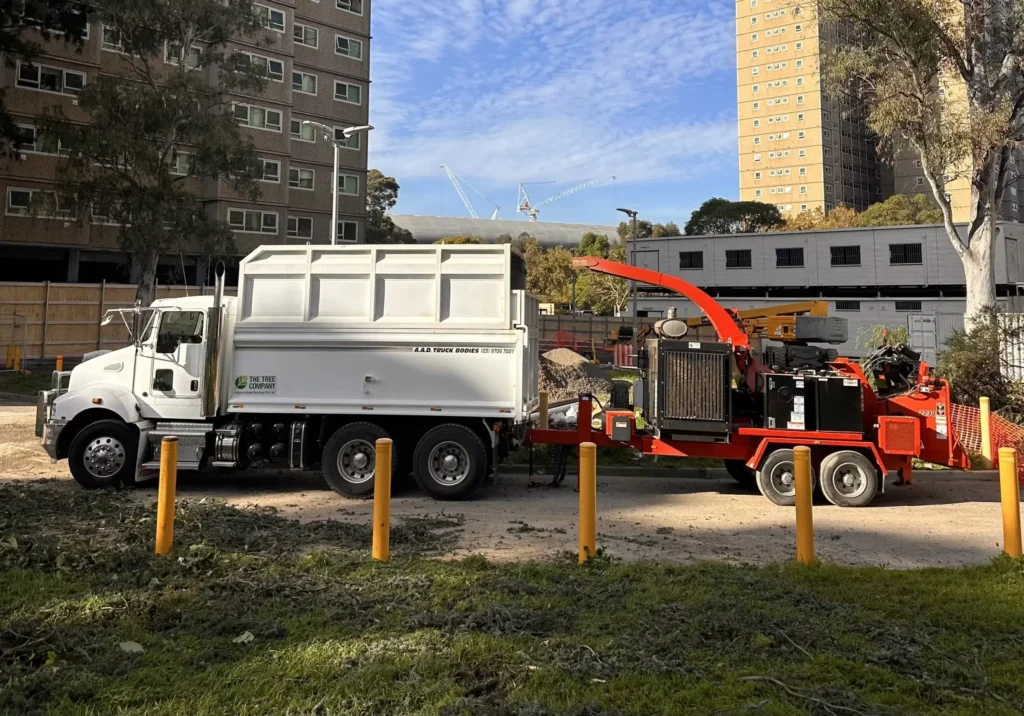
Access decides most of it. A grinder gets to the stump through a gate at least three feet wide, or over a lawn that can take a tracked machine, or not at all. A stump behind a fence, between a shed and a property line, or inside a raised bed changes the plan before the machine arrives, and the honest answer is to look at it rather than guess over the phone.
The other half of the job is what happens to the hole. Grindings are a mix of chips and soil, and they settle by roughly a third once they dry. A stump ground and left with a mound on top becomes a dip by the following spring, which is why the hole is backfilled and the surface levelled rather than simply left open. If the spot is going to be planted, the grindings are removed instead of left, because fresh wood chips pull nitrogen out of the soil as they break down.
Depth is the third variable. A stump ground four inches below grade is enough for a mower and a lawn. A stump in the path of a driveway, a patio or a new fence line has to go deeper, and the roots that supported it have to be chased far enough that nothing lifts the new surface in five years.
why the roots decide the work
A cut stump does not disappear. It rots from the outside in, and the rot is what attracts the insects that then find the house. In the Midlands the process is quick: warm, wet summers and mild winters keep fungal decay running for most of the year, and a water oak stump can go soft in three or four seasons while the root flare stays hard enough to stop a mower for a decade.
The stump is also a hazard that grows into the lawn. As the wood shrinks it leaves a void under the turf, and the turf collapses into it, which is how a trip hazard appears in a yard that looked flat two summers earlier. On a property with children or a dog, that is the part that matters more than the look of it.
There is a timing argument on the other side too. Grinding a fresh stump is easier than grinding a rotten one, because the wood holds together and the grinder throws clean chips rather than a slurry of soil and fibre. A stump left for years can also be full of grit and stones that were not there when the tree came down, and grit is what dulls a cutter wheel.
The county’s yard waste rules are worth knowing before the work starts. Richland County’s curbside programme takes sticks and small limbs up to four feet long and four inches across, about two roll carts or six 30-gallon bags a week, which does not cover a stump’s worth of grindings or the root flare from a large oak. Those loads leave with the crew or go to a drop-off centre, and that is part of the scope rather than a surprise at the end.
Why the root flare decides the job
Fallen Tree Removal Columbia works from 1205 Mason Rd and grinds stumps across Columbia and the towns around it. What we will not do is tell you the crew holds a credential or a registration number we cannot produce, or give a figure over the phone without seeing the access, the species and what is under the ground. What we will do is look at the stump, say what the machine can reach, and put the scope in writing before the work starts.
Why the root flare decides the job
The root flare is the widening at the base where the trunk meets the roots. On a water oak it can spread two or three times the trunk diameter, and it stays hard long after the stump itself has gone soft. A grinder that only takes the visible stump leaves the flare, which is the part that stops a mower and pushes a new patio out of level. The work is finished when the flare is gone to the depth the next use of the ground needs, not when the top of the stump is out of sight. That is why the width across the flare is the first measurement taken, before the machine is chosen. A grinder that stops at the visible wood leaves the hard part in the ground, and the mower finds it again the following summer.
What 811 does before a grinder arrives
South Carolina’s 811 service marks underground utilities before anyone digs or grinds. A stump near a service line, an irrigation main or a septic field is exactly the situation the call exists for, and the marking is done at no charge to the property owner. Grinding through an irrigation line is a repair, and grinding near a gas service is worse than a repair. The locate is requested before the machine is scheduled, and the flags stay visible until the work is done. On a corner lot with the meter at the side of the house, that locate is the difference between a morning’s work and a call to the utility. The request is made early because the marking window runs a few working days, and the schedule is built around it rather than the other way around.
Stump grinding against stump removal
Grinding takes the stump down below grade and leaves the roots in the ground. Removal pulls the stump and the root ball out, which takes a machine with more reach, leaves a much larger hole, and is the right answer when the spot is going to carry a structure. Most residential jobs are grinding jobs. A stump in the middle of a future slab, or one that has already lifted a walkway, is usually a removal, and the assessment says which one it is. The distinction is worth settling before a contractor builds a patio over the top of it. The answer also decides how long the ground stays unusable, because a removal leaves a hole that has to be filled and settled before anything is built over it.
What the grindings can and cannot be used for
Grindings are useful as fill in a low spot or around a planting bed, and they are the wrong material to dig into a vegetable bed or to use as a top dressing, because fresh chips tie up nitrogen while they break down. The usual answer is to take the grindings away and bring the hole back to grade with soil, which is what a lawn needs. Where the client wants them kept, they are piled clear of the house rather than left in the hole, and the pile is kept away from the foundation so it does not hold moisture against the wall. Either way the material leaves the hole, and the client is told before the work starts which one is happening.
What 811 does before a grinder arrives
Grinding is the usual answer for a stump in a lawn. Removal is the answer when the spot has to carry a slab, a shed or a fence post, because the roots that remain under a grinder will keep settling long after the surface goes down.
What a stump does under a slab
A stump left under a slab rots, the void opens, and the corner of the slab drops. The same thing happens to a fence post set beside an old pine stump. Knowing what is going on the ground decides the depth.
The scenario that catches homeowners: a stump under the driveway
The call that goes wrong starts with a stump at the edge of a driveway. The tree came down years ago, the stump was cut flush, and the driveway was poured over the top of it. Then the wood rots, the void opens, and a corner of the slab drops two inches. By the time it is noticed, the crack runs from the stump out to the street and the repair is no longer a stump job.
The same thing happens at a fence line. A post set beside an old pine stump looks solid for a season and then leans, because the ground under it has gone. On a lot with a septic field, the version of this that hurts the most is a stump ground without checking where the field lines run, which turns a small job into an excavation.
The way to avoid all three is to know what is under the surface before the machine starts. That means the locate, a look at the grade, and a question about what is going on top of the spot in the next year or two. A stump that is going to sit under a lawn can be ground to eight inches. A stump that is going to sit under a slab has to be taken out far enough that nothing will settle under it, and that is a different scope with a different machine.
There is a quieter version of the same problem on a property that is being sold. A stump in the back corner is easy to forget until an inspector walks the lot, and the note goes into the report with everything else. Grinding it before the listing is less work than negotiating it after the inspection, and it removes a question the buyer will otherwise ask twice.
Access
A gate, a lawn or a narrow side yard decides which machine comes.
Locate
811 marks the lines before the cutter goes near the ground.
Grind
Stump and flare taken below grade to the depth the next use needs.
Backfill
Grindings out or piled clear, hole brought back to grade.
Next step for a stump on your property
Call 803 866-3855 with the address and a description of the stump: how wide it is, what is growing over it, and whether a fence, a shed or a driveway is close. We will look at the access, check the locate, and put the scope in writing before the machine is booked.
Where we grind stumps around Columbia
Stump grinding runs across Columbia and the towns within about ten miles: Lexington, West Columbia, Cayce, Springdale, Forest Acres, Arcadia Lakes, Irmo, Blythewood, Elgin, Hopkins, Garners Ferry, Eastover, Gaston, Gilbert and Little Mountain.
Frequently Asked Questions
What happens to the hole and the grindings?
The hole is backfilled and brought back to grade, and the grindings are either hauled away or left in a pile clear of the house, depending on what the client wants. Fresh grindings are useful as fill but are not a planting medium, because they tie up nitrogen as they break down.
Can a stump be ground if a fence or shed is in the way?
Sometimes. A machine needs a route in and room to work, and a stump tight against a fence or under a shed roof may need the fence section moved or a smaller grinder brought in. That is decided on site, which is why the access question comes before any figure is discussed.
How deep should a stump be ground?
For a lawn, four to eight inches below grade is enough for a mower and for turf to cover the spot. For a driveway, patio or fence line, the stump and the flare need to come out far enough that nothing settles under the new surface, which usually means a deeper grind or a full removal. The depth is set by what the ground will carry next, not by a default.
Will grinding kill the roots?
Grinding removes the stump and the flare. The roots that are left decay over time and do not send up a new trunk from a hardwood stump, though some species can sucker from roots. Where suckering is a risk, the roots are cut back or treated as part of the job, and the assessment says which species behave that way on a Midlands lot.
Do you need to mark utilities before grinding?
Yes. South Carolina’s 811 service marks underground lines before any digging or grinding, and the marking is done at no charge to the property owner. A stump near an irrigation main, a service line or a septic field is exactly why the call exists. The flags stay up until the work is finished.