Commercial Tree Services in Columbia, SC
What the job covers
Tree work on a property that has to stay open
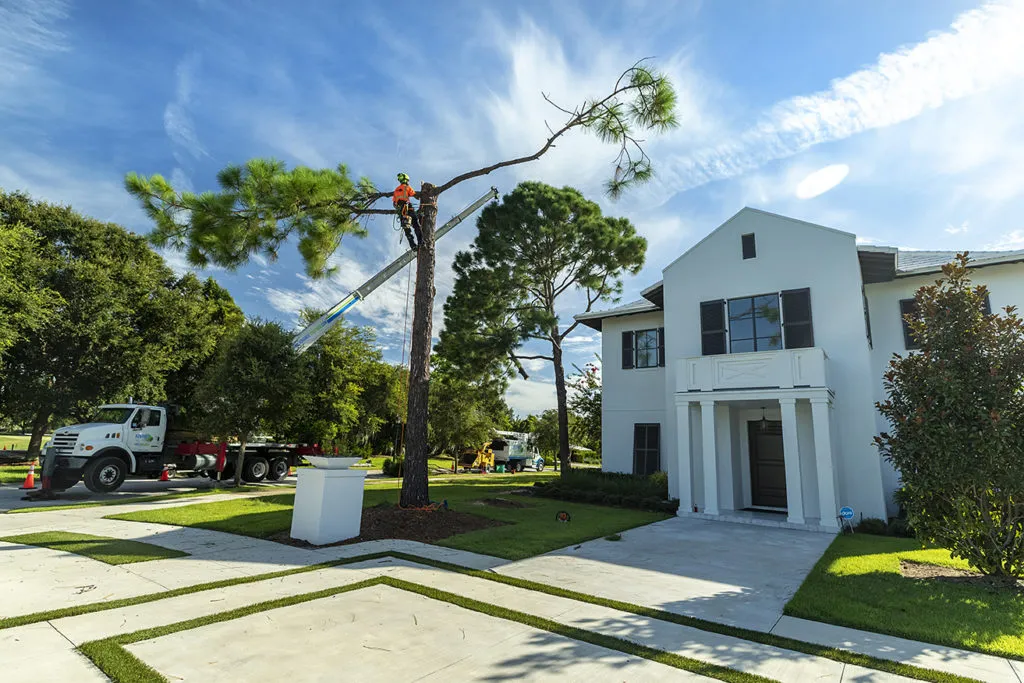
A parking lot loses two spaces when a water oak splits over the curb, and a retail center on Two Notch Road loses a Saturday when a limb takes the sign down with it. Commercial tree work in Columbia is a scheduling problem before it is a tree problem: the work has to happen without closing the lot, without pulling a tenant off the phone line, and without leaving the property looking worse than the tree did.
Why property managers call us before the storm season
Commercial tree services in Columbia are judged on what happens to the property, not on the size of the crew. A shopping center manager at Sandhills has tenants with delivery windows; a distributor off Bluff Road has trucks that cannot wait behind a chipper; a church on Atlas Road has a Sunday it cannot lose. The work has to be planned around those windows, and that is the part most crews skip.
Our approach is to walk the property first and write down what is actually at risk: which limbs overhang which parking spaces, which trunks lean toward a service drop, which stumps sit where a future sidewalk is going. That walk produces a scope you can hand to an owner or an insurer, with the work grouped by what is urgent and what can wait for a scheduled visit.
We also separate the two conversations that get blurred on commercial jobs. Tree health is one question; liability is another. A tree that is merely messy is not the same as a tree that will fail. Clemson’s Home and Garden Information Center notes that drought stress is the most significant factor in Hypoxylon canker, which attacks weakened oaks, so a stand that looked fine in a wet spring can be compromised by August.
Why now, not after the next storm
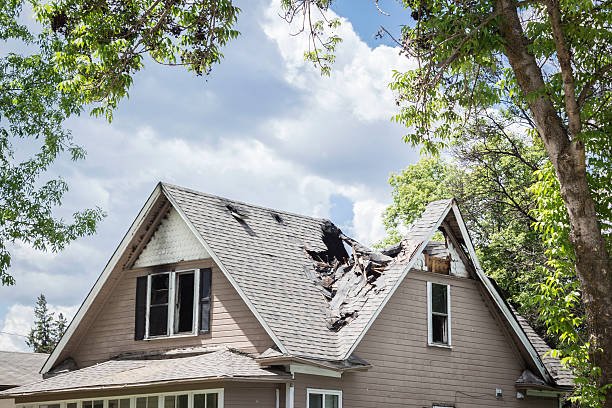
Columbia’s storm record is not abstract. The National Weather Service office in Columbia recorded maximum wind gusts of 60 to 70 mph in Richland County during Hurricane Helene in September 2024, with many trees and power lines down, some roads closed, sections of the county without power, a few structures damaged by falling trees, 18 homes destroyed and 232 others damaged. Commercial properties were in that same wind field, and the trees that failed were largely the ones that had been leaning, hollow or root-damaged for years.
The window to act is the stretch between storms, not the day after one. Once a tree is on a building or across a driveway, the work changes character: it becomes an emergency removal with utility coordination, traffic control and a property owner who has already lost a day. Scheduling the assessment while the tree is still standing means the removal can be done in daylight, with the lot open, and with the debris hauled in one pass instead of three.
Season shapes the work as well. Late winter is the cleanest time to prune most hardwood trees in the South Carolina Midlands, because the canopy is thin and the wounds close as growth resumes. Summer storms arrive with the canopy at full weight, which is exactly when a weak union fails. A property that prunes in January is not doing the same job as a property that calls in July.
What backs the work we do
Fallen Tree Removal Columbia works from 1205 Mason Rd in the north of the city, which puts most of Richland and Lexington County inside a short drive. The claims we can support are narrow, and we prefer to keep them that way. We work to the City of Columbia’s landscape and tree ordinance, which requires a tree removal permit for removals on private property other than single-family residential lots, and a separate forestry permit for any work inside the drip line of a public right-of-way or city-owned property. Neither permit is a formality: the ordinance also protects grand trees, defined as hardwoods 24 inches or more in diameter, softwoods 30 inches or more, and small hardwoods 10 inches or more, and a city-approved removal of a grand tree carries a replacement requirement.
The City of Columbia tree ordinance
Columbia’s ordinance is the single most useful document for a commercial property owner, because it decides what can be cut and what has to be replaced. Tree removal permits cover private property removals outside single-family residential lots and carry no fee, according to the city’s landscape and tree ordinance page. Work inside the drip line of a right-of-way or city-owned land needs a forestry permit instead, and the city’s Forestry and Beautification Division is the office that maintains city trees, gateways and medians. Grand trees need city permission before removal, and replacement is required when the city approves one. A manager who plans a site change around those rules avoids a stop-work order in the middle of a resurfacing job.
Hypoxylon canker and weakened oaks
Clemson’s Home and Garden Information Center describes Hypoxylon canker as a stress-related fungal disease that attacks weakened oak trees, including water oak and southern red oak, and names drought stress as the most significant factor in infection. On a commercial site the practical consequence is that a stand of oaks can decline quietly for two seasons before a limb drops. The visible signs are sparse crowns, dead branches in the upper canopy and bark that has begun to slough. An assessment that ignores those signs is an assessment of the parking lot, not of the trees, and it will miss the tree that a summer storm takes. A canopy walk and a look at the root flare take an hour on a small site.
Storm damage that decides a tree’s future
Clemson’s storm and weather damage factsheet puts the judgment plainly: the extent and type of damage determines whether a tree will live. A tree with a split trunk and a lifted root plate is a removal. A tree with one broken scaffold limb and an intact leader can often be reduced and kept. That distinction matters commercially, because the second option keeps a mature shade tree over a tenant entrance and the first option is the one that has to happen before an insurance adjuster arrives. The same walk also decides what the debris load will be and therefore how long the lot section stays closed, which is the part a tenant notices. Planning that closed section in advance takes less explaining later.
Yard waste rules in Richland County
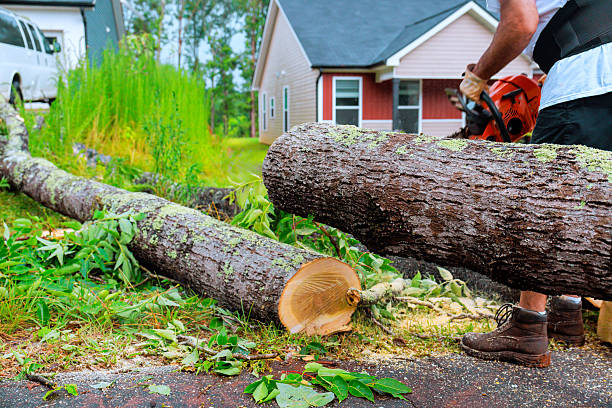
Richland County’s curbside program accepts sticks and small limbs up to four feet long and four inches in diameter, roughly two loose roll carts or six 30-gallon bags a week, with larger loads going to the county’s drop-off centers. A commercial removal generates far more than that in an afternoon. Knowing where the material goes is part of the scope: chipping on site, hauling in one pass, and leaving the lot sweepable rather than stacked behind a dumpster enclosure where it becomes the next complaint. The county rule is also a useful reality check when a tenant asks why the debris cannot simply go to the curb, and it keeps a property from being cited over a pile no hauler agreed to take.
permits before cutting
The City of Columbia tree removal permit governs removals on private property outside single-family residential lots, and the forestry permit governs anything inside the drip line of a right-of-way. Both are checked before a crew is scheduled.
one written scope, not a verbal plan
A scope lists every tree, what is wrong with it, and whether it is a removal, a reduction or a wait-and-watch. The owner keeps a copy, which is also what an insurer or an owner’s representative asks for later.
debris accounted for on the day
Chips and logs leave in the same pass. Richland County’s curbside limits are four feet long and four inches across, which no commercial removal fits, so stacking at the curb is not the plan.
The situation most commercial proposals never address
The scenario that separates a planned job from an emergency is a tree that has already moved. Picture a 40-inch water oak behind a strip center on Garners Ferry Road, in soil that has been wet for a week, with a root plate that has lifted two inches on the parking-lot side. Nothing has fallen. The tree looks intact from the street. It is also the tree that will come down in the next 50 mph gust, and it sits between a transformer and a dumpster enclosure.
That job cannot be handled by adding a crew. It needs a sequence: the utility notified so the service drop is de-energized or protected, the lot section closed and marked, the tree taken down in sections from the top with a controlled rigging plan, the stump ground below grade, and the debris hauled before the lot reopens the next morning. It also needs a record, because the property owner will be asked by an insurer or an owner’s representative why the decision was made when it was.
We build that sequence into the scope before the first cut. If the tree is past saving, the scope says so and explains what failed. If it can be reduced and kept, the scope says that too, and the property keeps a mature tree instead of a stump. What we will not do is arrive with a saw and a story.
The same logic applies to a portfolio. A manager with four properties does not need four separate emergencies; they need one assessment that ranks every tree on every site by failure risk, and a schedule that spreads the work across a year. That is the difference between commercial tree services and a residential crew that happens to have a bigger truck.
Utility and access check
The service drop, lot entrances and fire lanes are identified before a truck is positioned.
Section-by-section close-off
Only the spaces the work needs are closed, and the closure is marked and timed.
Controlled take-down
The tree is taken down in sections rather than felled, so nothing lands where it was not planned to land.
Stump, sweep, reopen
The stump is ground below grade, the lot is swept, and the section reopens when the wood is gone.
Next step
Call (803) 866-3855 and describe the property: the address, what the tree is doing, and what has to stay open while the work happens. We will set a time to walk the site, put the findings and the sequence in writing, and schedule the work around your tenants rather than the other way round.
Where we work around Columbia
Commercial tree work runs across Columbia and the towns inside about ten miles of the city: Lexington, West Columbia, Cayce, Springdale, Forest Acres, Arcadia Lakes, Irmo, Blythewood, Elgin, Hopkins, Garners Ferry, Eastover, Gaston, Gilbert and Little Mountain. Give the address and we will confirm the site is inside the service area.
Frequently Asked Questions
How does a commercial job avoid closing the parking lot?
By sequencing. We group the work by lot section, schedule the sections that carry the most risk first, and take trees down in controlled sections rather than felling whole. Utility coordination comes before the first cut where a service drop is in the work zone, and debris leaves in the same pass so the lot is sweepable at the end of the day.
What do you do with the wood and debris?
Branches and small limbs are chipped on site where access allows, and the rest is hauled. Richland County’s curbside program caps sticks and small limbs at four feet long and four inches in diameter and takes roughly two carts or six 30-gallon bags a week, which is far below what a commercial removal produces, so a commercial job hauls rather than stacks at the curb.
How do you handle a tree that is leaning but has not fallen?
A lean is a symptom, and the assessment looks for the cause: a lifted root plate, a new crack at the base, soil heaving on one side, or a canopy that has shifted. If the root plate has moved, the tree is treated as a removal and the sequence above applies. If the lean is old and stable, the tree may be reduced instead. The finding is written down either way.
Do you need a permit to remove a tree on commercial property in Columbia?
Yes, in most cases. The City of Columbia’s landscape and tree ordinance requires a tree removal permit for removals on private property other than single-family residential lots, and the permit carries no fee. Work inside the drip line of a public right-of-way or city-owned property needs a separate forestry permit. Grand trees, defined as hardwoods 24 inches or more across, softwoods 30 inches or more and small hardwoods 10 inches or more, need city permission before removal, and replacement is required when the city approves the removal.
What happens to a tree after Hurricane Helene-level wind in Richland County?
The National Weather Service recorded maximum gusts of 60 to 70 mph in Richland County during Helene in September 2024, with many trees and power lines down, some roads closed, and 18 homes destroyed with 232 others damaged. The trees that failed were generally the ones already compromised by root damage, a hollow trunk or a weak union. A post-storm walk that checks lean, root plate lift and crown dieback tells you which remaining trees are now the risk.
Can a storm-damaged tree be saved instead of removed?
Sometimes. Clemson’s storm and weather damage guidance is that the extent and type of damage determines whether a tree will live. A single broken limb on an otherwise sound tree is usually a pruning job. A split trunk, a lifted root plate or damage to more than half the crown usually is not. We assess the tree, not the debris pile, and put the finding in writing.